8 min read
Share This Review

Our review
The Measure
The Measure by Nikki Erlick Review: A Timely, Heartfelt Speculative Debut
Nikki Erlick's debut novel, an instant New York Times bestseller upon publication in June 2022, poses a single, shattering question — what if every adult on Earth woke one morning to find a small wooden box on their doorstep, inscribed with their name and containing a string whose length corresponds to the remaining span of their life? — then traces the human, social, and political fallout across the lives of several Americans over the course of twelve months. Published originally in hardcover by William Morrow in June 2022 and reissued in a William Morrow Paperbacks edition dated May 2024, the novel draws praise for balancing a high-concept speculative premise with genuine emotional depth and for imagining, with unusual ambition, the societal fractures such a revelation would produce.
LuvemBooks Verdict
Best for
Readers drawn to idea-driven speculative fiction and ensemble-character storytelling who are more interested in exploring the philosophical and societal ripples of a high-concept premise than in solving a mystery or following a tightly unified plot — and who want a strong book-club pick that generates lasting conversation about fate, mortality, and love.
Worth it if
The premise — every adult on earth wakes to a box containing a string measuring the length of their life — is enough to pull you in on its own terms, and you're content to let the novel stay in the realm of human consequence rather than supernatural explanation.
Skip if
You're expecting answers about where the boxes came from, or prefer a single-protagonist narrative with a propulsive, resolved plot — the ensemble structure spread across a year and the deliberately unexplained mechanism will likely frustrate more than satisfy.
What readers & critics say
Locus magazine praises the novel's deliberate choice to leave the boxes' origin unexplained as "a strength," and draws a pointed parallel between the social progression Erlick depicts and the early months of the COVID-19 pandemic. Columbia Magazine highlights that the book "really shines when she tackles the bigger picture, imagining the complicated societal issues that might arise in such a scenario," from electoral politics to intimacy, while the New York Times characterises the novel — despite its chilling premise — as "an escape from rather than a window into our own terrifying reality."
“The deliberate unknowability of the boxes' origin is a strength of the novel — Erlick is not writing a mystery, but about what humans do once they hold an answer they never asked for.”
— Locus MagazineAsk LuvemBooks
Was this helpful?
- Is it worth reading?
- For readers drawn to speculative premises that interrogate how society — not just individuals — bends under existential pressure, The Measure delivers in ways that few debut novels do. The two meaningful caveats are that the boxes' origin is never explained — deliberately so, as Locus magazine identifies that unknowability as a structural strength — and that the ensemble structure spread across a year-long timeline may feel diffuse to readers who prefer a single, tightly unified narrative. For the right reader, those are features, not flaws.
- Similar books
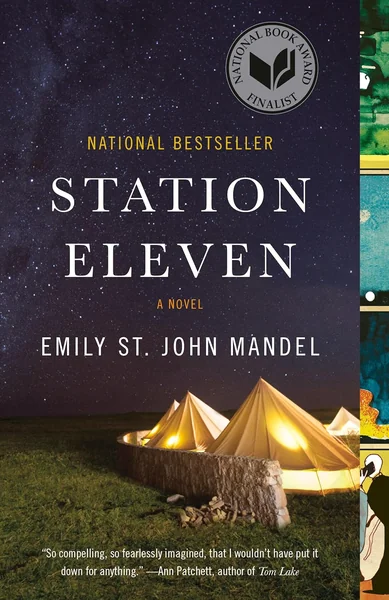
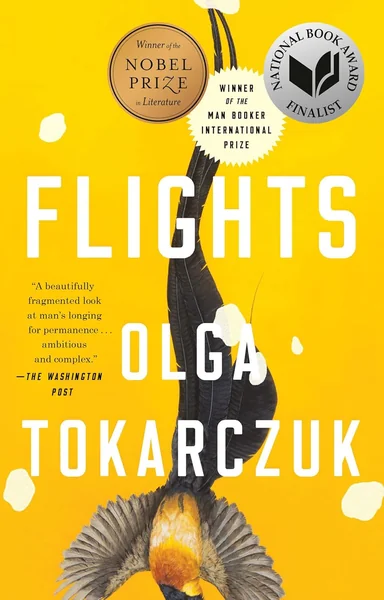
- Readers who respond to The Measure's blend of speculative premise and literary emotional depth will find natural companions in the curated selections below. Station Eleven by Emily St. John Mandel shares the ensemble structure, the civilisational disruption, and the meditation on what culture and connection mean when mortality becomes vivid — Locus even draws a parallel between The Measure's social progression and the early months of COVID-19, a comparison that echoes Mandel's pandemic resonance. The Midnight Library by Matt Haig occupies similar philosophical territory — the value of a life, the roads not taken, and what a knowledge of endings does to the present moment. For readers drawn to the novel's ambitious societal imagination and multi-perspective structure, Flights by Olga Tokarczuk and Demon Copperhead by Barbara Kingsolver both demonstrate the same literary ambition to map a world through many individual lives.
- Who should read this?
- The Measure is best suited to readers who are drawn to idea-driven literary fiction — those who reach for a novel because of the questions it asks rather than the plot it resolves. Specifically, it rewards readers interested in how society reorganises itself under collective existential pressure: the novel dramatises long-stringed political candidates leveraging apparent longevity as an electoral weapon, workplaces and legal structures reconfiguring around quantified mortality, and intimate relationships strained by the question of whether to disclose a short string to the people who love you.
- What are the main themes?
- At its core, The Measure interrogates what a known endpoint does to the texture of human life — to love, ambition, fairness, and the social contracts that hold society together. The novel dramatises a specific and unsettling set of societal fractures: electoral politics in which long-stringed candidates pressure opponents to disclose their strings the way tax returns are disclosed; workplaces and legal structures reorganising around quantified mortality; and the deeply personal question of when — or whether — to tell the people who love you that they will outlive you. Locus magazine draws a pointed parallel to the early months of the COVID-19 pandemic, noting that while the source is entirely different, the social progression Erlick describes — initial hysteria, then a gradual drift toward a new normal — is impossible to miss as a reflection of that experience.
- Why was it a Read with Jenna pick?
- The Measure was selected as a Read with Jenna pick — a mainstream book club designation associated with the Today show — upon its publication in June 2022, which significantly broadened its readership beyond the literary fiction audience. The Read with Jenna designation tends to favour novels with strong ensemble characters, clear emotional stakes, and discussion-generating premises — all qualities The Measure delivers.
- How is the book structured?
- The Measure is structured through alternating perspectives, giving voice to multiple characters with both long strings and short ones across a twelve-month timeline. Among the named characters is Hank, an emergency-room doctor whose professional life is built around other people's deaths and who must now confront his own string's verdict. The trade-off, as LuvemBooks notes, is that readers who prefer a tightly unified single-protagonist narrative may find the ensemble structure somewhat diffuse.
Summarize this book

Follow up
Synthesized from verified book data & published reviews · How we review
What would you like to know about The Measure?
Answers come from our editorial notes on this book. If we haven't covered something, we'll say so.
Readers often ask
Our Review
We review the evidence: published critics, reader verdicts and BookTube reviews, gathered and weighed with AI assistance and edited by LuvemBooks, rather than one reader's first-hand take.
The Premise and What the Novel Actually Does With It
Scope and Societal Imagination
Character and Emotional Architecture
Reception and Significance
Who It's For and Where It Asks the Most of Its Reader
Sources & Further Reading
The key facts and claims in this review are grounded in the retrieved, verified sources listed below.
- Cited in this review
- 1
- 2
txkmag.com
- Further reading
- 3
Nikki Erlick, LuvemBooks
- 4
- 5
magazine.columbia.edu
- 6
nikkierlick.com
- 7
jamifairleigh.com
- 8
cannonballread.com
- 9
bookclubs.com
Age & Reading Level
Our age band
Adult
Our age band groups books for browsing; it isn't an age a review gave.
3 content notes · who it suits
Content to know about
Skip if you need a mystery resolved — the novel never explains where the boxes come from or how the strings work.
Reader reviews
Be one of the first readers to answer.
Read it? Was it right for you?
Books like The Measure
Curated picks for readers who enjoyed The Measure, with our reasoning for each match.
If you liked The Measure