
8 min read
4.2
· 45,567 Amazon ratingsShare This Review
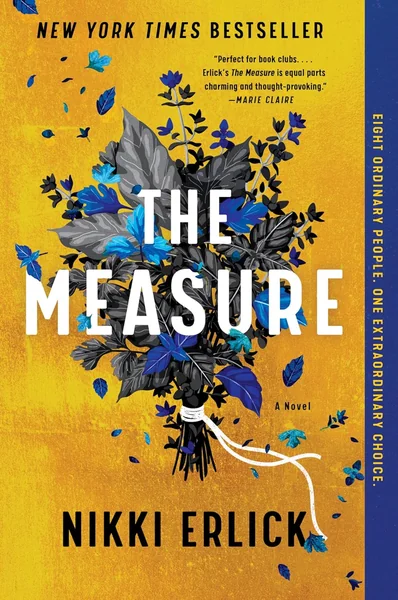
The Measure by Nikki Erlick Review: A Timely, Heartfelt Speculative Debut
Nikki Erlick's debut novel, an instant New York Times bestseller upon publication in June 2022, poses a single, shattering question — what if every adult on Earth woke one morning to find a small wooden box on their doorstep, inscribed with their name and containing a string whose length corresponds to the remaining span of their life? — then traces the human, social, and political fallout across the lives of several Americans over the course of twelve months. Published originally in hardcover by William Morrow in June 2022 and reissued in a William Morrow Paperbacks edition dated May 2024, the novel draws praise for balancing a high-concept speculative premise with genuine emotional depth and for imagining, with unusual ambition, the societal fractures such a revelation would produce.
LuvemBooks Verdict
Best for
Readers drawn to idea-driven speculative fiction and ensemble-character storytelling who are more interested in exploring the philosophical and societal ripples of a high-concept premise than in solving a mystery or following a tightly unified plot — and who want a strong book-club pick that generates lasting conversation about fate, mortality, and love.
Worth it if
The premise — every adult on earth wakes to a box containing a string measuring the length of their life — is enough to pull you in on its own terms, and you're content to let the novel stay in the realm of human consequence rather than supernatural explanation.
Skip if
You're expecting answers about where the boxes came from, or prefer a single-protagonist narrative with a propulsive, resolved plot — the ensemble structure spread across a year and the deliberately unexplained mechanism will likely frustrate more than satisfy.
What readers & critics say
Locus magazine praises the novel's deliberate choice to leave the boxes' origin unexplained as "a strength," and draws a pointed parallel between the social progression Erlick depicts and the early months of the COVID-19 pandemic. Columbia Magazine highlights that the book "really shines when she tackles the bigger picture, imagining the complicated societal issues that might arise in such a scenario," from electoral politics to intimacy, while the New York Times characterises the novel — despite its chilling premise — as "an escape from rather than a window into our own terrifying reality."
“The deliberate unknowability of the boxes' origin is a strength of the novel — Erlick is not writing a mystery, but about what humans do once they hold an answer they never asked for.”
— Locus MagazineAge & Reading Level
Recommended age
Adult
Reading level
Adult
3 content notes · who it suits
Content to know about
Skip if you need a mystery resolved — the novel never explains where the boxes come from or how the strings work.
The Measure: A Novel by Nikki Erlick is Trending
The Measure Is Having a Moment Again — Here's Why Readers Are Picking It Up Now
Nikki Erlick's debut novel about a world where everyone learns how long they have left to live keeps finding new readers. With no single splashy event driving it, this one seems to be spreading the old-fashioned way — word of mouth and its premise doing the heavy lifting.
The Measure has been quietly circulating among readers well past its June 2022 debut, and it's seeing renewed attention heading into fall 2026. The paperback edition from May 2024 kept it accessible and on shelves, and the kind of speculative, emotionally driven fiction it represents has stayed popular with book clubs and casual readers alike. No major adaptation or award news is driving this current wave — it appears to be genuine reader enthusiasm keeping the conversation going.
The book's core premise — mysterious boxes appear on every doorstep containing a string that measures exactly how long you have left to live — taps into something that never really goes out of style: questions about mortality, fairness, and how we'd treat each other if we knew the clock. That kind of story tends to resurface whenever people are in a reflective mood, and right now, readers seem to be in exactly that headspace.
If you haven't read it yet, this is a good time to pick it up. It's a fast, emotionally engaging read that works well solo or in a group setting. The paperback is widely available, and it's the kind of book that tends to spark real conversation long after the last page.
In This Review
- What Works & What Doesn't
- The Premise and What the Novel Actually Does With It
- Scope and Societal Imagination
- Character and Emotional Architecture
- Reception and Significance
- Who It's For and Where It Asks the Most of Its Reader
What Works & What Doesn't
What Works
- An instant New York Times bestseller and Read with Jenna selection, with widespread recognition on publication in June 2022
- Praised by Laurie Frankel and Marie Claire for successfully pairing a high-concept speculative premise with genuine emotional depth and a compelling ensemble cast
- The novel's deliberate choice to leave the boxes' origin unexplained is cited by Locus magazine as a structural strength
- Columbia Magazine highlights the novel's ambitious societal imagination — from electoral politics to intimacy — as its brightest dimension
- Multi-perspective narration across characters with both long and short strings allows the premise to be explored from multiple human angles
What Doesn't
- Readers seeking resolution to the mystery of the boxes' origin will find none — the novel is explicitly uninterested in explaining its supernatural mechanism
- The ensemble, multi-perspective structure spread across a year-long timeline may feel diffuse to readers who prefer a more tightly unified narrative focus
The Premise and What the Novel Actually Does With It
Scope and Societal Imagination
Character and Emotional Architecture
Reception and Significance
Who It's For and Where It Asks the Most of Its Reader
Frequently Asked Questions
Sources & Further Reading
The key facts and claims in this review are grounded in the retrieved, verified sources listed below.
- Cited in this review
- 1
- 2
- 3
txkmag.com
- Further reading
- 4
Nikki Erlick, Wikipedia
- 5
- 6
magazine.columbia.edu
- 7
nikkierlick.com
- 8
jamifairleigh.com
- 9
- 10
cannonballread.com
- 11
bookclubs.com
- 12
booksthatslay.com
- 13
newbookrecommendation.com
Related Reviews
Reviews of books we picked for readers who enjoyed The Measure.
Reader Comments
No comments yet
Be the first to share your thoughts!