
7 min read
4.1
· 204 Amazon ratingsShare This Review
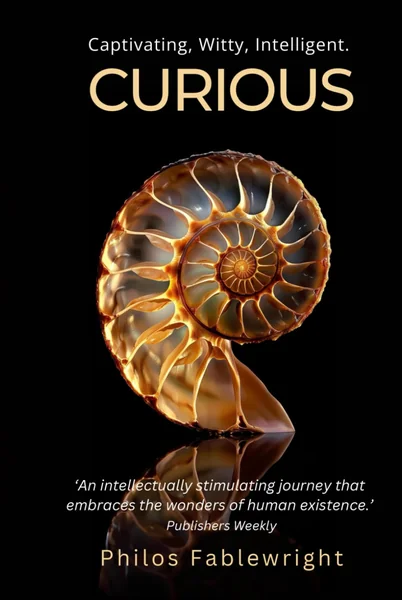
Curious by Philos Fablewright Review: A Debut Novel Fusing Philosophy, Science, and Fiction
Philos Fablewright's debut novel Curious follows Edward, a once-successful CEO whose life unravels, and uses his journey as a lens through which to examine life's biggest questions about existence, technology, and the future of humankind — blending fictional narrative, historical facts, scientific concepts, and humor into a single ambitious work that critics described as "engaging and challenging."
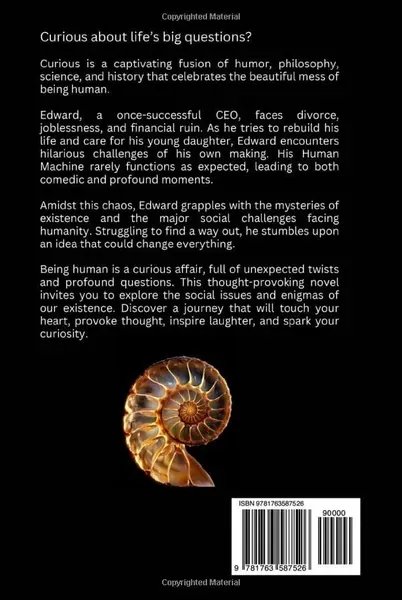 Tap to enlarge
LuvemBooks Verdict
Best for
Readers who want their fiction to carry genuine philosophical weight — those drawn to idea-driven, parable-like novels that use one character's unraveling as a lens for examining existence, technology, and humanity's future.
Worth it if
The accumulating, contemplative satisfaction of a novel that blends fiction, philosophy, science, history, and humor — and treats the reader as capable of holding all of it at once — sounds more rewarding to you than a propulsive plot.
Skip if
Readers who prioritise narrative momentum and conventionally plotted literary fiction over idea-driven storytelling are likely to find the multi-genre ambition slows the story's propulsion and creates tonal unevenness.
What readers & critics say
Awesomegang.com, attributing coverage to critical coverage, describes the novel as "Fablewright's ambitious and thought-provoking debut" that "seamlessly weaves together fictional narrative, historical facts, and scientific concepts," with "humor woven throughout," and concludes that "readers will be rewarded with a richly contemplative reading experience." Reader voices gathered on philosfablewright.com consistently praise the book as "witty, thought-provoking and deeply moving," with several drawing direct comparisons to Paulo Coelho's The Alchemist.
Sources: awesomegang.com, philosfablewright.comAsk LuvemBooks
Was this helpful?
- Is it worth reading?
- For readers who want fiction that carries philosophical weight and treats them as capable of holding intellectual inquiry and emotional storytelling in tension, Curious delivers. Critics found it 'engaging and challenging,' and reader responses praised the narrative as impactful and the characters as wonderfully written. The novel's multi-genre ambition — spanning philosophy, science, history, and fiction simultaneously — is its greatest strength, and critical coverage concluded that 'readers will be rewarded with a richly contemplative reading experience.' Those seeking plot-driven momentum rather than idea-driven contemplation, however, may find the balance uneven.
- Similar books
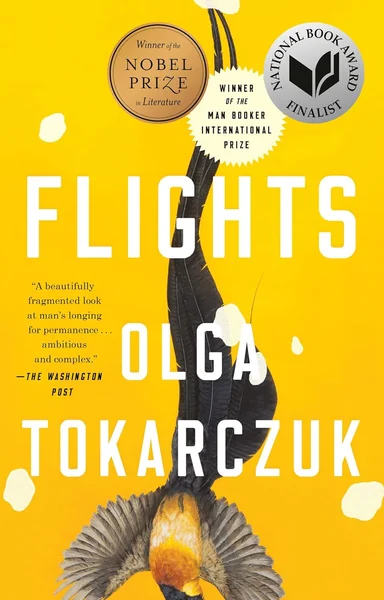
- Readers drawn to Curious for its meditative, idea-driven storytelling and existential scope will find kindred works among the curated titles below. Olga Tokarczuk's Flights shares the hybrid, genre-resistant quality and philosophical restlessness, while Nikki Erlick's The Measure similarly uses a high-concept premise to interrogate what it means to live a meaningful life. For readers who responded to Edward's arc of loss and hard-won wisdom, Wallace Stegner's Angle of Repose offers a richly contemplative novel about the weight of the past on the present self. Barbara Kingsolver's Demon Copperhead also traces a protagonist's unraveling with literary ambition and emotional depth, making it another strong companion read.
- Who should read this?
- Curious is designed for readers who pick up a novel not just to follow a character but to be genuinely unsettled by questions about existence, technology, and the trajectory of human civilization. Those who responded to the meditative, allegorical quality of works like The Alchemist are among the most likely to find it rewarding. It is equally suited to readers who appreciate fiction that is simultaneously intellectually rigorous and genuinely funny — the dual register critics called the novel's 'unique charm.' Readers who prefer propulsive, plot-first literary fiction are the group least likely to find the balance satisfying.
- What are the main themes?
- Curious engages with existence, technology, and the future of humankind as its overarching concerns, examined through the lens of Edward's personal unraveling. The novel treats these not as abstract topics but as questions that arise naturally from one man's loss of everything he thought defined him. Philosophy, science, and history are all recruited as frameworks for exploring what it means to be human — and where human civilization might be heading. The novel's stated aim is to make readers 'reconsider what they thought they knew' about these subjects, framing Edward's journey as a universal mirror rather than a singular case study.
- Is this a good book club pick?
- Curious is well-suited to book clubs looking for a discussion-rich read: its central questions about existence, technology, and humanity's future provide ample thematic territory beyond plot recap, and Edward's arc from professional success to personal unraveling to wisdom gives groups a concrete human story to anchor the conversation. The novel's 'engaging and challenging' nature, noted by critical coverage, means readers are likely to arrive with meaningfully different responses — those energised by the intellectual ambition and those who found the pacing uneven — which tends to generate the most productive discussions. Its comparisons to The Alchemist also give groups a familiar reference point for situating the book within a broader tradition of existential parable.
- What makes it notable as a debut?
- Published in July 2024 as a self-published work, Curious is Fablewright's first novel-length work, and its scope is considerable for any debut — let alone one outside the traditional publishing infrastructure. Critical coverage noted that the novel attracted a critical notice at all, framing that as significant in itself, and described it as 'Fablewright's ambitious and thought-provoking debut' that 'delves into the complexities of human existence.' The decision to simultaneously engage philosophy, science, history, and fiction in a first novel signals an author willing to prioritise intellectual ambition over the safer conventions of genre fiction.
Summarize this book
Follow up
Synthesized from verified book data & published reviews · How we review
Press Enter to ask. Answers come from our editorial Q&A — start typing to see related questions.
Age & Reading Level
Recommended age
Adult
Reading level
Adult
who it suits
Skip if You prefer plot-driven literary fiction where narrative momentum takes priority over ideas and philosophical inquiry.
Our Review
What the Novel Is and What It Sets Out to Do
Scope and Significance as a Debut
Strengths: Craft, Humor, and Intellectual Texture
Who May Find It Challenging
The Audience This Novel Is Genuinely For
Sources & Further Reading
The key facts and claims in this review are grounded in the retrieved, verified sources listed below.
- Cited in this review
- 1
- 2
awesomegang.com
- Further reading
- 3
Books like Curious
Curated picks for readers who enjoyed Curious, with our reasoning for each match.
If you liked Curious
Why It’s Trending
Hard Sci-Fi Is Having a Moment — and Curious Fits Right In
Netflix's adaptation of the dense sci-fi epic 3 Body Problem has readers hungry for books that blend big ideas with compelling storytelling. Curious, with its mix of philosophy, science, and narrative, is landing on a lot of reading lists as a result.