

9 min read
4.6
· 104,920 Amazon ratingsShare This Review
James by Percival Everett Review: A Pulitzer-Winning Reimagining of an American Classic
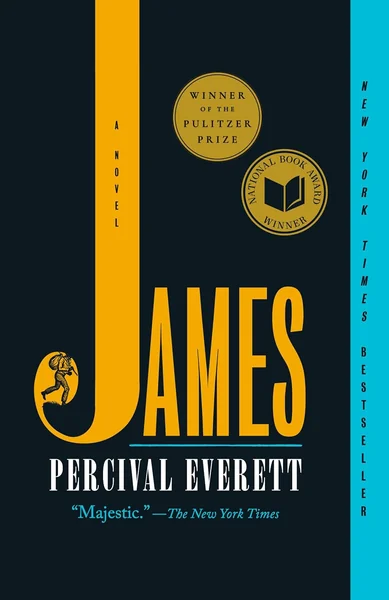
Percival Everett's James is a #1 New York Times bestselling novel that retells Adventures of Huckleberry Finn from the perspective of the enslaved Jim — renamed and reclaimed as James — sweeping the 2024–2025 awards circuit with the Pulitzer Prize for Fiction, the National Book Award, and the Kirkus Prize, among other major honors. This review is based on published reception and source materials, not hands-on reading.
LuvemBooks Verdict
Best for
Readers of literary fiction and Black American literature — particularly those familiar with Adventures of Huckleberry Finn — who want to engage with one of the most awarded and critically discussed American novels of the mid-2020s.
Worth it if
You're drawn to formally ambitious, intertextually rich fiction that uses dark humor and narrative inversion to reframe how American literature has historically distributed consciousness, sympathy, and voice.
Skip if
You're unfamiliar with Adventures of Huckleberry Finn and unwilling to engage with its source material, or you're looking for a light, straightforward adventure narrative rather than a layered, demanding literary reckoning with American slavery.
What readers & critics say
Kirkus Reviews awarded the novel a starred review, describing Everett as "audacious and prolific" in shifting the central viewpoint to the "more enigmatic and heroic Jim." The Los Angeles Review of Books highlights the novel's core formal invention — that James performs ignorance for white society while the reader is admitted to his full intelligence — as its defining structural achievement. The book's awards record, noted across sources including pulitzer.org and penguinrandomhouse.com, is extraordinary: winner of the 2025 Pulitzer Prize for Fiction, the 2024 National Book Award, and the Kirkus Prize, as well as a #1 New York Times bestseller.
“Audacious and prolific, Everett dives into the very heart of Twain's epochal odyssey, shifting the viewpoint to the more enigmatic and heroic Jim.”
— Kirkus ReviewsAsk LuvemBooks
Was this helpful?
- Is it worth reading?
- For readers of contemporary literary fiction, Black American literature in the tradition of Ralph Ellison and Toni Morrison, or serious revisionist historical novels, James represents one of the most celebrated American novels in recent memory. Its awards record — Pulitzer Prize for Fiction, National Book Award, Kirkus Prize, Booker shortlist, and National Book Critics Circle finalist — along with major critical praise from outlets including The New Yorker, The Atlantic, The Economist, and TIME, marks it as a genuine landmark. The key caveat is that the novel rewards active, attentive reading and prior familiarity with Adventures of Huckleberry Finn; readers expecting a lighter adventure narrative may find its formal and thematic ambitions demanding.
- Similar books
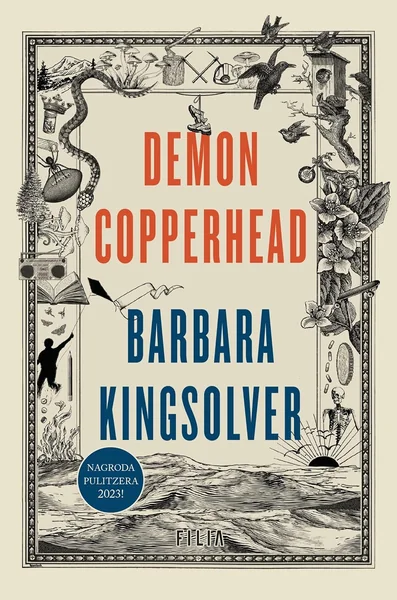
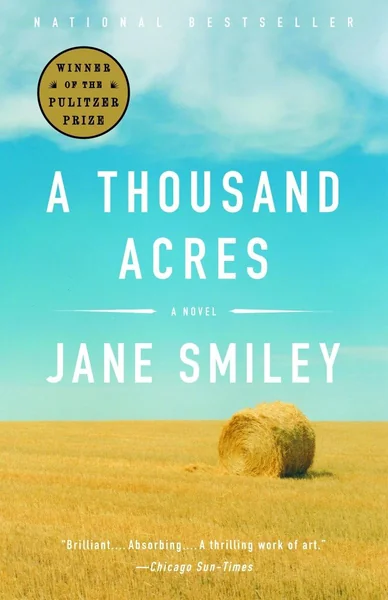
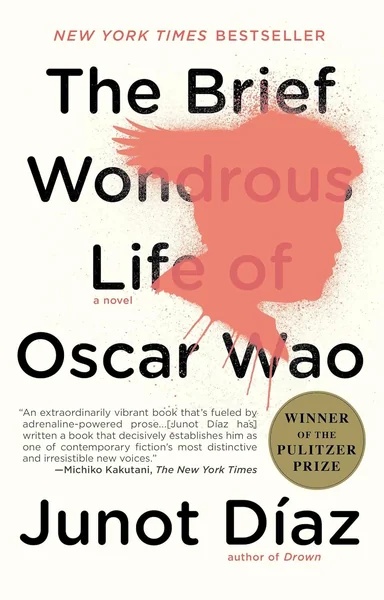
- Readers drawn to James will find strong companions in other celebrated novels that retell or reframe canonical stories through marginalized perspectives. Barbara Kingsolver's Demon Copperhead transplants David Copperfield to Appalachia, winning the Pulitzer Prize in a move that parallels Everett's own; Jane Smiley's A Thousand Acres reworks King Lear through the voices of women on an Iowa farm. For the deep engagement with race and American history, Toni Morrison's Beloved — a foundational text of Black American literary tradition that James directly engages — is the essential pairing. The Brief Wondrous Life of Oscar Wao by Junot Díaz shares James's blend of dark humor, formal invention, and unflinching engagement with historical violence. Kazuo Ishiguro's The Remains of the Day offers a similarly layered unreliable perspective, with a narrator who conceals as much as he reveals.
- Who should read this?
- James is ideally suited to readers of contemporary literary fiction who come with some familiarity with Adventures of Huckleberry Finn and an appetite for formally ambitious, intertextually rich work. It will resonate strongly with readers of Black American literature in the tradition of Ralph Ellison and Toni Morrison, as well as those drawn to serious revisionist historical fiction. Readers who enjoy novels that use dark humor and formal invention to interrogate race and power — rather than straightforward realism — will find Everett's approach particularly rewarding. Those expecting a light adventure story or an easy read should approach with adjusted expectations.
- About Percival Everett
- Percival Leonard Everett II is an American author and Distinguished Professor of English at the University of Southern California.
- Tell me about the adaptation
- James is in development as a feature film to be produced by Steven Spielberg. No further details — including a director, cast, or release timeline — are confirmed in available sources. Given the novel's extraordinary critical profile and its status as a #1 New York Times bestseller, the adaptation is among the more anticipated literary-to-film projects currently in development.
- Is this a good book club pick?
- James is an exceptional book club selection for groups prepared to engage with its literary and historical depth. The novel's central conceit — giving full interiority and voice to James, a character long marginalized in one of American literature's most debated classics — generates rich discussion about race, perspective, and the politics of whose consciousness American literature has historically centered. Jonathan Lethem's description of it as "an irrevocable intervention into the canon" gives groups a critical framework to explore, and the novel's dark humor provides tonal variety that keeps discussion lively. Pairing it with Adventures of Huckleberry Finn, or with works by Ralph Ellison and Toni Morrison that Everett is in dialogue with, can deepen the conversation significantly.
- How does James compare to Everett's Erasure?
- Both James and Erasure showcase Everett's hallmark blend of satirical invention and engagement with the politics of Black identity in America, but they operate at different scales of cultural intervention. Erasure targets the literary marketplace and the commodification of Black experience; James takes on one of the most canonical texts in American literature, repositioning Adventures of Huckleberry Finn's marginalized Jim as the novel's full protagonist. James has achieved the broader mainstream recognition — a #1 New York Times bestseller and a sweep of the major awards circuit — though Erasure established Everett's reputation for exactly the kind of formally daring, satirically incisive fiction that James brings to its most celebrated expression.
Summarize this book
Follow up
Synthesized from verified book data & published reviews · How we review
Press Enter to ask. Answers come from our editorial Q&A — start typing to see related questions.
Age & Reading Level
Recommended age
Adult
Reading level
Adult
Content to know about
Best for: Adults — harrowing depictions of American slavery, period-accurate racial violence, and a formally demanding narrative voice suited to mature readers.
Skip if You want a light adventure story in the spirit of Twain's picaresque original.
Our Review
What the Novel Actually Is and Does
The Central Argument and Its Stakes
Critical Reception and Awards Significance
Strengths: Voice, Intertextuality, and Satirical Force
Who This Novel Is For — and Where It Challenges
Sources & Further Reading
The key facts and claims in this review are grounded in the retrieved, verified sources listed below.
- Cited in this review
- 1
- 2
boswellbooks.com
- Further reading
- 3
Percival Everett, Wikipedia
- 4
en.wikipedia.org
- 5
pulitzer.org
- 6
- 7
wellesleybooks.com
- 8
copperfieldsbooks.com
- 9
briarsandbramblesbooks.indielite.org
- 10
bluebunnybooks.com
- 11
Books like James
Curated picks for readers who enjoyed James, with our reasoning for each match.
If you liked James
Why It’s Trending
Pulitzer Prize, National Book Award, and More — James Is Still a Reader Favorite in 2026
Percival Everett's James swept the 2024–2025 awards circuit — Pulitzer Prize, National Book Award, Kirkus Prize — and it's still very much part of the conversation. Book clubs are actively meeting around it, BookTok creators are breaking it down chapter by chapter, and new reviews keep coming in.