

9 min read
4.6
· 28,943 Amazon ratingsShare This Review
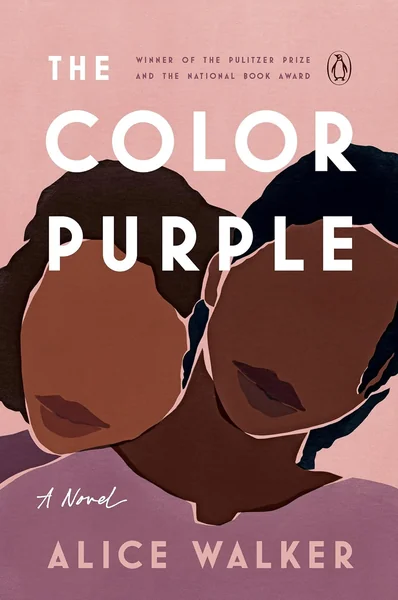
The Color Purple by Alice Walker Review: A Pulitzer-Winning Epistolary Masterwork
Alice Walker's epistolary novel The Color Purple — winner of both the Pulitzer Prize for Fiction and the National Book Award for Fiction in 1983 — follows Celie, a young Black woman in rural Georgia whose letters chart a harrowing and ultimately triumphant journey from abuse and silence toward selfhood and independence. It remains one of American literature's most decorated and contested works of the twentieth century.
LuvemBooks Verdict
Best for
Readers ready to engage with a foundational text of Black women's literature — particularly those drawn to fiction that centres the interior lives of silenced women through the lens of race, gender, and survival in the American South.
Worth it if
You want a structurally innovative, canonically significant novel in which a woman's voice — painstakingly reclaimed through letters — serves as both the subject and the instrument of her own liberation.
Skip if
You prefer fiction that handles sexual violence, abuse, and trauma obliquely or off-page — Walker's unflinching directness with rape, incest, and physical brutality is deliberate and sustained throughout.
What readers & critics say
Britannica credits the novel for being "praised for the depth of its female characters and for its eloquent use of Black English Vernacular," noting it movingly depicts Celie's self-realisation and resistance to oppression. Wikipedia's documented reception confirms its dual 1983 Pulitzer Prize and National Book Award wins, its place on the BBC's 2003 Big Read poll of the UK's best-loved novels, and its persistent appearance on the American Library Association's list of most frequently challenged books — ranked seventeenth for 2000–2010 — citing its sometimes explicit depiction of violence.
“Walker takes on subjects that would scare off most writers — the survival of Black women in a harsh world of rape, incest and domination in the Deep South.”
— NPRAge & Reading Level
Recommended age
Ages 16+
Reading level
Adult
4 content notes · who it suits
Content to know about
Best for: Adults / mature 16+ — direct, unmitigated depictions of rape, incest, child sexual abuse, and physical violence throughout
Skip if you prefer fiction that handles trauma obliquely or off-page rather than confronting it directly.
The Color Purple: A Novel by Alice Walker is Trending
The 2023 Musical Film Adaptation Keeps New Readers Coming to Alice Walker's Classic
The Color Purple got a big-screen musical treatment in 2023, and readers are still circling back to the novel that started it all. If you haven't read Walker's original yet, now's a great time to see where the story began.
The 2023 film adaptation of The Color Purple — a musical directed by Blitz Bazawule — brought a whole new audience to Alice Walker's story. The movie is itself based on the Broadway stage musical, making it the second major film adaptation of the 1982 novel, following Steven Spielberg's 1985 version. With both films getting renewed attention, a lot of people are naturally curious about the book that kicked everything off.
What's worth knowing is that Walker's novel isn't just the source material — it's widely considered the definitive version of Celie's story. The epistolary format (the whole thing is told through letters) gives you an intimacy with Celie that's hard to replicate on screen. The novel won the Pulitzer Prize and the National Book Award back in 1983, and it's one of those rare books that actually earns its reputation as a classic.
If you watched either film and felt moved by the story, reading the novel is genuinely worth your time. And if you've never encountered The Color Purple in any form, the renewed conversation around the adaptations makes this a good moment to start with the book itself.
In This Review
- What Works & What Doesn't
- What the Novel Is and What It Does
- Literary Significance and Awards
- Strengths: Voice, Structure, and Female Interiority
- Controversy and Ongoing Challenge
- Who This Novel Is For Today
What Works & What Doesn't
What Works
- Won both the 1983 Pulitzer Prize for Fiction and the National Book Award for Fiction — Walker became the first Black woman to win the Pulitzer in that category
- Celie's epistolary voice in Black English Vernacular is recognized as central to the novel's feminist and cultural power
- An unusually rich ensemble of Black female characters — including Sofia, Shug Avery, and Nettie — each drawn with distinct moral and emotional complexity
- Praised by Mel Watkins critics as a 'striking and consummately well-written novel' for its emotional impact and structural innovation
- A foundational text across American literature, women's studies, and African-American studies, with adaptations spanning film, Broadway, and radio
What Doesn't
- Walker's direct, unflinching depiction of rape, incest, and physical abuse makes the novel difficult reading — it has been one of the most frequently challenged books in American libraries precisely for this content
- The epistolary structure, while critically praised, requires readers to construct setting and chronology from letters alone, which some find demanding as an entry point to the narrative
What the Novel Is and What It Does
Literary Significance and Awards
Strengths: Voice, Structure, and Female Interiority
Controversy and Ongoing Challenge
Who This Novel Is For Today
Frequently Asked Questions
Sources & Further Reading
The key facts and claims in this review are grounded in the retrieved, verified sources listed below.
- Cited in this review
- 1
en.wikipedia.org
- Further reading
- 2
Alice Walker, Wikipedia
- 3
- 4
- 5
scatteredbooks.com
- 6
Related Reviews
Reviews of books we picked for readers who enjoyed The Color Purple.
Reader Comments
No comments yet
Be the first to share your thoughts!