BOOKS
Published

Read Time

3 min read

Curated & edited by

LuvemBooks Editorial

How we create our reviews →
Share This Review

We Were the Lucky Ones by Georgia Hunter Review: Sweeping Family Saga, Uneven Execution

Georgia Hunter's debut novel traces the Kurc family of Radom, Poland across five continents during the Holocaust, drawing on meticulous research into her own family history to deliver a sprawling, detail-rich narrative — though Kirkus Reviews finds the prose too reliant on cliché and the characters too thinly drawn to fully honor the weight of the subject.

LuvemBooks Verdict

Best for

Readers drawn to multi-generational family sagas who value documented research and emotional breadth over literary experimentation — particularly those interested in how one real Jewish family survived, and was scattered by, the Holocaust.

Worth it if

The research-grounded authenticity of a true family story, the organizational feat of tracking seven protagonists across five continents, and the emotional pull of reunion as narrative engine matter more to you than prose originality or psychological interiority.

Skip if

You hold Holocaust fiction to a high standard of literary craft and psychological depth — Kirkus Reviews' verdict that the characters "remain flat and unknowable" and the prose is "too beholden to sentimentality and cliché" will likely prove a dealbreaker.

What readers & critics say

Kirkus Reviews is sharply critical, finding the novel "too beholden to sentimentality and cliché" and failing to establish a "uniquely realized perspective," though it concedes the book is "thorough and precise in its details." Bookmarks Reviews takes a more measured stance, crediting Hunter with smoothly managing a sprawling cast across five continents while characterizing the writing overall as only "serviceable," rescued by occasional stronger passages.

Too beholden to sentimentality and cliché, this novel fails to establish a uniquely realized perspective.

Kirkus Reviews
Sources: Kirkus Reviews, Bookmarks Reviews
4.6from 46,304 Amazon ratings— reader ratings, not a LuvemBooks score
In This Review
  • What Works & What Doesn't
  • What the Novel Is and What It Covers
  • The Research Foundation and Personal Stakes
  • Structural Strengths: Managing a Large Cast
  • Where Critics Push Back: Prose and Characterization
  • Who This Book Is For

What Works & What Doesn't

What Works
  • Grounded in extensive, documented research into Hunter's own family history, lending the narrative factual specificity
  • Kirkus Reviews credits the novel as 'thorough and precise in its details' — a direct result of Hunter's archival and personal investigation
  • Effectively manages a large ensemble cast across five continents without losing narrative momentum, per Bookmarks Reviews
  • Includes contextual chapter markers and an authorial note explaining the real family's fates and Hunter's research process
  • Designed to appeal to readers of multi-generational family sagas set against the backdrop of World War II and the Holocaust
What Doesn't
  • Kirkus Reviews finds the prose too reliant on cliché and sentimentality, citing specific passages as evidence of language that is 'entirely inadequate for the subject matter'
  • Characters are described by Kirkus Reviews as 'flat and unknowable,' limiting the emotional depth a novel of this subject matter demands
  • Bookmarks Reviews characterizes the writing overall as only 'serviceable,' acknowledging cliché as a recurring issue even while noting occasional stronger passages
  • The novel does not substantially depart from established Holocaust fiction conventions, which Kirkus argues leaves it unable to distinguish itself within a weighty literary tradition
A novel grounded in real family history, We Were the Lucky Ones is genuinely ambitious in scope, but critical reception is divided between admiration for its research and reservations about its craft.

What the Novel Is and What It Covers

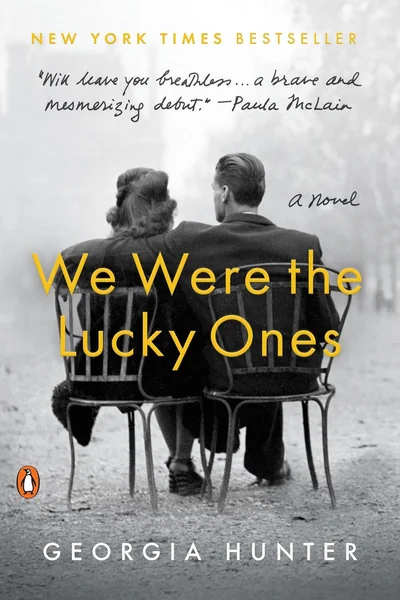
We Were the Lucky Ones: A Novel by Georgia Hunter front cover
We Were the Lucky Ones is a work of historical fiction centered on the Kurc family, prosperous Jewish shop owners living in Radom, Poland. Sol and Nechuma Kurc and their grown children inhabit a comfortable, cultured life that the Holocaust swiftly dismantles. The novel tracks each family member across divergent, continent-spanning ordeals: eldest son Genek and his wife are exiled to a Siberian gulag; youngest child Halina works alongside her resistance-fighter husband to protect the family; middle child Addy — a composer and engineer before the war — departs Europe on one of the last passenger ships and ends up thousands of miles away. Mila and Felicia, Jakob and Bella each carry their own harrowing share of the war's violence and uncertainty. The collective engine driving the narrative, as some readers note, is the family's shared dream of reunion.

The Research Foundation and Personal Stakes

Hunter began researching after discovering that her grandfather — the character Addy in the novel — had survived the Holocaust. That research underpins the book's most distinctive quality. Kirkus Reviews, while critical of the prose, acknowledges that "her novel is thorough and precise in its details," a directresult of extensive historical investigation. The novel also includes, according to reader accounts, chapter-opening date markers that situate individual storylines within the larger chronology of World War II events, as well as an authorial note at the end explaining how Hunter gathered the material and what became of the real family members. That transparency about sourcing is part of what sets this book apart from purely invented Holocaust fiction.

Structural Strengths: Managing a Large Cast

One of the novel's more technically demanding achievements is the management of its sprawling ensemble. Bookmarks Reviews notes that Hunter "smoothly keeps track of this sprawling cast as they move from one temporary hideout to another across five continents, and the narrative rarely flags." Keeping seven or more protagonists individually legible across multiple countries, timelines, and wartime circumstances is a genuine structural challenge, and the consensus across sources is that the novel navigates it without losing narrative momentum. For readers drawn to multi-strand family epics, this organizational coherence is a meaningful strength.

Where Critics Push Back: Prose and Characterization

The most substantive critique comes from Kirkus Reviews, which opens bluntly: the novel is "too beholden to sentimentality and cliché" and "fails to establish a uniquely realized perspective." The review cites specific passages as evidence — Halina steeling herself with "You'll get only one shot at this. Don't botch it," Genek framing a wartime identity decision as "a deal breaker" and "life and death," and a description of a gulag town as "a total shitscape" that Kirkus calls "a low point for Hunter's writing." The characters, Kirkus concludes, "remain flat and unknowable." Bookmarks Reviews takes a more moderate position, describing the writing as "serviceable" and noting that Hunter's overreliance on clichés is "rescued by occasional flares of strong sensory description." These are not minor quibbles but substantive craft criticisms from named critical outlets, and prospective readers should weigh them accordingly.

Who This Book Is For

We Were the Lucky Ones was originally published in 2017 and reissued by Penguin Books in a paperback edition dated January 2, 2018. The novel is designed for readers who respond to family-centered Holocaust narratives told across a wide geographic and emotional canvas. Readers who prioritize research fidelity and the emotional texture of a true family story will find the book rewarding on those terms. Readers who hold debut literary fiction to a high standard of prose originality and psychological depth — particularly against the vast, demanding tradition of Holocaust literature that Kirkus invokes — may find it falls short of that bar. It is not a book that attempts to redefine the genre; it is one that uses the genre's conventions to document a real family's survival, for better and for worse.

Sources & Further Reading

The key facts and claims in this review are grounded in the retrieved, verified sources listed below.

  1. Cited in this review
  2. 1
  3. Further reading
  4. 2
  5. 3
  6. 4
  7. 5
  8. 6
  9. 7
  10. 8