A Founding Mother
by Stephanie Dray, Laura Kamoie
A historical novel following Abigail Adams across the Revolutionary and early republic era, depicting her private influence on her husband John and on American political life from behind the scenes.
Best for
Readers who love immersive, woman-centred biographical fiction set in the Revolutionary era — especially fans of Dray and Kamoie's earlier founding-era novels or comparable titles such as Becoming Lady Washington and The Hamilton Affair — who want a scholarly yet novelistic portrait of Abigail Adams across fifty years of American history.
Our full verdict ↓At a glance
Be one of the first readers to answer.
Read it? Was it right for you?
About the Author
Stephanie Dray, Laura Kamoie2 books reviewed
A Founding Mother
by Stephanie Dray, Laura Kamoie
LuvemBooks Verdict
Best for: Readers who love immersive, woman-centred biographical fiction set in the Revolutionary era — especially fans of Dray and Kamoie's earlier founding-era novels or comparable titles such as Becoming Lady Washington and The Hamilton Affair — who want a scholarly yet novelistic portrait of Abigail Adams across fifty years of American history.
Worth it? Skip it? Read the full verdict →Ask LuvemBooks
Was this helpful?
- Is it worth reading?
- For readers drawn to immersive founding-era biographical fiction, A Founding Mother represents a standout entry in the genre. New York Times bestselling author Madeline Martin called it 'historical fiction at its absolute finest,' praising the portrait of Abigail as 'a fierce intellect' whose 'courage, wisdom, and strength helped shape the nation.' The novel's scholarly foundation — co-author Laura Kamoie holds a doctorate in early American history from the College of William and Mary — sets it apart from more loosely researched competitors in the space. The key caveat is scope: the fifty-year timeline and dense cast of historical figures reward readers who already have some familiarity with the founding era, while those who prefer tightly contained narratives may find the breadth demanding.
- Similar books
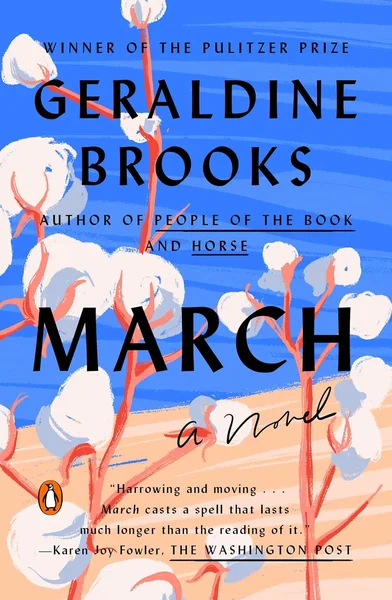
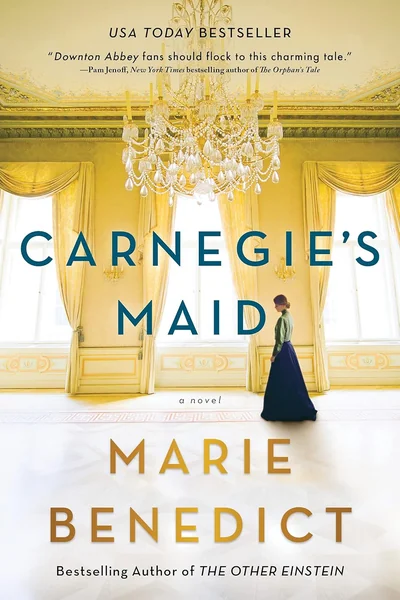
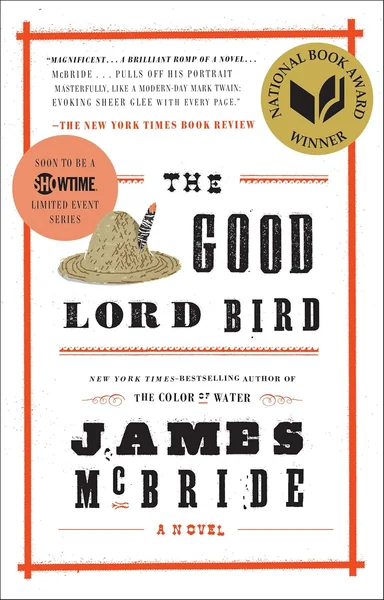
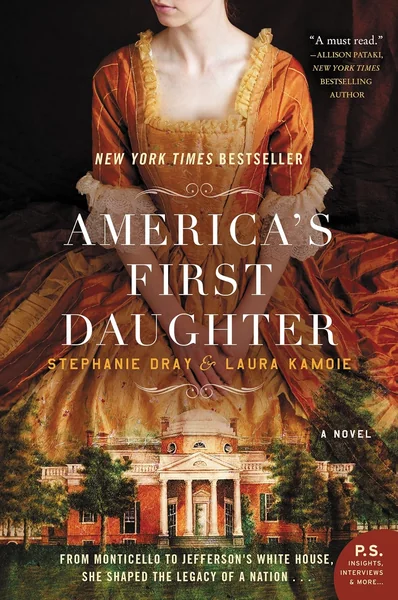
- Readers who enjoy A Founding Mother will find natural companions among the curated titles shown below. Geraldine Brooks's March and James McBride's The Good Lord Bird both bring rigorous literary craft to American historical fiction, exploring the era's moral fault lines through vivid fictional protagonists. Marie Benedict's Carnegie's Maid similarly centers a woman's intelligence and agency against a backdrop of great men and historical consequence — a structural echo of Dray and Kamoie's approach with Abigail. Alice Walker's The Color Purple, while set far later, shares the commitment to recovering a woman's inner life that history has pushed to the margins. The authors' own earlier founding-era biographical fiction — America's First Daughter and My Dear Hamilton — are the most direct companions for readers wanting to continue with Dray and Kamoie's distinctive voice in this period.
- Who should read this?
- A Founding Mother is squarely aimed at fans of immersive biographical fiction about founding-era women — particularly readers who have enjoyed comparable titles such as Becoming Lady Washington, The Secret Wife of Aaron Burr, or The Hamilton Affair. History enthusiasts seeking a woman-centered lens on the American Revolution and early republic, timed to the 250th anniversary of independence, will find this especially resonant. The novel also serves as a natural next read for established fans of Dray and Kamoie's earlier founding-era biographical fiction. Readers who prefer tightly contained narratives, or who want a conventional political account rather than an interior novelistic retelling, are likely better served elsewhere.
- About Stephanie Dray, Laura Kamoie
- Laura Croghan Kamoie is an American historian and author. The review notes that her academic background includes a doctorate in early American history from the College of William and Mary and two published nonfiction books on early America, which grounds the Dray-Kamoie collaboration in scholarly rigor uncommon in popular historical fiction.
- What are the main themes?
- At its core, A Founding Mother explores the tension between women's private sacrifice and public invisibility in an era that credited nation-building almost exclusively to men. Abigail's management of children, a farm, and finances largely on her own — while John traveled the Colonies and Europe — runs as a counterpoint to the grand political events she also witnesses and influences. The novel also engages with themes of radical conviction versus political pragmatism: the authors note that Abigail was often more radical than John on the great questions of the day, and her pointed assessments of Hamilton and Jefferson are rendered with wit rather than reverence. Underpinning everything is a meditation on legacy — whose stories get told, and whose get folded into footnotes.
- How historically accurate is this novel?
- The novel's scholarly foundation is unusually strong for popular historical fiction: co-author Laura Kamoie holds a doctorate in early American history from the College of William and Mary and has published two nonfiction books on early America. The authors have spoken openly about grounding their portrayal of Abigail in primary sources, and the Historical Novel Society notes the novel delivers the tumultuous years between 1765 and 1818 in a way that 'goes places many readers won't expect.' That said, A Founding Mother is deliberately a novelistic, interior retelling — not a documentary account — and readers seeking verifiable historical analysis rather than an imaginative reconstruction should turn to a traditional biography.
Summarize this book
Follow up
Synthesized from verified book data & published reviews · How we review
What would you like to know about A Founding Mother?
Answers come from our editorial notes on this book. If we haven't covered something, we'll say so.
Readers often ask
Editorial Review
A Founding Mother is a sweeping historical fiction novel by Stephanie Dray and Laura Kamoie, published by William Morrow in 2026, that traces Abigail Adams's extraordinary life from her 1765 marriage to John Adams through five decades of revolution, nation-building, and personal sacrifice. Timed to the 250th anniversary of American independence, it is designed for readers who want an intimate, meticulously researched portrait of one of the republic's most consequential women — told from Abigail's own perspective, alongside the famous men who shaped the age.
Read the Full ReviewReader reviews
No reader reviews yet
Read it? Be the first to say what you thought.
Books like A Founding Mother
Curated picks for readers who enjoyed A Founding Mother, with our reasoning for each match.
If you liked A Founding Mother