
In This Article
- What the New Book Argues
- Who Is Involved and Where the Book Fits
- Context: A Decade of Challenging Diet Orthodoxy
- What to Watch
Dr. Jason Fung, the Toronto-based nephrologist best known for popularising intermittent fasting, has released a new book titled The Hunger Code. Fung announced the launch on his Substack, describing it as "the fourth in a series that includes The Obesity Code, The Diabetes Code, and The Cancer Code".
Around the same time, he appeared on Fox News to outline his central argument: that lasting weight loss requires a shift in how people understand and respond to hunger, rather than a focus on calorie arithmetic.
What the New Book Argues
According to Fung's own Substack, The Hunger Code extends the metabolic and hormonal framework he has built across his previous titles, moving the conversation toward the biological and psychological forces that drive eating behaviour. The Audible edition description indicates the book offers "three Golden Rules and 50 actionable tips," covering how to slow digestion, break emotional eating cycles, and resist social pressures to eat.
A companion interview published by Toward Health frames the book as a direct challenge to the widespread belief that weight regain after dieting is biologically inevitable, with Fung exploring what he describes as the deeper drivers of hunger. For a full assessment of the book itself, see our review.
Who Is Involved and Where the Book Fits
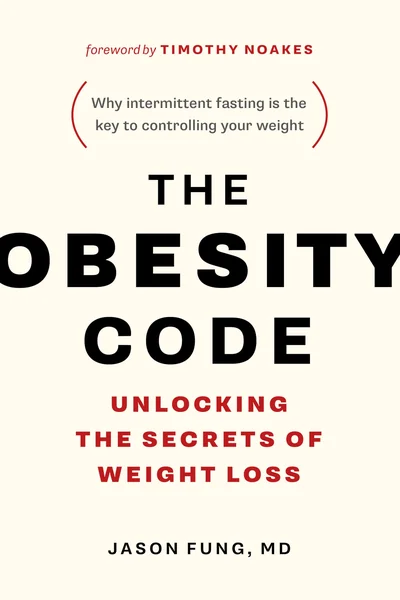
Fung practises as a nephrologist — a kidney specialist — in Toronto, and his clinical work with diabetic and obese patients has long informed his writing. His 2016 debut, The Obesity Code, established his public profile by contending, as Barnes & Noble's catalogue entry notes, that insulin resistance and chronically elevated insulin levels trap the body in fat-storage mode — a position that ran against the dominant calorie-in, calorie-out model of the time.
The Hunger Code is positioned as a continuation of that inquiry; Fung's Substack states explicitly that the new book "continues this exploration" of body composition beyond the traditional framework.
Context: A Decade of Challenging Diet Orthodoxy
The Obesity Code drew attention not only for its conclusions but for the professional credibility behind them. Diagnosis Diet's contemporaneous commentary noted that Fung's argument — that overweight individuals are "hormonally different" from those who maintain weight without effort — was presented with a writing style that balanced accessibility with clinical rigour.
His official site describes the 2016 book as having introduced "five basic steps to controlling your insulin for better health", a practical layer that helped it reach readers beyond specialist audiences. That foundation is what The Hunger Code now builds on, shifting from the question of why people gain weight to the question of why they struggle to stop eating.
What to Watch
The release arrives as The Hunger Code becomes available in audiobook format through Audible, broadening its potential reach. Fung's Fox News appearance and the Toward Health interview signal an active promotional campaign in progress.
Whether the book's focus on hunger biology and psychology lands with the audience that followed his earlier insulin-centred work remains to be seen as reviews and reader responses accumulate.
Frequently Asked Questions
Is The Obesity Code: Unlocking the Secrets of Weight Loss worth buying in 2026?
Yes, for readers seeking a medically-informed alternative to traditional dieting. Fung's focus on hormonal factors and intermittent fasting remains relevant, though his approach may be too rigid for some individuals.
What is the main message of The Obesity Code?
The book argues that insulin resistance, not caloric excess, is the primary driver of obesity. Fung advocates for intermittent fasting and reducing refined carbohydrates rather than simply counting calories.
Who should read The Obesity Code by Jason Fung?
The book is ideal for people frustrated with traditional dieting approaches, those interested in the science of metabolism, and readers seeking a physician's perspective on sustainable weight loss strategies.
Should I read The Obesity Code or try Jason Fung's new book The Hunger Code?
Start with The Obesity Code to understand Fung's foundational theories about insulin and weight loss. The Hunger Code appears to build on these concepts with his evolved approach to the subject.
Does The Obesity Code actually work for weight loss?
Many readers report success with Fung's intermittent fasting approach, but results vary by individual. The book's strength lies in its scientific framework rather than guaranteeing universal results.
Is Jason Fung's approach in The Obesity Code scientifically valid?
Fung presents credible medical research about insulin's role in weight regulation, though some critics argue he oversimplifies complex metabolic processes. His clinical background adds credibility to his claims.
No Discussion Yet
Be the first to share your thoughts on this news article.