
4 min read
4.3
· 688 Amazon ratingsShare This Review
Intermittent Fasting For Dummies by Janet Bond Brill Review: A Thorough, Evidence-Based Beginner's Guide
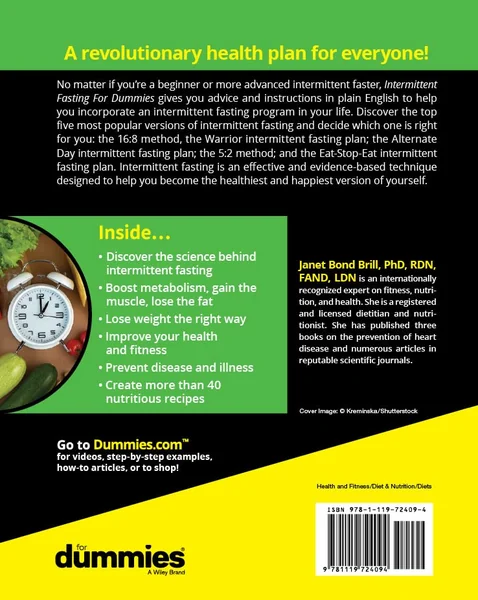
Intermittent Fasting For Dummies by Janet Bond Brill, PhD, RDN, FAND, LDN is a well-structured health and wellness reference book that covers the science and practice of intermittent fasting, presenting five popular methods alongside more than 40 recipes and evidence-based guidance designed to help readers choose an approach suited to their lifestyle and health goals. This review is based on published sources and the book's documented contents, not hands-on use.
LuvemBooks Verdict
Best for
General adult readers who are new to intermittent fasting and want a single, credentialed, science-grounded reference that explains multiple fasting methods alongside practical diet and exercise guidance — without requiring any background in nutrition or medicine.
Worth it if
You want a structured, safety-conscious introduction that covers the five most popular fasting protocols, the metabolic science behind them, and complementary lifestyle recommendations all in one organized volume.
Skip if
You already have a solid grounding in nutrition science or are managing complex medical conditions requiring highly personalized clinical guidance, as the For Dummies format's deliberate accessibility will likely feel too introductory for your needs.
What readers & critics say
NetGalley reviewers described the book as an easy-to-read resource that delivers detailed breakdowns of different fasting plan types and their associated benefits (netgalley.com). The author's own site echoes this framing, characterizing it as an accessible guide that also addresses nutrition basics and recipes, while notably recommending the Mediterranean eating plan over keto as a complement to fasting (drjanet.com).
Sources: NetGalley, drjanet.comLook inside the book
Preview the actual pages, via Google BooksIn This Review
- What Works & What Doesn't
- What the Book Actually Is and Covers
- Author Credentials and the Weight They Carry
- Strengths: Structure, Scope, and Accessibility
- Limitations and Who May Find It Frustrating
- Who This Book Is For
What Works & What Doesn't
What Works
- Written by a registered dietitian and nutritionist (PhD, RDN, FAND, LDN) with a documented background in disease prevention and heart health research, lending the guidance strong professional credibility
- Covers five popular intermittent fasting methods, allowing readers to identify the approach best suited to their individual lifestyle and health goals
- Includes more than 40 recipes alongside the scientific and methodological content, extending the book's practical utility
- NetGalley early readers described it as an easy-to-read resource with clear explanations of the different types of fasting
- Designed to serve a wide range of readers — from those focused on weight loss to those interested in fitness, muscle building, or disease prevention
What Doesn't
- Readers already well-versed in fasting science or nutrition may find the introductory-level foundational content covers familiar territory
- Brill's explicit recommendation of the Mediterranean eating plan and her argument against combining intermittent fasting with a ketogenic diet means keto-committed readers will find the dietary pairing guidance misaligned with their current approach
What the Book Actually Is and Covers
Author Credentials and the Weight They Carry

Strengths: Structure, Scope, and Accessibility
Limitations and Who May Find It Frustrating
Who This Book Is For
Frequently Asked Questions
Sources & Further Reading
The key facts and claims in this review are grounded in the retrieved, verified sources listed below.
- 1
- 2
- 3
netgalley.com
- 4
- 5
- 6
- 7
Related Reviews
Reviews of books we picked for readers who enjoyed Intermittent Fasting For Dummies.
Reader Comments
No comments yet
Be the first to share your thoughts!