
8 min read
4.5
· 53 Amazon ratingsShare This Review
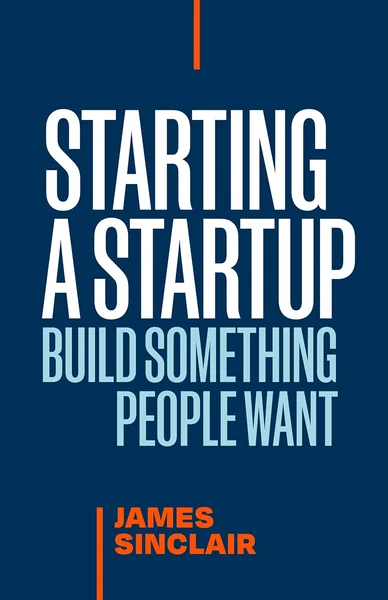
Starting a StartUp: Build Something People Want by James Sinclair Review: A No-Nonsense Tactical Playbook for Founders
James Sinclair's Starting a StartUp: Build Something People Want is a step-by-step entrepreneurial guide built around a single, unsparing premise: 90% of startups fail not because founders lack effort, but because they build products nobody wants. Designed to prevent that outcome, the book delivers practical frameworks and real-world systems aimed squarely at early-stage founders who cannot afford to waste time on theory. Published by Page Two in September 2025, it draws on Sinclair's two decades of founding companies, achieving multi-million dollar exits, and mentoring hundreds of entrepreneurs — plus his experience leading innovation projects at SAP for clients including LinkedIn, Google, and Citi. The result is a guide that positions execution, not inspiration, as the true engine of startup success.
LuvemBooks Verdict
Best for
Early-stage founders — whether on company one or company five — who are pre-product and pre-revenue, serious about execution, and want a structured, validation-first process rather than startup motivation or inspiration.
Worth it if
Worth it if you are stuck between idea and execution, know this one has to work, and need a methodical, practitioner-built system for figuring out what customers actually want before committing time or money to building anything.
Skip if
Skip it if you are an experienced serial founder who has already navigated multiple validation cycles, or if you want deeper conceptual frameworks and strategic theory alongside the tactical step-by-step content.
What readers & critics say
Retailer and bookseller listings retrieved from Porchlight Books and StartupToScaleUp describe the book as a "brutally tactical playbook" and a "battle-tested framework built for founders who want results," with both sources emphasising its no-theory, no-fluff, execution-first stance. No independent critical reviews from editorial outlets were among the retrieved sources.
Sources: Porchlight Books, StartupToScaleUpAge & Reading Level
Recommended age
Adult
Reading level
Adult
who it suits
Skip if you want conceptual depth, historical context, or strategic frameworks that flex across radically different market types rather than a step-by-step tactical playbook.
In This Review
- What Works & What Doesn't
- What the Book Is and What It Argues
- Sinclair's Authority and Standpoint
- Core Strengths: Validation, Frameworks, and Compression of Learning
- Limitations and Who May Struggle With It
- Who This Book Is Genuinely For
What Works & What Doesn't
What Works
- Grounded in genuine practitioner experience — Sinclair brings two decades of founding startups with multi-million dollar exits, giving the playbook real-world credibility rather than academic theory.
- Validation-first architecture: the book explicitly directs founders to validate their idea and deeply understand their market before writing a single line of code or spending a dollar on development.
- Step-by-step systems and real-world frameworks designed to compress the learning curve for first-time founders who cannot afford 18 months of trial and error.
- Broad applicability across founder stages — the book is framed to meet readers whether they are launching their first company or their fifth.
- Backed by a substantial practitioner community: Sinclair's weekly newsletter reaches 150,000 founders, suggesting the frameworks have been stress-tested against a large, active audience.
What Doesn't
- The book's self-described 'no theory, no fluff' posture may frustrate readers who want deeper conceptual or strategic context alongside the tactical frameworks.
- Experienced serial founders who have already navigated multiple validation cycles may find the step-by-step structure more introductory than their stage demands.
What the Book Is and What It Argues
Sinclair's Authority and Standpoint
Core Strengths: Validation, Frameworks, and Compression of Learning
Limitations and Who May Struggle With It
Who This Book Is Genuinely For
Frequently Asked Questions
Sources & Further Reading
The key facts and claims in this review are grounded in the retrieved, verified sources listed below.
- Cited in this review
- 1
- 2
porchlightbooks.com
- Further reading
- 3
startuptoscaleup.com
- 4
- 5
- 6
Related Reviews
Reviews of books we picked for readers who enjoyed Starting a StartUp.


Reader Comments
No comments yet
Be the first to share your thoughts!