8 min read
4.8
· 166 Amazon ratingsShare This Review
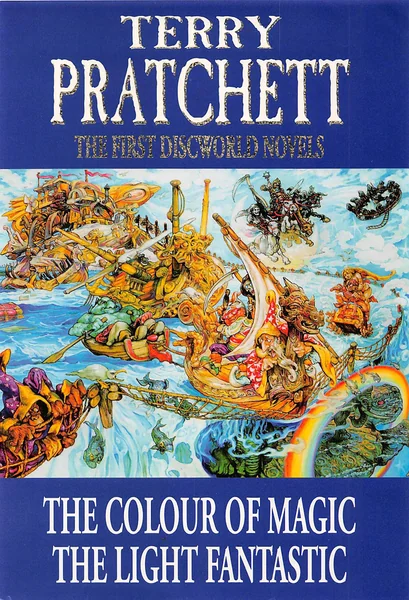
The Colour of Magic and The Light Fantastic by Terry Pratchett Review: A Riotous Start to Discworld
This Colin Smythe hardcover edition binds together the first two Discworld novels — The Colour of Magic and The Light Fantastic — giving readers the complete opening arc of Terry Pratchett's beloved fantasy comedy series in a single volume. Following the hapless wizard Rincewind and the irrepressibly naive tourist Twoflower across a flat world balanced on the backs of four elephants standing on a cosmic turtle, these novels established the satirical template that would sustain more than forty subsequent Discworld books. As Colin Greenland wrote in Imagine magazine, Pratchett does for sword and sorcery what Douglas Adams did for science fiction — a comparison that captures both the anarchic wit and the deep affection for genre that define the Discworld project from its very first pages.
LuvemBooks Verdict
Best for
Readers beginning the Discworld series who want the complete opening arc — both The Colour of Magic and The Light Fantastic — in a single durable hardcover, as well as established fans seeking a collected edition of the foundational texts.
Worth it if
You want to experience the origins of one of fantasy fiction's most beloved universes and appreciate comedy that is structurally embedded in character and world-building rather than merely decorative — Rincewind, Twoflower, and the Luggage are inventions that reward discovery from the very first pages.
Skip if
Readers who have come to the series through its later, more architecturally intricate entries — the Watch novels or the Tiffany Aching books, for instance — may find the freewheeling, episodic structure of these opening volumes a significant stylistic adjustment.
What readers & critics say
Kirkus Reviews praised The Light Fantastic as "that rare event, a comedy sequel that is twistier, plottier, and funnier than its predecessor," signalling that the two-book arc grows in ambition as it goes. Britannica characterises Pratchett's Discworld as "a deeply satirical and witty spoof on the fantasy genre," noting that the series developed a large and devoted following, especially in Britain.
“That rare event, a comedy sequel that is twistier, plottier, and funnier than its predecessor.”
— Kirkus ReviewsAsk LuvemBooks
1 user found this summary helpful
- Is it worth reading?
- For anyone beginning the Discworld series, this Colin Smythe hardcover is the natural entry point — it delivers the complete opening arc in a single, durable format and establishes the satirical world-building that sustains more than forty subsequent novels. The comedy is not merely decorative: it arises from character and situation, with Twoflower's incapacity to perceive danger and Rincewind's supernatural talent for survival through cowardice inverting every expectation the fantasy genre had trained readers to hold. The episodic structure of The Colour of Magic means it reads more loosely than later Discworld novels, but that picaresque quality is a feature of early Pratchett rather than a shortcoming. Established fans seeking a collected hardcover edition of the foundational texts will also find it a meaningful piece of publishing history, given that The Colour of Magic's first British printing ran to only 506 copies.
- Similar books
- Readers who enjoy these Discworld opener novels have several strong next reads. Within Pratchett's own catalogue, Mort — his fourth Discworld novel — is a natural progression, offering the same satirical wit applied to the figure of Death and his reluctant apprentice, with tighter plotting that rewards readers who found the opening volumes loosely structured. Making Money, a later Discworld entry, showcases the series at full maturity. Beyond Discworld, Good Omens (co-written by Terry Pratchett and Neil Gaiman) shares the anarchic comic sensibility, while The Hitchhiker's Guide to the Galaxy by Douglas Adams is the closest genre parallel — the comparison Colin Greenland drew in Imagine magazine holds up as a reading recommendation as much as a critical observation. John Scalzi's Redshirts and William Goldman's The Princess Bride round out the field for readers who love genre fiction that affectionately dismantles its own conventions.
- Who should read this?
- This volume is ideally suited to two groups: readers beginning the Discworld series who want the full opening arc in a single, durable hardcover format, and established Discworld fans seeking a collected edition of the foundational texts. Fantasy readers with a taste for satirical comedy — particularly those who enjoy works that demonstrate a thorough understanding of and genuine love for the genre being lampooned — will find exactly that here. Readers who prefer their fantasy tightly plotted may find the episodic structure of The Colour of Magic a mild adjustment, but it remains essential context for one of fantasy fiction's most enduring universes.
- About Terry Pratchett
- Terry Pratchett was a beloved British fantasy author, best known as the creator of the Discworld series. Celebrated for his satirical wit, he sold over 85 million books worldwide across his career.
- Where should I start with Discworld?
- This volume — collecting The Colour of Magic and The Light Fantastic — is the chronological starting point for the Discworld series and the natural choice for readers who want to begin at the beginning. It is worth noting, as the review acknowledges, that the freewheeling, episodic structure of these opening novels is characteristic of early Discworld rather than the series at its most architecturally complex; some readers find that later entry points like Mort (Book 4) offer tighter plotting as an alternative on-ramp. For those who want the full founding arc and the publishing history that comes with it — The Colour of Magic began with a British first printing of only 506 copies — this collected hardcover is the definitive starting place.
- How does this compare to other Pratchett novels?
- Within the Discworld series, The Colour of Magic and The Light Fantastic occupy a foundational but distinctive place: they are more loosely plotted and picaresque than the later novels Pratchett became celebrated for. The review notes that readers coming to these books after the Ankh-Morpork Watch novels or the Tiffany Aching sequence — both known for tight, architecturally complex construction — may find the episodic structure of the first book a stylistic adjustment. Making Money and Mort, both reviewed by LuvemBooks, represent the series at greater maturity; but the satirical template, the world-building density, and the structural embedding of comedy in character that define those later books are already present in recognisable form from the very first pages of this volume.
Summarize this book
Follow up
Synthesized from verified book data & published reviews · How we review
Press Enter to ask. Answers come from our editorial Q&A — start typing to see related questions.
Age & Reading Level
Recommended age
Adult
Reading level
Adult
who it suits
Skip if you prefer tightly plotted fantasy novels over episodic, picaresque comedy adventures.
Our Review
What These Books Actually Are
The Satirical Architecture of Discworld
Strengths: Comedy as Craft
Limitations: A Series Finding Its Footing
Who This Volume Is For
Sources & Further Reading
The key facts and claims in this review are grounded in the retrieved, verified sources listed below.
- Cited in this review
- 1
en.wikipedia.org
- 2
filmaffinity.com
- 3
- Further reading
- 4
Terry Pratchett, Wikipedia
- 5
- 6
- 7
righterofwords.com
- 8
- 9
- 10
Books like The Colour of Magic and The Light Fantastic
Curated picks for readers who enjoyed The Colour of Magic and The Light Fantastic, with our reasoning for each match.
More by Terry Pratchett