

8 min read
4.4
· 28,200 Amazon ratingsShare This Review
Our review
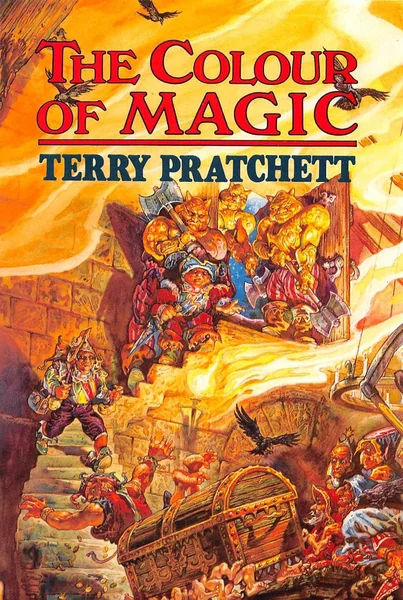
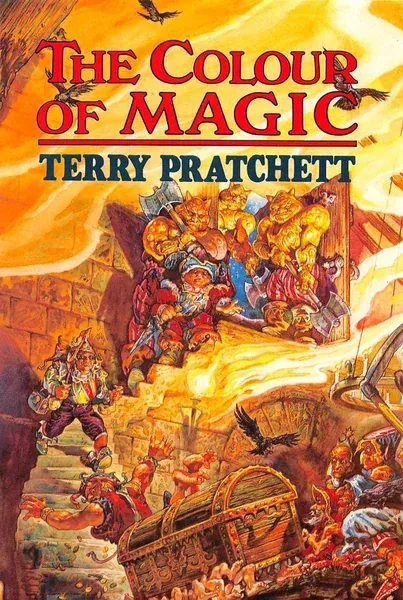
The Colour of Magic by Terry Pratchett Review: A Riotous Fantasy Parody That Started Everything
The Colour of Magic is the fantasy comedy novel by Terry Pratchett that launched the Discworld series, following hapless wizard Rincewind as he reluctantly shepherds Twoflower — the Disc's first tourist — through chaos, catastrophe, and cosmic absurdity. It is the book that introduced one of fiction's most beloved satirical universes, and its irreverent wit remains its greatest asset.
 Tap to enlarge
LuvemBooks Verdict
Best for
Readers new to Discworld who want to enter the series at its origin and enjoy satirical comedy fiction that uses fantasy genre conventions as raw material for jokes, in the tradition of Douglas Adams.
Worth it if
Worth reading if you enjoy satirical comic fiction that dismantles genre tropes with genuine structural wit and want to watch one of fantasy's most inventive universes take its first, irreverent shape.
Skip if
Skip it if you need a self-contained narrative with meaningful character development and a satisfying resolution — critics have openly noted the episodic structure offers no traditional arc, and Rincewind and Twoflower remain archetypes throughout.
What readers & critics say
Kirkus Reviews described the novel as a "madcap travelogue" built on Pratchett's characteristically wacky flat-Earth premise, capturing its freewheeling comic energy. Fantasy-Hive.co.uk noted that, for a book over 30 years old, it "stands the test of time fairly well," crediting Pratchett with mocking fantasy stereotypes decades before those tropes were considered well-worn.
“Madcap travelogue involving the disc's zany, often magical inhabitants — Pratchett's wacky flat-Earth yarn at its most freewheeling.”
— Kirkus ReviewsAsk LuvemBooks
Was this helpful?
- Is it worth reading?
- By the assessment of its critical champions, yes — with caveats. Dave Langford, writing in White Dwarf, called it 'one of those horrible, antisocial books which impel the reader to buttonhole friends and quote bits at them,' and Sam Jordison's 2015 reassessment in The Guardian concluded that it 'leaves me hungry for more,' endorsing it as the perfect series introduction despite its thin character development. Pratchett's comic timing and the sheer inventiveness of the Discworld's cosmology carry considerable momentum even for readers unfamiliar with the pre-1980s sword-and-sorcery tropes being lampooned. Those seeking emotional depth or tight narrative closure may find it a more limited experience, but as the launchpad for one of modern fantasy's most celebrated universes, its historical and entertainment value is hard to dispute.
- Similar books
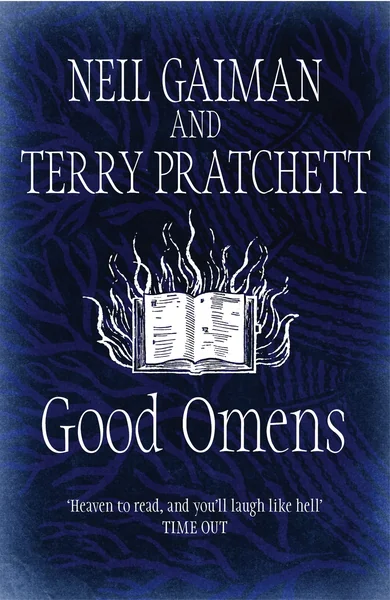
- Readers who enjoy The Colour of Magic's genre-deflating wit will find natural companions in the curated selection below. Good Omens, co-written by Terry Pratchett and Neil Gaiman, channels a very similar comic energy — absurdist, satirical, and deeply invested in puncturing grand mythological conceits. The Hitchhiker's Guide to the Galaxy by Douglas Adams is the benchmark comparison critics themselves reached for: Colin Greenland explicitly wrote that Pratchett does for sword and sorcery 'what Douglas Adams did for science fiction.' Diana Wynne Jones's Howl's Moving Castle shares the playful subversion of fantasy tropes, while Nicholas Eames's Kings of the Wyld and Travis Baldree's Legends & Lattes both demonstrate the lasting influence of comedic, self-aware fantasy that The Colour of Magic helped pioneer.
- Who should read this?
- The Colour of Magic is most immediately rewarding for fans of Douglas Adams, satirical fantasy, and comic fiction that uses established genre conventions as raw material for jokes — the novel's irreverent wit is its primary offering. Readers who want to enter the Discworld at the very beginning and watch the universe take its first shape will find it the natural starting point. Those seeking emotional depth, psychologically complex characters, or a self-contained narrative with traditional resolution may find this first installment more of an extended, gleeful prologue than a wholly satisfying standalone novel — a caveat its own critical champions have readily conceded.
- About Terry Pratchett
- Sir Terry Pratchett OBE (1948–2015) was an English author born in Beaconsfield, Buckinghamshire, best known for the satirical fantasy Discworld series.
- How does this compare to later Discworld books?
- Critical consensus holds that The Colour of Magic, while an essential and entertaining debut, is less fully realised than many of the Discworld novels that followed it. Rincewind and Twoflower are archetypes — the reluctant cynic and the incurable optimist — rather than deeply psychological figures, and the episodic, set-piece structure reflects the book's origins as a parody of anthology-style fantasy rather than a character-driven arc. Sam Jordison's 2015 reassessment in The Guardian acknowledged the debate around whether it is the ideal series entry point, noting that later books are more highly regarded by many readers, even while endorsing The Colour of Magic as 'still more than worth reading in and of itself.'
- What kind of satire is this?
- Pratchett himself described The Colour of Magic as 'an attempt to do for the classical fantasy universe what Blazing Saddles did for Westerns' — a framing that signals purposeful structural parody rather than gentle genre affection. The humour operates by wrapping genuine plot mechanics in absurdist logic: Twoflower's fire insurance scheme, for instance, functions simultaneously as farce and as sharp commentary on financial naivety and local venality, culminating in the arson-triggered conflagration that swallows all of Ankh-Morpork. Colin Greenland captured the ambition succinctly in Imagine magazine, comparing Pratchett's effect on sword-and-sorcery to what Douglas Adams achieved in science fiction — a benchmark that, as the review notes, has aged well.
- What is the Discworld cosmology?
- The Discworld is one of fantasy fiction's most genuinely original premises: a planet-sized flat disc carried through space on the backs of four gargantuan elephants — Berilia, Tubul, Great T'Phon, and Jerakeen — who in turn stand on the shell of Great A'Tuin, a gigantic star turtle. This cosmology is not merely decorative; it is the structural foundation for the series' satirical logic, allowing Pratchett to reimagine every fantasy convention from first principles. The inventiveness of this setup was widely praised by early critics and remains one of the novel's most durable strengths, carrying momentum even for readers unfamiliar with the specific pre-1990s fantasy tropes being lampooned.
Summarize this book
Follow up
Synthesized from verified book data & published reviews · How we review
Press Enter to ask. Answers come from our editorial Q&A — start typing to see related questions.
Our Review
What the Book Actually Is
The Satirical Ambition Behind It
Critical Reception and Enduring Reputation
Where It Stands as a Series Opener
Who This Book Is For
Sources & Further Reading
The key facts and claims in this review are grounded in the retrieved, verified sources listed below.
- Cited in this review
- 1
en.wikipedia.org
- 2
fantasy-hive.co.uk
- 3
- Further reading
- 4
Terry Pratchett, Wikipedia
- 5
- 6
terrypratchettbooks.com
- 7
rottentomatoes.com
- 8
adventureswithpeps.com
- 9
booksfortopics.com
Age & Reading Level
Recommended age
Adult
Reading level
Adult
Heat level
No sex scenes · no sexual content
Tropes
From how readers and romance sites describe it, not our own reading.
who it suits
Skip if you want a self-contained narrative with deep character development and a traditional resolution
Be one of the first readers to answer.
Read it? Was it right for you?
Reader reviews
No reader reviews yet
Read it? Be the first to say what you thought.
Books like The Colour of Magic
Curated picks for readers who enjoyed The Colour of Magic, with our reasoning for each match.

More by Terry Pratchett
If you liked The Colour of Magic


