Skip to content
Reviewed

Read Time

6 min read

Reader rating
4.4 · 3,339 Amazon ratings, as of Nov 2026
reader ratings, not a LuvemBooks score
Curated & edited by

LuvemBooks Editorial

How we create our reviews →
Share This Review
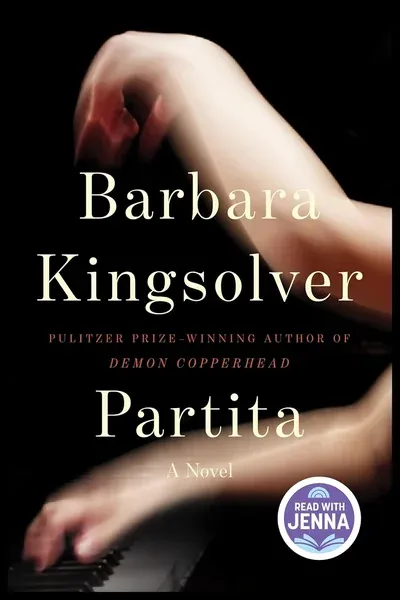
Partita: A Novel by Barbara Kingsolver front cover

Our review

Partita

Partita by Barbara Kingsolver Review: A Quiet Reckoning with Art

Kingsolver’s Partita follows Livia Cable, a former piano prodigy, as a past lover’s call forces her to confront a shattered career and complex loss. The novel offers a rich meditation on art and compromise that rewards patient readers, though its deliberate pacing may test those seeking immediate momentum.

LuvemBooks Verdict

Best for

Readers who appreciate patient, introspective storytelling will find a rich meditation on art and compromise through the journey of a former piano prodigy confronting a shattered career and complex loss.

Worth it if

Worth reading if you enjoy reflective narratives that weave classical music motifs into a richly drawn exploration of memory and regret.

Skip if

Skip it if you prioritize immediate plot momentum and brisk pacing, as the deliberate, slower opening may test your patience.

Where reviewers agree and split

Readers rate it 4.4 on Amazon. The reviews we read that discuss it in depth split on some points:

  • Mixed

    The Guardian · Press review: critiques overwrought prose but acknowledges thematic depth

  • Positive

    Los Angeles Times · Press review: praises the author's consistent warmth and narrative skill

  • Positive

    Southern Review of Books · Magazine: celebrates the novel's musical structure and profound emotional depth

Of the 3 reviews we read that discuss its prose, 2 praise the pithy, illuminating lines, but 1 critiques the overwrought romance scenes.

  • Prose

    2 praise the pithy, illuminating lines · 1 critiques the overwrought romance scenes

  • Characters

    2 praise the wry, resilient lead

Prose

Praise

“Flair for pithy sentences that illuminate the human experience”

— Los Angeles Times · Press review
Praise

“Flair for pithy sentences that illuminate the human experience”

— Bookmarks.reviews · Book blog
Criticism

“Breathless, overwrought prose runs through the account of Livia’s affair with Sigurd”

— The Guardian · Press review

Characters

Praise

“Tackles broad ideas by personalizing them through singular characters”

— Los Angeles Times · Press review
Praise

“Narrator of Kingsolver’s new novel, Partita, is wry, resilient and as forthcoming”

— Bookmarks.reviews · Book blog
Overall verdicts are our summary of each review we read, from its headline, rating and conclusion. Topic counts use only words we can quote (3 reviews: 2 press reviews, 1 book blog).

Critics generally praise Kingsolver’s nuanced character work and thematic depth, with the Los Angeles Times highlighting her 'flair for pithy sentences' and Southern Review of Books celebrating the novel's 'musical, moving' structure. However, The Guardian issues a mixed verdict, warning that 'breathless, overwrought prose' in the central romance threatens to destabilize the narrative.

“breathless, overwrought prose runs through the account of Livia’s affair with Sigurd”

— The Guardian

“flair for pithy sentences that illuminate the human experience”

— Los Angeles Times
Sources: The Guardian, Los Angeles Times, Southern Review of Books
4.4from 3,339 Amazon ratings, as of Nov 2026— reader ratings, not a LuvemBooks score

Hailey from Book Explained reviews Partita: A Novel

Hailey from Book Explained presents a comprehensive spoiler-free review and scorecard for Barbara Kingsolver's Partita.

A BookTube review by Book Explained, 2026 · 12 views · 27 subscribers · Watch on YouTube ·

Their views, not ours. The points are our AI summary of what they say, each playing from where they say it.

Musical structure and preludes

Hailey explains that the novel is structured like a partita, alternating short daily preludes in the present with longer dance-titled chapters set in the past.

Vivid depictions of music

Hailey highlights Kingsolver's prose for capturing classical pieces as physical imagery and making solitary piano practice feel dramatic.

Pacing lulls and political speeches

Hailey points out that several long flashback chapters drag unnecessarily and that Sigurd's political perspectives often feel like extended speeches.

Heavy content and external perspectives

Hailey warns of intense topics such as childhood abuse and grief, and notes a personal desire to have seen more from Charlie's perspective.

Ask LuvemBooks

Was this helpful?

Partita by Barbara Kingsolver follows former piano prodigy Livia Cable as a past lover’s call forces her to confront a shattered career and complex loss. The novel rewards patient readers, though its deliberate pacing may test those seeking immediate momentum. Best for readers who appreciate introspective storytelling and literary prose, it delivers a deeply moving character study that demands patience in its middle chapters but culminates in a satisfying emotional resolution.
Is it worth reading?
It is worth reading if you enjoy reflective narratives exploring memory and regret. Critics praise Kingsolver’s pithy, illuminating sentences and her ability to personalize broad ideas through singular characters, though some note that the prose around the central romance occasionally becomes overwrought. The book ultimately argues that artists follow their calling most fully when they integrate their art into a loving community.
Similar books
Readers who enjoy this blend of literary fiction, musical motifs, and character-driven introspection may also appreciate Interpreter of Maladies by Jhumpa Lahiri, The Goldfinch by Donna Tartt, and The Midnight Library by Matt Haig. While The Poisonwood Bible shares Kingsolver’s thematic depth, it is not currently linked in our catalog. For those seeking a comparison to another musician’s life, Jeff Giles’s Someone Saved My Life Tonight explores similar ground, though Kingsolver’s work focuses more on the quiet sacrifices of middle age.
Who should read this?
This novel is written for adults who appreciate patient narratives. It strongly appeals to readers interested in the intersection of classical music, artistic ambition, and middle-aged compromise. Those who prefer brisk, plot-heavy pacing or the visceral intensity of Kingsolver’s previous bestsellers may find its quiet, reflective tone difficult to sustain.
What age is it for?
This book is written for adults and contains mature themes including marital infidelity, artistic burnout, and the suicide of a sibling. It is not intended for younger readers due to its complex emotional landscape and adult subject matter.
What are the main themes?
Partita explores the transformative power of music and the lingering impact of trauma. It examines how creative passion intersects with everyday community life, suggesting that surviving in broken parts is an ordinary, perhaps lucky, human experience. The narrative also questions the role of art in an artist’s life and the dissonance between professional ambition and personal fulfillment.
How is the pacing?
The opening is deliberately slow, and reviewers note sluggish sections that only accelerate toward the end. While the Baroque structure and musical motifs create a deeply resonant framework, the pacing may test readers wanting quick plot movement.
Summarize this book

Summarize this book

Livia Cable, a rural school music teacher, has built a quiet life with her farmer husband until a phone call from a former college lover, Sigurd, fractures her peace. The narrative shifts between her present-day Tennessee life and her past at an Indiana conservatory, tracing how a hand injury, a complicated romance, and childhood trauma derailed her musical ambitions. Kingsolver structures the story like a Baroque dance suite, using classical music motifs to frame Livia’s internal life and her journey toward reconciling artistic passion with everyday community.

Follow up

How is the pacing?
Is the structure unusual?

Synthesized from verified book data & published reviews · How we review

Ask LuvemBooks

What would you like to know about Partita?

Answers come from our editorial notes on this book. If we haven't covered something, we'll say so.

Readers often ask

Our Review

We review the evidence: published critics, book bloggers and reader verdicts, gathered and weighed with AI assistance and edited by LuvemBooks, rather than one reader's first-hand take.
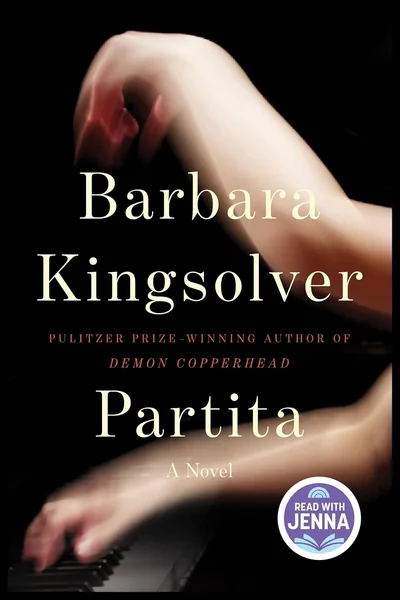
Barbara Kingsolver’s latest novel offers a rich, character-driven meditation on art and compromise, though readers seeking immediate plot momentum may find its deliberate pacing difficult to sustain.
Partita: A Novel by Barbara Kingsolver front cover
Kingsolver delivers a deeply moving exploration of artistic ambition and middle-aged compromise through the eyes of a former piano prodigy. Readers who appreciate nuanced character studies and literary prose will find the novel rewarding, provided they are willing to invest time in its slower opening.

The Premise of Partita

Livia Cable has built a contented life as a school music teacher in rural Tennessee. She remains married to a farmer who once worked on her father’s land.
Her quiet existence fractures when she receives a phone call from Sigurd, a former lover from her college years. The call forces her to confront a past defined by a brief, all-consuming affair and a shattered musical career.
Livia’s narrative shifts between her present-day life and her time as a conservatory student in Indiana. She recalls escaping her Appalachian roots to pursue a dream of becoming a world-class pianist.
A hand injury and a complicated relationship with Sigurd ultimately derailed those ambitions. The novel traces how childhood trauma, including the suicide, continues to shape her adult identity.

Kingsolver’s Musical and Emotional Architecture

Kingsolver structures the narrative like a Baroque dance suite, with chapters named Allemande, Toccata, Sarabande, and Fugue. The author uses classical music to frame Livia’s internal life and her relationships.
Ravel’s Gaspard de la Nuit serves as a central motif, symbolizing the technical virtuosity Livia once possessed and the passion she lost. Critics note that the novel grapples seriously with the role of art in an artist’s life.
The Guardian observes that the book is a "quieter book, slower to get going and to make its world enticing." BookBrowse highlights how the author captures the dissonance classical artists often feel between professional ambition and personal fulfillment.
Their presence allows the narrative to examine how classical training can coexist with personal expression. Kingsolver writes with a flair for pithy sentences that illuminate private vulnerabilities.
The Los Angeles Times praises her ability to personalize broad ideas through singular characters.

Pacing and Prose: Where the Novel Stumbles

Despite its literary merits, the novel demands patience from its audience. The pacing only accelerates toward a heart-hammering final third.
A reviewer for Bookmarks.reviews points out that the book "has a few sluggish chapters, but they fall in the middle." Kingsolver’s prose also draws mixed reactions regarding its handling of intimacy.
The Guardian criticizes the breathless, overwrought prose in the account of Livia’s affair with Sigurd. The reviewer warns that this writing threatens to throw the entire novel off-kilter.
Ink and Imaginings acknowledges that the narrative contains moments of Thomas Hardy sadness but praises the wonderfully done ending.

Is Partita Worth Reading for Contemporary Audiences?

Across critical assessments, Partita emerges as a rewarding but demanding read. It appeals strongly to readers who enjoy slow-burn literary fiction and character-driven narratives.
The novel shares thematic ground with Jeff Giles’s Someone Saved My Life Tonight, which also explores the lives of musicians. However, Kingsolver’s work focuses more intently on the quiet sacrifices of middle age rather than Hollywood spectacle.
Readers who prioritized the immediate, visceral momentum of Demon Copperhead may find this quieter, more reflective book less engaging. The novel ultimately argues that artists often follow their calling most fully when they integrate their art into a loving community.
It suggests that surviving in broken parts is an ordinary, perhaps lucky, human experience.

Sources & Further Reading

The key facts and claims in this review are grounded in the retrieved, verified sources listed below.

  1. 1

    Barbara Kingsolver, LuvemBooks

  2. 2
  3. 3
  4. 4

    barbarakingsolver.com

  5. 5
  6. 6
  7. 7
  8. 8
  9. 9
  10. 10

Age & Reading Level

Content to know about

sibling suicide
marital infidelity
artistic burnout

Skip if you prioritize immediate plot momentum and brisk pacing, as the deliberate, slower opening may test your patience.

From our readers

Reader reviews

No LuvemBooks readers have answered yet.

Read it? Was it right for you?

Discussion

Reader comments