

8 min read
Share This Review
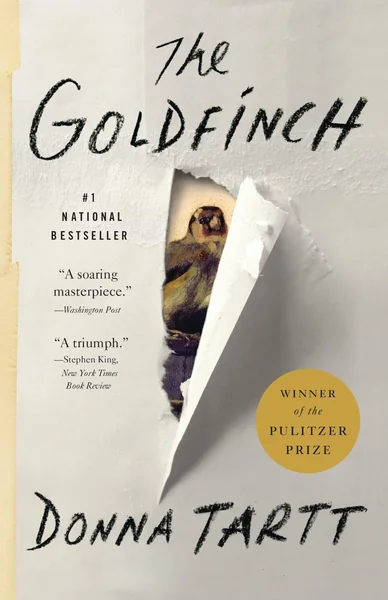
The Goldfinch by Donna Tartt Review: Pulitzer-Winning Novel of Grief and Beauty
Donna Tartt's novel The Goldfinch won the Pulitzer Prize for Fiction in 2014, following thirteen-year-old Theodore Decker from a devastating terrorist attack at the Metropolitan Museum of Art through the years of moral and emotional upheaval that follow — all anchored by his secret possession of a masterwork of Dutch Golden Age painting. Reception was sharply polarized, with major outlets ranging from rapturous to scathing, making it one of the most debated literary novels of its decade.
LuvemBooks Verdict
Best for
Readers drawn to large-canvas, nineteenth-century-style literary fiction who want a novel that weaves art history, grief, friendship, and moral ambiguity across an expansive, immersively plotted narrative.
Worth it if
You respond to fiction that pursues philosophical and emotional depth through dense, sensory storytelling and are willing to commit to a 771-page novel that earns its scope.
Skip if
You prefer tightly plotted, economically written prose — the novel's considerable length and its sprawling detours through Las Vegas and Amsterdam have tested even sympathetic readers.
What readers & critics say
The novel won the 2014 Pulitzer Prize for Fiction and earned starred reviews from critical coverage and critical coverage, with npr.org calling it "Dickensian both in the ambition of its jumbo, coincidence-laced plot, as well as in its symphonic range of emotions." Critical dissent was equally forceful: theguardian.com found it a "Harry Potter tribute novel" whose juggernaut sometimes loses track of what is driving it forward, and vanityfair.com documented the sharp divide between ecstatic praise and pointed dismissal that has defined the novel's reception.
“No other word will do: Donna Tartt's The Goldfinch is Dickensian in the ambition of its jumbo, coincidence-laced plot and its symphonic range of emotions.”
— NPR“I don't know what I was expecting, but a Harry Potter tribute novel was definitely not it — it feels as if Tartt simply forgets what's driving her juggernaut forwards.”
— The GuardianAsk LuvemBooks
Was this helpful?
- Is it worth reading?
- For readers drawn to immersive, densely populated literary fiction in the tradition of the nineteenth-century novel, The Goldfinch is a major achievement — it won the 2014 Pulitzer Prize for Fiction and earned starred reviews from both Booklist and Kirkus, with French and Dutch outlets calling it 'masterful' and 'a great bewitching novel.' The key caveat is length and ambition: critics also called it 'overlong and tediously Potteresque,' and The Paris Review stated flatly that 'a book like The Goldfinch doesn't undo any clichés — it deals in them.' It is not a novel that generates indifference, which is itself a kind of recommendation — but readers who prefer tightly plotted or economically written prose may find its scope a genuine obstacle.
- Similar books
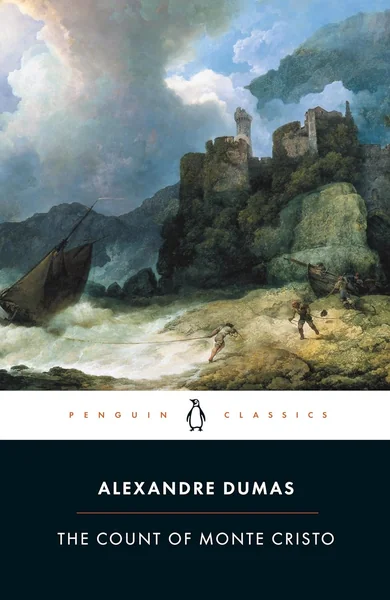
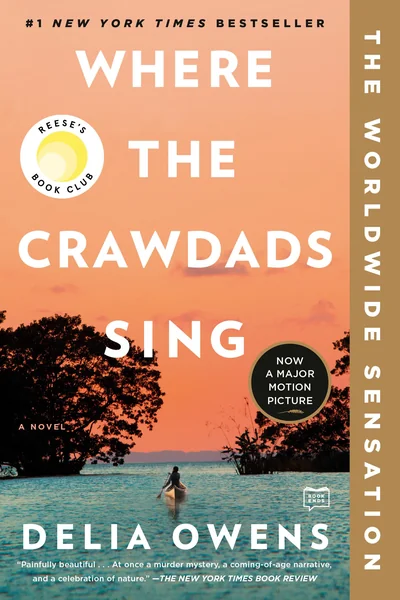
- Readers who responded to The Goldfinch's blend of literary ambition, grief, and moral complexity will find kindred spirit in several of the related titles curated below. J. D. Salinger's The Catcher in the Rye shares Theo Decker's retrospective coming-of-age narration and tone of alienated moral searching. Alexandre Dumas's The Count of Monte Cristo echoes The Goldfinch's large-canvas plotting, moral reckoning, and sheer narrative sweep across years and continents. For a more contemporary register, Eleanor Oliphant Is Completely Fine by Gail Honeyman and Where the Crawdads Sing by Delia Owens both combine emotional depth with a strong sense of place and character-driven storytelling, while Matt Haig's The Midnight Library offers a more accessible but thematically resonant meditation on loss and the choices that define a life.
- Who should read this?
- The Goldfinch is written for adult readers with an appetite for large-canvas literary fiction — those who enjoy moral and philosophical questions pursued through immersive, densely populated storytelling in the tradition of the nineteenth-century novel. It will particularly reward readers interested in art history, grief as a narrative subject, and the moral underworld of the antiques trade. Readers who responded to the emotional and thematic ambition of works like The Catcher in the Rye or The Count of Monte Cristo — and who are unbothered by considerable length — are its natural audience. Those who prefer tightly plotted or economically written prose are explicitly the readers most likely to find its scope an obstacle.
- About Donna Tartt
- Born in Greenwood, Mississippi, and educated at Bennington College, Pulitzer Prize winner Donna Tartt has established herself as one of America's most celebrated contemporary novelists.
- What are the main themes?
- At its core, The Goldfinch is a meditation on grief, beauty, and the moral weight of loss — anchored by Theo Decker's decades-long secret possession of Carel Fabritius's painting. Art functions throughout as what critics have called 'a touchstone of order,' with the transformative power of beauty positioned as both a source of meaning and a burden. The novel also operates as a coming-of-age story, a crime narrative rooted in the antiques underworld, and — according to one Buzzfeed critic cited in Wikipedia's reception summary — simultaneously 'a crime novel, an art history thesis, an LGBTQ coming-of-age story, and a meditation on toxic masculinity.' Donna Tartt has said its genesis lay in the Taliban's destruction of the Bamiyan Buddha statues: the idea that something irreplaceable and beautiful could simply be taken away.
- How was it received by critics?
- Reception was sharply and unusually polarized, making The Goldfinch one of the most debated literary novels of its decade. On the positive side, it won the 2014 Pulitzer Prize for Fiction, earned starred reviews from Booklist and Kirkus, and was praised by Le Monde as 'a great bewitching novel' and by Télérama as 'masterful'; Dutch daily De Telegraaf called it 'a rich, very readable novel.' Against that, critics called it 'overlong and tediously Potteresque,' The Sunday Times of London declared it 'a turkey,' The Paris Review stated it 'deals in clichés,' and Dutch paper NRC Handelsblad awarded it two out of five stars. The sections set outside New York drew particular criticism even from some who admired the novel overall.
- Is it a good book club pick?
- The Goldfinch is an outstanding book club pick for groups willing to engage with its length and ambition. Its polarizing critical reception — Pulitzer Prize winner on one side, 'a turkey' on the other — virtually guarantees divergent responses within any group, and its layered themes of grief, moral corruption, art, friendship, and beauty give a club ample material for discussion. The novel's considerable scope (spanning New York, Las Vegas, and Amsterdam) and its roots in a real, historically resonant painting also lend themselves to rich contextual conversation beyond the text itself.
Summarize this book
Follow up
Synthesized from verified book data & published reviews · How we review
Press Enter to ask. Answers come from our editorial Q&A — start typing to see related questions.
Age & Reading Level
Recommended age
Ages 16+
Reading level
Adult
4 content notes · who it suits
Content to know about
Best for: Adults / mature 16+ — themes of drug addiction, criminal violence, parental loss, and moral corruption across a narratively complex, 771-page literary novel.
Skip if you prefer tightly plotted or economically written prose — the novel's expansive scope across decades and three continents is its defining quality, for better or worse.
Our Review
What the Novel Is and What It Contains
The Novel's Origins and Significance
Strengths Recognized Across the Reception
Genuine Criticisms and the Polarized Debate
Who This Novel Is For
Sources & Further Reading
The key facts and claims in this review are grounded in the retrieved, verified sources listed below.
- Cited in this review
- 1
en.wikipedia.org
- 2
- Further reading
- 3
Donna Tartt, Wikipedia
- 4
- 5
thepointpress.org
- 6
thischickreads.com
- 7
thecentipede.org
- 8
- 9
Books like The Goldfinch
Curated picks for readers who enjoyed The Goldfinch, with our reasoning for each match.
If you liked The Goldfinch
Why It’s Trending
The Goldfinch Is Back in Readers' Conversations — Here's Why
Donna Tartt's Pulitzer Prize-winning novel is getting fresh attention again, likely driven by renewed interest in Tartt's work and ongoing discussion of her back catalog. If you've been curious about this divisive literary heavyweight, now's a good time to dive in.