BOOKS
Published

Read Time

3 min read

Curated & edited by

LuvemBooks Editorial

How we create our reviews →
Share This Review

The Taste of Country Cooking: 50th Anniversary Edition by Edna Lewis Review: A Landmark Cookbook Reissued for a New Generation

Edna Lewis's The Taste of Country Cooking, first published in 1976, is widely regarded as one of the most important American cookbooks of the twentieth century — a seasonal, memoir-threaded record of the food traditions Lewis learned growing up in Freetown, Virginia. This 50th Anniversary Edition, published by Knopf in May 2026, arrives with a new design and a foreword by historian and author Toni Tipton-Martin, giving a new generation of cooks a fresh entry point into a book that The Washington Post credits with inspiring the now-ubiquitous farm-to-table movement. This review assesses the book's content, structure, and critical record from published sources — not from a kitchen test.

LuvemBooks Verdict

Best for

Readers drawn to the intersection of food writing and cultural history, particularly those interested in seasonal and regional American cooking, Southern culinary tradition, and cookbooks that carry genuine literary and memoir-like depth.

Worth it if

You want a cookbook that works simultaneously as cultural document and practical seasonal guide — one that rewards careful attention to sourcing, season, and the philosophy of cooking as much as the recipes themselves.

Skip if

If you already own a previous edition and are hoping for new recipes, the substantive additions here are limited to the redesign and Toni Tipton-Martin's foreword; and if you're after quick, pantry-flexible weeknight cooking, Lewis's hyper-seasonal, farm-rooted approach will likely frustrate more than inspire.

BookPage calls the 50th Anniversary Edition "both retro and modern," praising its personal touches, focus on garden-fresh ingredients, and Toni Tipton-Martin's "insightful new foreword," and notes it "continues to be the primer for the recipes and foods that define the American South." Kitchen Arts & Letters describes it as "a stunning 50th-anniversary edition of one of the most beloved cookbooks of all time," crediting Lewis with having "proudly announced the food of the American South as one of the world's great cuisines."

Both retro and modern, with its personal touches, focus on garden-fresh ingredients and an insightful new foreword by Toni Tipton-Martin.

BookPage

Continues to be the primer for the recipes and foods that define the American South.

BookPage

I will never forget spring mornings in Virginia" — the chef Edna Lewis's pioneering 1976 cookbook continues to inspire.

NYTimes.com
Sources: BookPage, Kitchen Arts & Letters, The New York Times, Southern Living

Look inside the book

Preview the actual pages, via Google Books
In This Review
  • What Works & What Doesn't
  • What the Book Actually Is
  • The Book's Place in American Food Culture
  • Strengths: Voice, Seasonal Structure, and Cultural Significance
  • The 50th Anniversary Edition: What's New
  • Who This Book Is For — and One Honest Limitation

What Works & What Doesn't

What Works
  • Organised around the agricultural calendar, structuring recipes within a coherent seasonal and cultural philosophy that The Washington Post credits with inspiring the farm-to-table movement
  • Carries extraordinary critical pedigree: inducted into the James Beard Foundation Cookbook Hall of Fame and praised by Saveur, Food & Wine, Bon Appétit, San Francisco Chronicle, and NPR, among others
  • The 50th Anniversary Edition adds a foreword by Toni Tipton-Martin, a historian whose scholarly focus on Black American culinary tradition brings meaningful new context to Lewis's work
  • Operates simultaneously as a cookbook and a memoir of Freetown, Virginia — giving it a literary and cultural depth rare in the genre
  • Available in a Kindle edition with enhanced typesetting, X-Ray, and Screen Reader support, expanding accessibility for digital readers
What Doesn't
  • Lewis's recipes are grounded in the seasonal, hyper-local produce of rural Virginia — readers without access to farm-fresh or regional ingredients may find the book's core philosophy difficult to fully realise
  • Readers who own a previous edition will find that the substantive new material is limited to the foreword and redesign; the recipe content itself is unchanged from prior editions
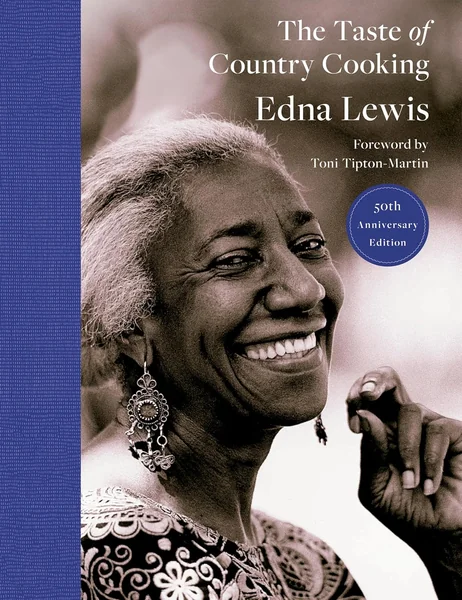
A half-century after its original publication, Edna Lewis's The Taste of Country Cooking remains, as Saveur has put it, "widely hailed as one of the most important cookbooks of the twentieth century" — a status this anniversary edition does nothing to diminish.
The Taste of Country Cooking: 50th Anniversary Edition: A Cookbook by Edna Lewis front cover

What the Book Actually Is

The Taste of Country Cooking is a seasonal cookbook rooted in the food traditions of Freetown, Virginia, the rural community where Edna Lewis grew up. The cookbook is organised around the agricultural calendar — the food of each season driving both the recipes and the narrative that surrounds them. Its origins are well documented: editor Judith Jones, fascinated by Lewis's recollections of life in Freetown, encouraged her to build a cookbook around those stories. The result, first published in 1976, is as much a memoir of a place and a people as it is a collection of recipes. The New York Times, in a 2026 piece marking this anniversary edition, quotes its opening line directly: "I will never forget spring mornings in Virginia." That sentence sets the governing spirit of a book in which food and memory are inseparable.
the most beloved Southern cookbook of all time: a glorious celebration of seasonal eating that has shaped generations of home cooks.

The Book's Place in American Food Culture

Few cookbooks have earned the kind of sustained critical weight this one carries. The Washington Post has credited Lewis with inspiring the farm-to-table movement by championing local, seasonal ingredients and the virtues of growing one's own food — ideas that now permeate professional and home cooking alike. Food & Wine has stated that "it's impossible to overstate the importance of Edna Lewis in the pantheon of American chefs," and San Francisco Chronicle named her "the grand dame of Southern cooking." Critical coverage has called her "the first lady of Southern cooking." Lewis's books — including this one — were inducted into the James Beard Foundation Cookbook Hall of Fame, and she was commemorated with a United States Postal Service postage stamp. The 50th anniversary edition joins a lineage of reissues that includes a 30th anniversary edition featuring a foreword by Alice Waters; this edition adds a new foreword by Toni Tipton-Martin, a historian and author whose scholarly focus on Black American culinary tradition makes her a particularly fitting voice for the occasion.

Strengths: Voice, Seasonal Structure, and Cultural Significance

What distinguishes this cookbook from a purely technical manual is the depth of perspective Lewis brings to the subject. Alexander Smalls, writing in Bon Appétit, described Lewis's central achievement this way: "And that's the greatest gift she gives: a new way to think about the art of cooking." The seasonal organisation is not merely a structural choice — it reflects Lewis's argument that the best cooking is inseparable from time, place, and the land that produces ingredients. That philosophy, embedded in a book grounded in the specific rhythms of a Black Southern community in Virginia, gives it a cultural and historical dimension that few cookbooks achieve. Penguinrandomhouse.com's publisher description calls it "the most beloved Southern cookbook of all time: a glorious celebration of seasonal eating that has shaped generations of home cooks."

The 50th Anniversary Edition: What's New

Knopf's 2026 edition presents the cookbook with a new design and a new foreword by Toni Tipton-Martin, whose work on the history and legacy of Black American cooking — including her own James Beard Award–winning books — positions her to contextualise Lewis's contributions with scholarly precision. Critics noted the repackaging directly in its May 2026 coverage, describing it as "a new design and a foreword by the historian and author Toni Tipton-Martin." The Kindle edition supports enhanced typesetting, X-Ray, and Screen Reader functionality, making it accessible in digital format. For readers who already own an earlier edition, the substantive additions are the foreword and the redesign; the recipes themselves are Lewis's originals.

Who This Book Is For — and One Honest Limitation

Readers drawn to the intersection of food writing and cultural history, to seasonal and regional American cooking, and to cookbooks that carry genuine literary weight will find this edition as essential as its predecessors. It is also a natural choice for anyone building a serious reference shelf of American food literature. The honest limitation worth naming: Lewis's cooking is rooted in the seasonal availability of ingredients specific to the rural Virginia of her upbringing. Readers in urban settings or those without access to farm-fresh seasonal produce may find that some of the book's underlying philosophy requires adaptation to their circumstances — not a flaw in the text, but a practical consideration the book itself does not resolve. The recipes are written for a reader willing to think carefully about sourcing and season, not one seeking quick, pantry-flexible weeknight solutions.

Sources & Further Reading

The key facts and claims in this review are grounded in the retrieved, verified sources listed below.

  1. Cited in this review
  2. 1
  3. 2
  4. 3
  5. Further reading
  6. 4
  7. 5
  8. 6
  9. 7
  10. 8