8 min read
Share This Review
The Taste of Country Cooking: 50th Anniversary Edition by Edna Lewis Review: A Landmark Cookbook Reissued for a New Generation
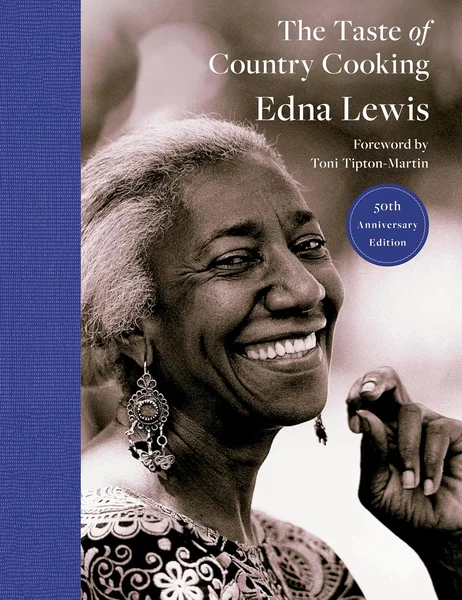
Edna Lewis's The Taste of Country Cooking, first published in 1976, is widely regarded as one of the most important American cookbooks of the twentieth century — a seasonal, memoir-threaded record of the food traditions Lewis learned growing up in Freetown, Virginia. This 50th Anniversary Edition, published by Knopf in May 2026, arrives with a new design and a foreword by historian and author Toni Tipton-Martin, giving a new generation of cooks a fresh entry point into a book that critical coverage credits with inspiring the now-ubiquitous farm-to-table movement. This review assesses the book's content, structure, and critical record from published sources — not from a kitchen test.
LuvemBooks Verdict
Best for
Readers drawn to the intersection of food writing and cultural history, particularly those interested in seasonal and regional American cooking, Southern culinary tradition, and cookbooks that carry genuine literary and memoir-like depth.
Worth it if
You want a cookbook that works simultaneously as cultural document and practical seasonal guide — one that rewards careful attention to sourcing, season, and the philosophy of cooking as much as the recipes themselves.
Skip if
If you already own a previous edition and are hoping for new recipes, the substantive additions here are limited to the redesign and Toni Tipton-Martin's foreword; and if you're after quick, pantry-flexible weeknight cooking, Lewis's hyper-seasonal, farm-rooted approach will likely frustrate more than inspire.
What readers & critics say
BookPage calls the 50th Anniversary Edition "both retro and modern," praising its personal touches, focus on garden-fresh ingredients, and Toni Tipton-Martin's "insightful new foreword," and notes it "continues to be the primer for the recipes and foods that define the American South." Kitchen Arts & Letters describes it as "a stunning 50th-anniversary edition of one of the most beloved cookbooks of all time," crediting Lewis with having "proudly announced the food of the American South as one of the world's great cuisines."
“Both retro and modern, with its personal touches, focus on garden-fresh ingredients and an insightful new foreword by Toni Tipton-Martin.”
— BookPage“Continues to be the primer for the recipes and foods that define the American South.”
— BookPage“I will never forget spring mornings in Virginia" — the chef Edna Lewis's pioneering 1976 cookbook continues to inspire.”
— NYTimes.comAsk LuvemBooks
Was this helpful?
- Is it worth reading?
- For readers drawn to the intersection of food writing and cultural history, this is one of the most essential American cookbooks of the twentieth century — a verdict supported by its induction into the James Beard Foundation Cookbook Hall of Fame and sustained praise from Saveur, Food & Wine, Bon Appétit, The Washington Post, the San Francisco Chronicle, and NPR, among others. Alexander Smalls, writing in Bon Appétit, described Lewis's central achievement as giving readers "a new way to think about the art of cooking," and The Washington Post credits her with inspiring the farm-to-table movement. The honest caveat is that the book's philosophy is tied to the seasonal, hyper-local ingredients of rural Virginia — readers without access to farm-fresh produce may find some of that philosophy requires real-world adaptation.
- Similar books
- Readers who respond to The Taste of Country Cooking's blend of memoir, cultural history, and seasonal philosophy will find natural companions in a handful of landmark American food books. Toni Tipton-Martin's own James Beard Award–winning work on the history of Black American cooking shares Lewis's scholarly grounding in that tradition. Other touchstones in the canon of literary, place-rooted cookbooks include works from the broader Southern and regional American food writing tradition. The 30th Anniversary Edition of this very book included a foreword by Alice Waters, whose own writing on California seasonal cooking grows from the same farm-to-table roots Lewis helped establish.
- Who should read this?
- This book is essential for anyone building a serious reference shelf of American food literature, and a natural choice for readers drawn to the intersection of food writing and cultural history, seasonal and regional American cooking, and cookbooks with genuine literary weight. It is also particularly well-suited for those interested in the history of Black American culinary traditions — a dimension that Toni Tipton-Martin's new foreword explicitly contextualises. Readers seeking quick weeknight recipes or pantry-flexible cooking guides should look elsewhere; the book's philosophy demands engagement with sourcing, season, and place.
- How has the book been received critically?
- The critical reception is remarkable for its consistency and longevity. Saveur has called it "widely hailed as one of the most important cookbooks of the twentieth century," Food & Wine has stated that "it's impossible to overstate the importance of Edna Lewis in the pantheon of American chefs," and the San Francisco Chronicle named her "the grand dame of Southern cooking." Lewis's books were inducted into the James Beard Foundation Cookbook Hall of Fame, she was commemorated with a United States Postal Service postage stamp, and The Washington Post credits her with inspiring the farm-to-table movement — a legacy that now permeates both professional and home cooking.
- Why does Toni Tipton-Martin write the foreword?
- Toni Tipton-Martin is a historian and author whose scholarly focus is the history and legacy of Black American cooking — a field in which she has earned her own James Beard Award–winning recognition. That expertise makes her a particularly fitting voice to contextualise Lewis's contributions in this anniversary edition, providing the kind of scholarly precision that goes beyond a celebratory introduction. The previous major reissue, the 30th Anniversary Edition, featured a foreword by Alice Waters; Tipton-Martin's appointment for the 50th signals a deliberate emphasis on the cultural and historical dimensions of Lewis's work.
- Is the Kindle edition a good option?
- The Kindle edition supports enhanced typesetting, X-Ray, and Screen Reader functionality, making it a genuinely accessible digital option — particularly for readers who use assistive technology. For a book whose value lies as much in its prose and cultural narrative as in its recipes, a digital format is a reasonable alternative to the print edition. Readers who prioritise the physical design of the 50th Anniversary Edition's new presentation from Knopf may still prefer the print version.
Summarize this book
Follow up
Synthesized from verified book data & published reviews · How we review
Press Enter to ask. Answers come from our editorial Q&A — start typing to see related questions.
Age & Reading Level
Recommended age
Adult
Reading level
Adult
who it suits
Skip if you're looking for quick, pantry-flexible weeknight recipes rather than a seasonal, place-rooted cooking philosophy.
Our Review
What the Book Actually Is
The Book's Place in American Food Culture
Strengths: Voice, Seasonal Structure, and Cultural Significance
The 50th Anniversary Edition: What's New
Who This Book Is For — and One Honest Limitation
Sources & Further Reading
The key facts and claims in this review are grounded in the retrieved, verified sources listed below.
- Cited in this review
- 1
en.wikipedia.org
- 2
- 3
kitchenartsandletters.com
- Further reading
- 4
- 5
- 6
- 7
- 8
Books like The Taste of Country Cooking
Curated picks for readers who enjoyed The Taste of Country Cooking, with our reasoning for each match.
If you liked The Taste of Country Cooking