BOOKS
Published

Read Time

3 min read

Curated & edited by

LuvemBooks Editorial

How we create our reviews →
Share This Review

Run Fast. Eat Slow. by Shalane Flanagan & Elyse Kopecky Review: A New York Times Bestselling Athlete's Cookbook

Run Fast. Eat Slow.: Nourishing Recipes for Athletes is a New York Times bestselling cookbook co-authored by four-time Olympian and New York City Marathon champion Shalane Flanagan and chef and nutrition coach Elyse Kopecky, built around the argument that whole, indulgent foods and elite athletic performance are not in conflict. Published by Rodale Books in 2016, it became a landmark in the sports-nutrition cookbook space and earned praise from Olympic champions Joan Benoit Samuelson and Meb Keflezighi. This review assesses the book's content, structure, and documented reception from published sources — not a kitchen test.

LuvemBooks Verdict

Best for

Runners and endurance athletes who have been conditioned to eat less and want a practical, whole-foods cookbook that argues nourishment and performance are the same goal — especially those new to the idea that fat, flavor, and indulgence belong in a training diet.

Worth it if

You're an active person or runner looking for flavorful, whole-foods recipes — from Superhero Muffins to race-day bars and power bowls — and you want a philosophy-first cookbook backed by genuine elite-athlete authority rather than a macro-counting manual.

Skip if

You're looking for quantified macro targets, periodized nutrition programming, or sport-specific fueling protocols — or you're already deeply fluent in whole-foods cooking and are unlikely to find the foundational "fat is good" argument revelatory.

What readers & critics say

Barnes & Noble's product page quotes Olympic marathon champion Joan Benoit Samuelson calling it "a true runner's kitchen companion" with "sound advice and delicious and nutritious recipes," and confirms its New York Times bestseller status. Her Campus (Drexel) reviewed the book positively, noting its focus on ingredients athletes love — especially fat — and its guidance on relieving common female-runner issues like GI stress and amenorrhea, while observing the cookbook extends well beyond athletes to anyone seeking whole-foods eating.

Sources: Barnes & Noble, Her Campus (Drexel)
4.8from 2,065 Amazon ratings— reader ratings, not a LuvemBooks score

Look inside the book

Preview the actual pages, via Google Books
In This Review
  • What Works & What Doesn't
  • What the Book Is and What It Argues
  • The Credentials Behind the Concept
  • What the Recipes Are Designed to Do
  • Reception and Cultural Footprint
  • Who Will Get the Most From It — and Who May Not

What Works & What Doesn't

What Works
  • Co-authored by four-time Olympian Shalane Flanagan and chef-nutritionist Elyse Kopecky, lending the book rare dual authority in both elite athletic performance and culinary craft
  • Became a New York Times bestseller, with endorsements from Olympic marathon champions Joan Benoit Samuelson and Meb Keflezighi confirming its standing in elite running circles
  • Centers Kopecky's 'indulgent nourishment' philosophy, directly countering restrictive diet trends historically pushed at female athletes
  • Covers a wide practical range — from Superhero Muffins and race-day bars to grain salads, power bowls, smoothies, and homemade pizza — designed to fuel training without sacrificing flavor
What Doesn't
  • Readers seeking quantified macro targets or periodized nutrition programming will find the book's approach — recipe-driven and philosophy-forward — does not meet those expectations
  • Those already fluent in whole-foods cooking may find the book's foundational argument more familiar than revelatory, limiting its impact for experienced natural-foods cooks
A cookbook that reframes athletic nutrition not as deprivation but as whole-foods abundance, Run Fast. Eat Slow. became a New York Times bestseller by doing what few sports-nutrition books attempt: making the case that fat, flavor, and indulgence belong in an elite training diet.

What the Book Is and What It Argues

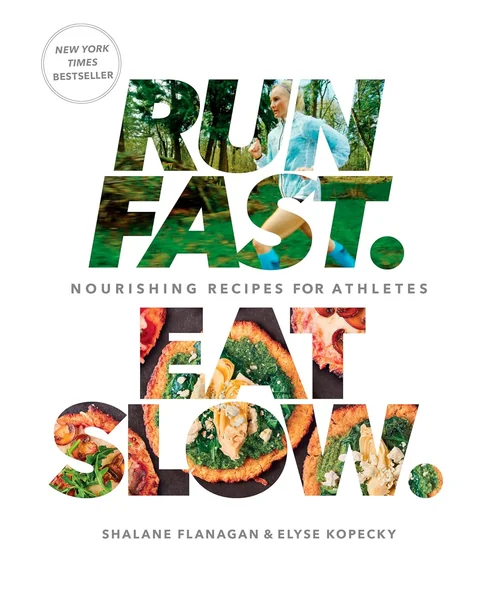
Run Fast. Eat Slow.: Nourishing Recipes for Athletes: A Cookbook by Shalane Flanagan, Elyse Kopecky front cover
Run Fast. Eat Slow.: Nourishing Recipes for Athletes is a cookbook co-authored by Shalane Flanagan — four-time Olympian and New York City Marathon champion — and Elyse Kopecky, a chef, speaker, and nutrition coach. Its central argument, built around Kopecky's "indulgent nourishment" food philosophy, is that whole, flavor-forward foods can simultaneously satisfy and fuel athletic performance. The book positions itself as a direct counterweight to what its publisher describes as a culture of processed foods, factory-farmed meats, and produce shipped from halfway around the world. Rather than prescribing restriction, the authors make the case that runners and active people should eat more of the right things — not less of everything.

The Credentials Behind the Concept

The pairing of Flanagan and Kopecky gives the book an unusual authority. Flanagan brings the athlete's perspective: a training and racing career at the absolute top of American distance running. Kopecky brings the culinary infrastructure — recipe development, nutritional grounding, and the practical kitchen knowledge to translate elite fueling principles into home-cookable meals. That combination is exactly what distinguishes the book from both the generic healthy-eating cookbook and the sports-science manual. Joan Benoit Samuelson, the first-ever women's Olympic marathon champion, called it "a true runner's kitchen companion" and praised its sound advice alongside its recipes. Four-time US Olympian and Boston Marathon champion Meb Keflezighi recommended it to anyone wanting to excel in running or maintain an active lifestyle — endorsements that reflect the book's standing within elite running circles, not merely its commercial reach.

What the Recipes Are Designed to Do

The cookbook's recipes are written to deliver fuel and nutrition without sacrificing taste. The range spans everyday staples and training-specific fare: the authors' signature Superhero Muffins, energizing smoothies, grain salads, veggie-loaded power bowls, homemade pizza, and race-day bars are among the dishes the book is built around. The design intent throughout is whole-foods cooking that is both indulgent and nourishing — a deliberate refusal of the low-fat, low-calorie orthodoxy that has historically dominated advice aimed at female athletes in particular. The publisher notes the book addresses the problem of misleading diet trends pushed at young female athletes, and the recipe selection reflects that corrective purpose.

Reception and Cultural Footprint

The book became a New York Times bestseller — a distinction confirmed across its publisher's own materials — and its success was substantial enough to generate a follow-up cookbook. That sequel was described by the publisher as building on the lesson Run Fast. Eat Slow. taught runners: that healthy food could be both indulgent and nourishing. Few sports-nutrition cookbooks achieve that level of commercial and critical traction, and the fact that two Olympic-caliber athletes offered front-matter endorsements signals unusually high-profile buy-in from the running community. The New York Times bestseller status is the clearest single marker of how broadly the book's message landed outside specialist circles.

Who Will Get the Most From It — and Who May Not

The cookbook is designed primarily for runners and endurance athletes seeking whole-foods fueling strategies, but its philosophy extends readily to anyone pursuing an active lifestyle, as Keflezighi's endorsement suggests. Readers who want prescriptive macro-counting or sport-specific periodization plans will find those expectations unmet — this is a cookbook, not a training manual, and its nutritional guidance operates through the lens of ingredient quality and recipe design rather than quantified athletic programming. Cooks already committed to whole-foods kitchens may find the book's philosophical case less revelatory than those newer to the idea that butter, olive oil, and full-fat dairy belong in an athlete's diet. But for the runner who has been told to eat less and train more, the book's core argument — that nourishment and performance are the same goal — is the point of entry the genre had been missing.

Sources & Further Reading

The key facts and claims in this review are grounded in the retrieved, verified sources listed below.

  1. Cited in this review
  2. 1
  3. 2
  4. 3

    runfasteatslow.com

  5. Further reading
  6. 4

    Shalane Flanagan, Elyse Kopecky, Wikipedia

  7. 5
  8. 6
  9. 7