
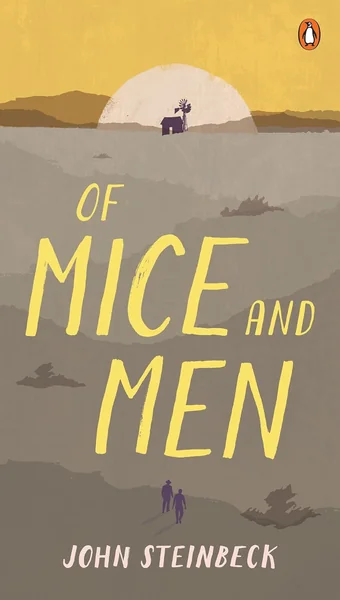
At a glance

Of Mice and Men
LuvemBooks Verdict
Best for: Readers who want a landmark of American literature in a single evening — students encountering it for class, and adults returning to (or finally picking up) Steinbeck's devastating Depression-era novella about friendship, loneliness, and a fragile shared dream.
Worth it? Skip it? Read the full verdict →Ask LuvemBooks
Was this helpful?
- Is it worth reading?
- Yes, with one caveat: go in braced for tragedy. LuvemBooks' assessment is that few books this short carry this much force — Steinbeck packs the Depression, loneliness, race, and disability into barely a hundred pages without ever feeling crammed, and the central friendship between George and Lennie lands with enormous emotional impact. John Irving's endorsement on the Penguin edition warns that 'you can't prepare yourself for the magnitude and emotional impact of this powerful novel,' and the warning is fair. Readers who need uplift or suspense, however, may find the heavily foreshadowed slide toward the ending oppressive rather than moving.
- Similar books
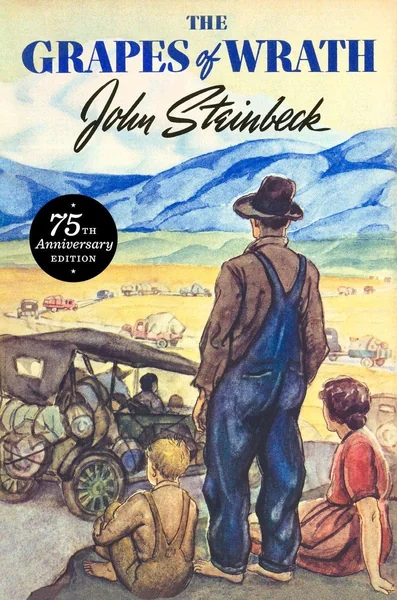
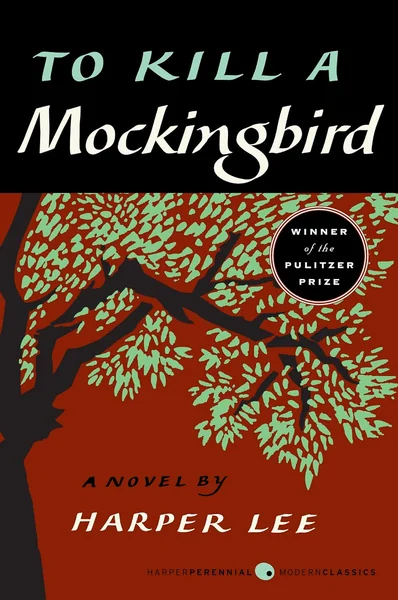
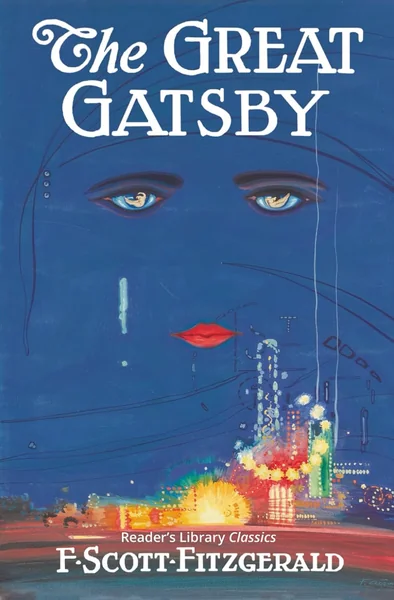
- Readers who connect with Steinbeck's novella should start with his own The Grapes of Wrath, his Pulitzer-winning epic of Depression-era displacement. For compact American classics with similar moral weight, Harper Lee's To Kill a Mockingbird shares its confrontation with racial injustice, and F. Scott Fitzgerald's The Great Gatsby matches its brevity and its doomed American dream. Daniel Keyes's Flowers for Algernon is the natural next read for the disability theme, while Hemingway's The Old Man and the Sea and Twain's Adventures of Huckleberry Finn round out the short-classic shelf.
- Who should read this?
- Students assigned it in school are the obvious audience — it's been a fixture of curricula for generations — but LuvemBooks stresses it equally rewards adults who never read it or haven't returned since school. Readers who want Depression-era America rendered with compassion and without sentimentality will find exactly that here, and at 107 pages it asks only an evening. Readers seeking comfort, or a story whose sympathies are expressed in contemporary language, should know what they're walking into — and will likely find the discomfort is the point.
- What age is it for?
- Best for ages 14 and up — that is the customer-suggested reading age carried on the Penguin mass-market edition, and it aligns with the book's long-standing placement in high school classrooms. The content reasons are concrete: Crooks is addressed with racial slurs, animals and a woman are killed on the page, the ending is a mercy killing, and Lennie's cognitive disability is rendered through a 1937 lens. Parents of sensitive younger teens should know the book's honesty about racism and sexism is deliberately confronting — it is the point, but it requires a mature reader.
- About John Steinbeck
- John Ernst Steinbeck was an American writer and novelist.
- Why is it often banned or challenged?
- It has appeared on the American Library Association's lists of banned and challenged books, and the reasons track with its content: racial slurs aimed at Crooks, profanity, violence including a mercy killing, and its unflinching treatment of disability and sex. LuvemBooks notes that the challenges say something about how uncomfortable the book's honesty still makes some readers — Steinbeck depicts the prejudices of the ranch as lived realities rather than softening them.
- How does it compare to The Grapes of Wrath?
- The Grapes of Wrath is Steinbeck at full scale — a sprawling Depression-era epic — while Of Mice and Men achieves comparable force through compression, packing the same world of itinerant labor and economic despair into barely a hundred pages. Readers new to Steinbeck often start with the novella precisely because it asks only an evening, then move to The Grapes of Wrath for the deeper immersion. Both are grounded in Steinbeck's own years working California ranches and farms.
- Is it really a one-evening read?
- Almost everything about it — the Penguin mass-market paperback is a compact 107-page volume, sized to slip into a bag, and the whole novella is readable in a single evening. Yet the compression is the point: readers consistently note how much Steinbeck fits into so little time on the page, from the Depression and the economics of itinerant labor to race, loneliness, and disability. The trade-off is that the supporting cast, Curley's wife especially, is thin by design.
Summarize this book
Follow up
Synthesized from verified book data & published reviews · How we review
Press Enter to ask. Answers come from our editorial Q&A — start typing to see related questions.
Age & Reading Level
Recommended age
Ages 14+
Reading level
Adult
Content to know about
Best for: Ages 14+ (the Penguin edition's customer-suggested reading age) — racial slurs of the period, on-page deaths, and a mercy-killing ending require mature readers
Skip if you want uplift, suspense, or an unpredictable ending — the novella is unrelentingly bleak and its tragedy is heavily foreshadowed from the first pages
Editorial Review
John Steinbeck's novella follows migrant ranch workers George Milton and Lennie Small across Depression-era California as their shared dream of a small farm collides with reality. A hundred-page parable of friendship and loss that remains one of the most taught — and most powerful — works in American fiction.
Read the Full ReviewBooks like Of Mice and Men
Curated picks for readers who enjoyed Of Mice and Men, with our reasoning for each match.
If you liked Of Mice and Men
Why It’s Trending