
9 min read
4.9
· 22,308 Amazon ratingsShare This Review
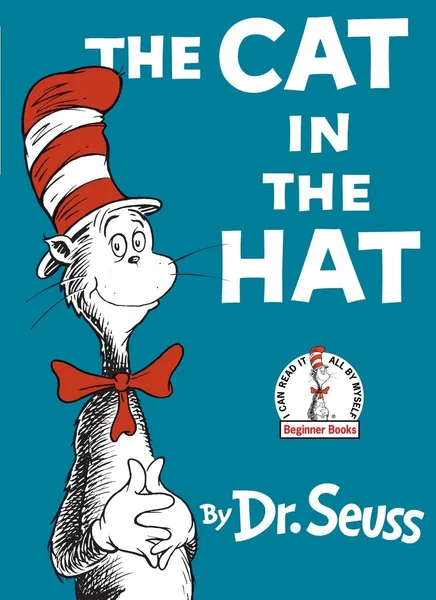
The Cat in the Hat by Dr. Seuss Review: A Landmark of Early Reader History
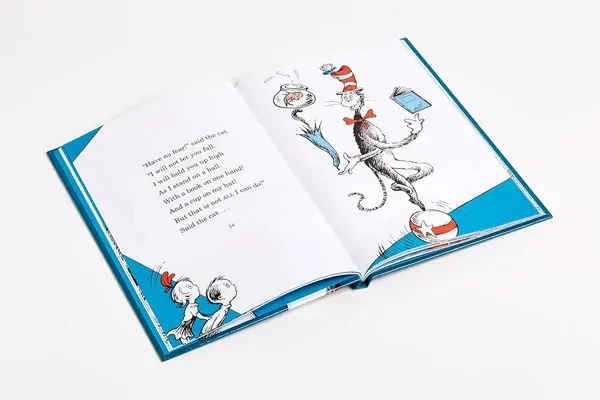
First published by Random House in 1957, The Cat in the Hat by Theodor "Dr. Seuss" Geisel is one of the most consequential children's books ever written — a deliberate act of educational disruption that became a cultural institution, ranked number nine on Publishers Weekly's all-time list of best-selling children's books and placing at number 36 on School critical coverage's "Top 100 Picture Books" survey in 2012.
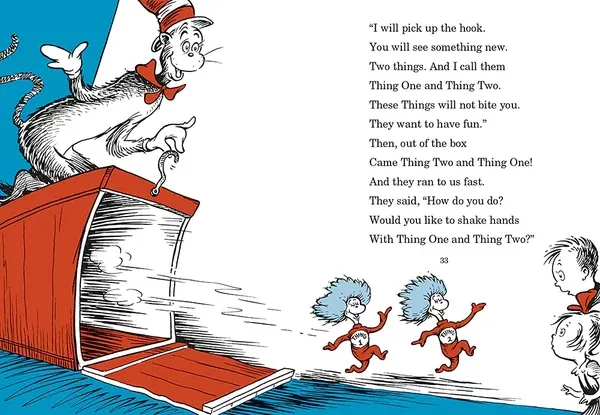
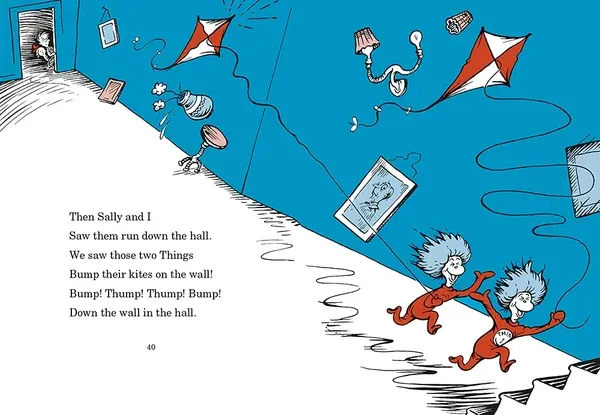
 Tap to enlarge
LuvemBooks Verdict
Best for
Caregivers, early-years educators, and anyone curious about how a single 61-page picture book reshaped the architecture of children's literacy publishing — as well as parents seeking a proven, vocabulary-controlled first reader for children roughly aged two to six.
Worth it if
You come to it as a foundational early-reader for a young child, or as a culturally curious adult who wants to understand how deliberate vocabulary constraint, rhyme, and illustration can combine to create genuine narrative drive — and genuine critical depth.
Skip if
Readers seeking expansive plot, complex characterisation, or a richer story arc will find the deliberately limited vocabulary and structure purposefully narrow — that constraint is the book's engine, not a flaw to be worked around, and it won't satisfy on those terms.
What readers & critics say
The New Yorker (2002) identified transgression and hypocrisy as the book's principal themes, framing it as a Cold War artifact whose apparent simplicity conceals genuine psychological unease, per newyorker.com. Kirkus Reviews, in its original 1957 notice, called it "a perfect sublimation of what can happen," praising the Seuss drawings for telling as much of the story as his simple verses, while Common Sense Media deems it "a must-read classic for every child," noting its birth in response to the pivotal Life magazine literacy debate.
“Transgression and hypocrisy are themes at the heart of Dr. Seuss's best-selling children's classic, published in the midst of the Cold War.”
— The New Yorker“A perfect sublimation of what can happen — the Seuss drawings tell as much of a story as his simple verses.”
— Kirkus Reviews“This is a must-read classic for every child — making one of the most unforgettable entrances in the history of children's literature.”
— Common Sense MediaAge & Reading Level
Recommended age
Ages 5–8
who it suits
Best for: Ages 2–6 (read-aloud) / Ages 5–8 (independent reading) — the strictly controlled vocabulary and short sentence structures are calibrated for early and emerging readers; older independent readers will find it very brief.
Skip if you're looking for an expansive, plot-driven story with complex characters — the vocabulary-controlled format makes narrative and character depth a deliberate non-feature.
The Cat in the Hat by Dr. Seuss is Trending
The 2003 Cat in the Hat Movie Is Back in the Conversation — and Not for Good Reasons
The infamous 2003 live-action Cat in the Hat film starring Mike Myers is making the rounds again, reminding people why Dr. Seuss's widow banned all future live-action adaptations. If you haven't revisited the original book lately, now's a good time to remember what the fuss is about.
The 2003 live-action Cat in the Hat movie — the one with Mike Myers in that unsettling costume — is getting talked about again, partly because people are tracking down where to stream it in 2026 (Prime Video, Apple TV, and Fandango At Home, if you're curious) and partly because its reputation as a cinematic disaster keeps resurfacing. Critics piled on at the time, with Leonard Maltin calling it 'a betrayal of everything Dr. Seuss ever stood for,' and the behind-the-scenes drama is equally wild: the producers were already planning a sequel before the film even opened, based on The Cat in the Hat Comes Back.
That sequel never happened, and here's why: Audrey Geisel, Dr. Seuss's widow, was so unhappy with the finished film that she shut down any future live-action adaptations of her late husband's work entirely. It's one of those rare cases where a single bad movie effectively changed the rules for an entire catalog. That backstory has taken on a life of its own and keeps pulling people back to the source material.
If all this chatter has you curious, the book itself is the obvious starting point — and honestly, it holds up. It was designed from the ground up to be fun and readable, and it still is. The movie mess is a good reminder of just how much was packed into those 61 pages that Hollywood managed to miss.
In This Review
- What Works & What Doesn't
- What the Book Actually Is
- The Educational Mission Behind the Madness
- Reception and Cultural Significance
- The Deeper Reading: Subversion and Complexity
- Who This Book Is For — and Where It Has Its Limits
What Works & What Doesn't
What Works
- A deliberate and historically significant response to the failures of mid-century literacy primers, built around a strictly controlled vocabulary that still manages genuine narrative drive
- Immediate and sustained commercial success — over a million copies sold within three years of publication, and ranked number nine on Publishers Weekly's all-time best-selling children's books list in 2001
- Directly launched the Beginner Books imprint at Random House, changing how early-reader publishing was structured
- Rich enough in theme — transgression, absent authority, domestic disorder — to reward serious critical analysis alongside its surface appeal to young readers
- Both written and illustrated by Geisel, making it a unified artistic vision with word and image working in deliberate concert
What Doesn't
- The vocabulary-controlled format, a deliberate design constraint, limits narrative and character complexity — readers seeking a more expansive story will find the structure purposefully narrow
- The book's enormous cultural shadow means it arrives pre-loaded with expectations and nostalgia, which can make fresh engagement with its actual text and themes more difficult for adult readers approaching it critically
What the Book Actually Is
The Educational Mission Behind the Madness
Reception and Cultural Significance
The Deeper Reading: Subversion and Complexity
Who This Book Is For — and Where It Has Its Limits
Frequently Asked Questions
Sources & Further Reading
The key facts and claims in this review are grounded in the retrieved, verified sources listed below.
- Cited in this review
- 1
- 2
audible.com
- 3
penguinrandomhouse.com
- 4
newyorker.com
- Further reading
- 5
Dr. Seuss, Wikipedia
- 6
en.wikipedia.org
- 7
- 8
- 9
commonsensemedia.org
- 10
newbookrecommendation.com
- 11
rogerebert.com
- 12
bookanalysis.com
- 13
rottentomatoes.com
- 14
- 15
brookevitale.com
- 16
Related Reviews
Reviews of books we picked for readers who enjoyed The Cat in the Hat.
Reader Comments
No comments yet
Be the first to share your thoughts!