

8 min read
4.8
· 6,755 Amazon ratingsShare This Review
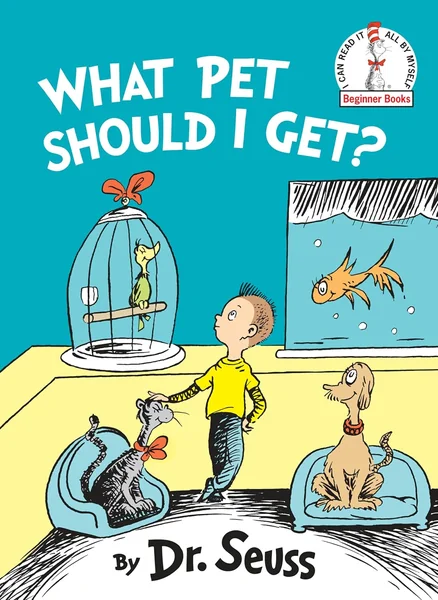
What Pet Should I Get? by Dr. Seuss Review: A Remarkable Posthumous Discovery for Young Readers
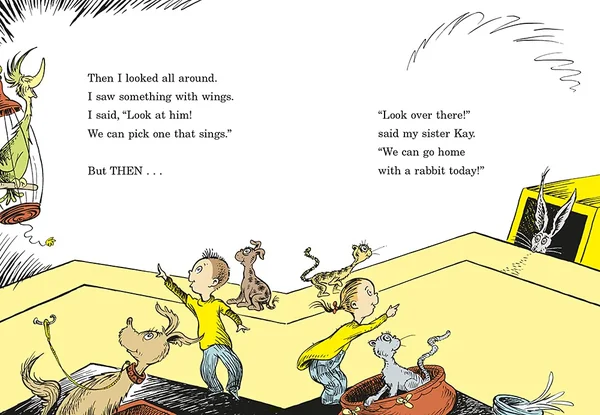
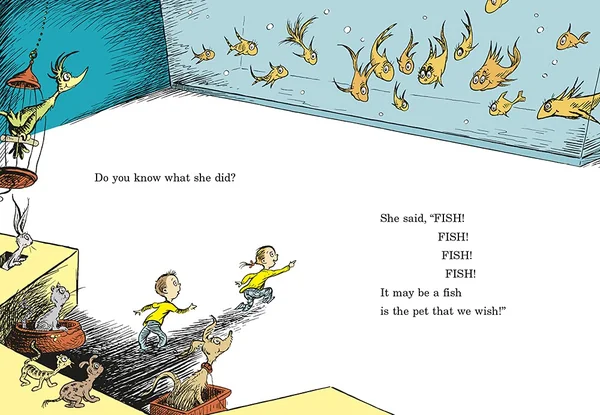
What Pet Should I Get? Is a posthumously published Dr. Seuss picture book, originally written between 1958 and 1962, that follows siblings Jay and Kay as they wrestle with an impossible choice inside a pet store — reconstructed from a rediscovered manuscript and published by Random House in July 2015, with a later edition in 2019.
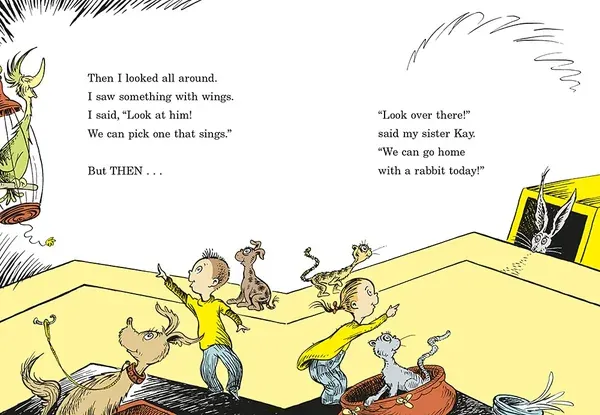
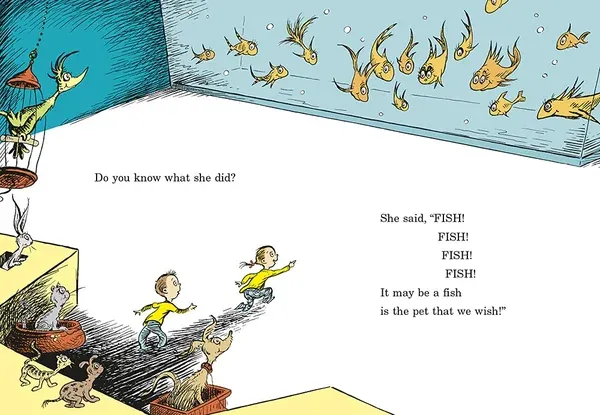
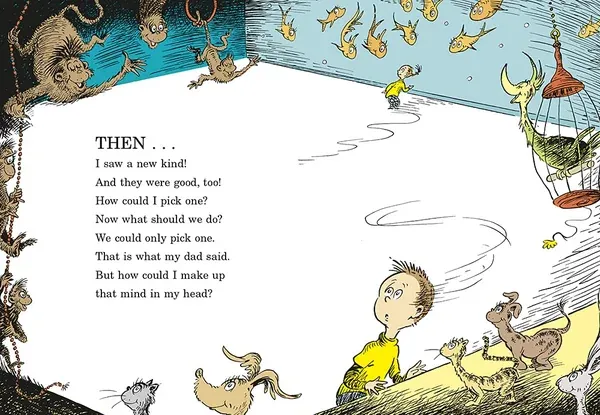 Tap to enlarge
LuvemBooks Verdict
Best for
Seuss fans and parents of early readers (ages 3–6) who want to explore a fascinating piece of literary history and an authentic, if unfinished, addition to the Seuss canon — especially those already familiar with One Fish, Two Fish, Red Fish, Blue Fish.
Worth it if
You're drawn to the remarkable backstory of a posthumously recovered manuscript and want a genuinely Seussian early-reader that connects meaningfully to an existing classic.
Skip if
You're hoping for top-tier, fully polished Seuss — this is a careful reconstruction of an unfinished manuscript, not a revised final work, and its pet-shop-as-shopping premise will feel dated to readers attentive to modern attitudes around animal adoption.
What readers & critics say
The Guardian found the reconstruction "an almost spookily precise addition to the Seuss canon" that slots effortlessly onto the shelf with his other works, while Kirkus Reviews judged it a more satisfying posthumous release than other Seuss publications but ultimately of "more lasting interest to scholars than children." The New York Times praised it as a strong example of Seuss's genius for capturing both the spirit of his times and the timeless mindset of children, though noted it falls short of his very best work.
“Out of black-and-white drawings and faded typed rhymes, the team recreated an almost spookily precise addition to the Seuss canon.”
— The Guardian“Of more lasting interest to scholars than children — a tantalizing glimpse, and a far more satisfying experience than other posthumous Seuss publications.”
— Kirkus Reviews“Shows Dr. Seuss's particular genius for distilling both the spirit of his times and the timeless mind-set of children.”
— nytimes.comAge & Reading Level
Recommended age
Ages 3–6
who it suits
Best for: Ages 3–6 — simple rhythmic text and picture-book format suit early readers and pre-K comprehension levels.
Skip if you want a fully polished, author-approved final work rather than a reconstructed manuscript.
In This Review
- What Works & What Doesn't
- What the Book Is and What It Contains
- The Remarkable Story Behind Its Discovery
- Its Significance in the Seuss Canon
- Strengths: Authentic Seussian Voice and Reception
- Genuine Limitations to Consider
What Works & What Doesn't
What Works
- A genuine literary discovery — reconstructed from a manuscript Seuss wrote between 1958 and 1962, offering an authentic addition to his body of work
- Features familiar characters Jay and Kay from the beloved 1960 classic One Fish, Two Fish, Red Fish, Blue Fish, giving the story a satisfying connection to the broader Seuss canon
- Critical coverage critic Maria Russo praised it as a strong example of Seuss's genius for capturing both the era and the timeless mindset of children
- The central dilemma — choosing just one pet under time pressure — draws directly on a universal childhood experience that resonates with the target age group of 3–6
What Doesn't
- The pet-store shopping premise is dated by contemporary standards; as critics noted, treating animals as interchangeable commodities clashes with modern adoption norms
- As an unfinished manuscript never fully revised by Seuss himself, published reviews placed it below his top-tier work — it is a remarkable recovery rather than a polished final creation
What the Book Is and What It Contains
The Remarkable Story Behind Its Discovery
Its Significance in the Seuss Canon
Strengths: Authentic Seussian Voice and Reception
Genuine Limitations to Consider
Frequently Asked Questions
Sources & Further Reading
The key facts and claims in this review are grounded in the retrieved, verified sources listed below.
- Cited in this review
- 1
en.wikipedia.org
- 2
penguinrandomhouse.com
- 3
- 4
- Further reading
- 5
Dr. Seuss, Wikipedia
- 6
- 7
- 8
seussville.com
- 9
- 10
chicagotribune.com
- 11
commonsensemedia.org
Related Reviews
Reviews of books we picked for readers who enjoyed What Pet Should I Get?.

Reader Comments
No comments yet
Be the first to share your thoughts!