

In This Article
- The Filmmakers and Voice Cast
- A New Premise, Not the Familiar Rainy Day
- A Long Road to Production
- What to Watch For
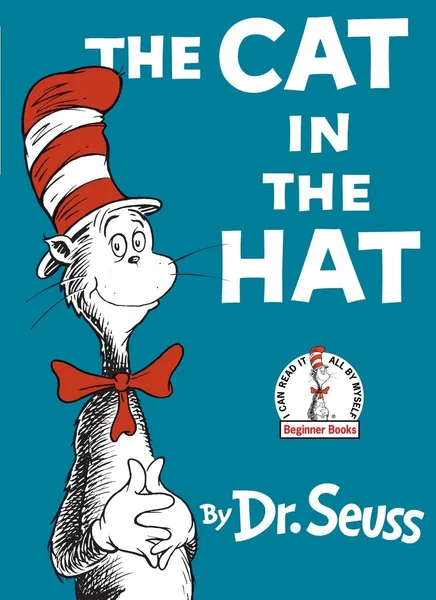
Warner Bros. Pictures has set November 6, 2026 as the U.S. theatrical release date for an animated feature adaptation of Dr. Seuss's The Cat in the Hat, according to Wikipedia's production record for the film. The film will open in standard formats and IMAX, with Warner Bros. handling worldwide distribution, per the official film site. It is the first feature-length animated adaptation of the classic 1957 picture book — and the second theatrical film based on it overall, following the 2003 live-action version starring Mike Myers.
The Filmmakers and Voice Cast
The film is written and directed by Alessandro Carloni and Erica Rivinoja, with animation produced by DNEG, according to Wikipedia. Bill Hader leads the voice cast as the Cat in the Hat, a tall anthropomorphic cat who wears a magical red-and-white striped top hat. He is joined by Xochitl Gomez, Matt Berry, Quinta Brunson, Paula Pell, Tiago Martinez, Giancarlo Esposito, America Ferrera, Bowen Yang, and Tituss Burgess, as confirmed by IMDb. Most of the cast was announced in March 2024, with additional casting announced in June 2025, per Wikipedia.
A New Premise, Not the Familiar Rainy Day
Rather than retelling the original book's well-known scenario, the film introduces an original story. The Cat — described as an "agent of chaos" employed by the "Institute for the Institution of Imagination and Inspiration, LLC" (I.I.I.I.) — is assigned to cheer up two siblings, Gabby and Sebastian, who are struggling to adjust after moving to a new town. The stakes for the character are personal: Wikipedia notes that the assignment represents the Cat's last chance to prove himself — or lose his magical hat. For those wanting a critical take on the source material, LuvemBooks has a full review of the book.
A Long Road to Production
The path to this film spans more than a decade. An animated Cat in the Hat adaptation was first announced by Illumination Entertainment in 2012, following the commercial success of The Lorax, with Rob Lieber attached to write the script — but that project never advanced, according to Wikipedia. Warner Bros. then acquired the rights to the book in January 2018. In October 2020, Rivinoja and Art Hernandez were hired to direct; Hernandez was later replaced by Carloni in June 2023, with the co-directing partnership with Rivinoja continuing through to the current production.
What to Watch For
The November 2026 release arrives during a broader moment of activity around the Dr. Seuss brand. Kirkus Reviews reports that Random House Children's Books is also publishing a newly discovered Seuss manuscript — Sing the 50 United States! — on June 2, 2026, ahead of the film's release. For the animated film, the November 6 date now stands as the next major milestone, with Warner Bros. distributing the title globally.
Frequently Asked Questions
Is The Cat in the Hat worth buying in 2026?
Absolutely. Despite being published in 1957, The Cat in the Hat remains one of the finest early readers ever created, with controlled vocabulary and engaging rhythm that makes learning to read genuinely fun. The upcoming film adaptation makes it even more relevant for new young readers.
What is the main message of The Cat in the Hat?
The book explores the tension between following rules and embracing fun, encouraging children to think about authority, responsibility, and consequences. It doesn't provide easy answers, instead letting young readers grapple with the complexity of the Cat's chaotic but exciting influence.
Who should read The Cat in the Hat?
Perfect for beginning readers ages 4-8, parents seeking quality educational entertainment, and anyone interested in foundational children's literature. Teachers and librarians also value it as an excellent introduction to independent reading skills.
Should I read The Cat in the Hat or wait for the 2026 animated film?
Read the book first — it's a quick, delightful experience that builds reading skills and appreciation for Dr. Seuss' rhythmic language. The film will likely be entertaining but can't replicate the educational benefits and intimate reading experience of the original text.
Reader Discussion
No comments yet
Be the first to share your thoughts!