
7 min read
4.7
· 12,456 Amazon ratingsShare This Review

Our review
Restart by Gordon Korman Review: A Gripping Middle-Grade Tale of Redemption
Restart is a New York Times bestseller by Gordon Korman in which eighth-grade football star and school bully Chase Ambrose falls off a roof, wakes up with amnesia, and must piece together the person he was — while deciding whether that's the person he wants to be. Told through multiple first-person narrators, including Chase's former victims and his old cronies, it is a character-driven middle-grade novel built around identity, bullying, forgiveness, and the possibility of genuine change.
LuvemBooks Verdict
Best for
Middle-grade readers aged 10–12 — and their teachers or librarians — who want a character-driven story that tackles bullying and identity through multiple first-person perspectives, with enough emotional weight to fuel genuine classroom discussion.
Worth it if
You're drawn to ensemble narratives that hold a central character accountable while still leaving room for growth, and you appreciate anti-bullying fiction that goes deeper than a standard redemption arc.
Skip if
You're picking it up expecting Korman's trademark full-throttle comic energy — the tone here is deliberately more serious and reflective than most of his earlier work, which may catch fans off-guard.
What readers & critics say
Kirkus Reviews calls out "Korman's trademark humor" as part of the book's appeal while framing its central question — will a bully always be a bully? — as the engine driving Chase's return to school. Common Sense Media describes it as a "poignant, hilarious middle school classic" packed with relatable emotions, different points of view, and a strong anti-bullying message.
“Korman's trademark humor makes this an appealing read… Will a bully always be a bully? That's the question Chase has to answer for himself.”
— kirkusreviews.com“Poignant, hilarious middle school classic — packed with laughs, relatable emotions, different points of view, and a strong anti-bullying message.”
— commonsensemedia.orgAsk LuvemBooks
Was this helpful?
- Is it worth reading?
- For readers in the middle-grade range who respond to character-driven fiction with genuine emotional stakes, Restart earns its reputation as a New York Times bestseller. The multi-narrator structure does real work — it prevents the novel from becoming a simple feel-good redemption story by keeping the experiences of Chase's victims, including characters like Shoshanna Weber and her brother Joel, fully in frame. The key caveat is for fans of Korman's typically comic work: the tone here is deliberately and noticeably more serious, which is a strength for readers who want depth but worth knowing in advance.
- Similar books
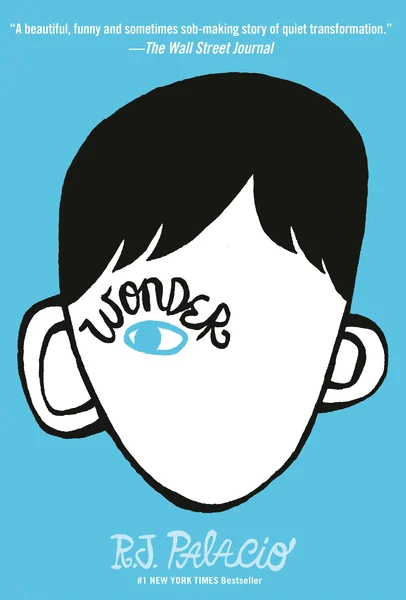
- Readers drawn to Restart's blend of character-driven middle-grade storytelling and meaningful anti-bullying themes often enjoy other books that explore identity, perspective, and social dynamics in middle school. Gordon Korman's own No More Dead Dogs shares a comparable spirit, though with a lighter register — Scholastic's synopsis for Restart explicitly positions it as a return to that book's energy. Beyond Korman, R.J. Palacio's Wonder tackles school social hierarchies and empathy from multiple viewpoints, making it a natural companion read. Jerry Spinelli's Loser and Andrew Clements' The Losers Club also occupy similar thematic territory for the middle-grade reader interested in outsider perspectives and school dynamics.
- Who should read this?
- Restart is designed for middle-grade readers roughly aged ten to twelve, and works well across both independent reading and guided classroom contexts. It is an especially strong fit for readers who respond to narrative structures that fragment and reassemble a character's identity — and for those who want their middle-grade fiction to have genuine emotional stakes rather than purely comic energy. Readers who have experienced bullying firsthand will likely find the novel's insistence that past behavior has lasting consequences for victims particularly meaningful.
- What age is it for?
- Best for readers ages 10 to 12, which aligns with the standard middle-grade range Scholastic designed the book for. The novel's themes of bullying, identity, and the consequences of past behavior are rendered with enough emotional complexity to reward readers who can engage with multiple competing perspectives — making it a good fit for confident readers at the upper end of that range as well.
- What's the reading level?
- Restart is written for the middle-grade range, targeting readers roughly aged ten to twelve, and its grade-level positioning means it works comfortably across both independent reading and guided classroom contexts. The novel's rotating first-person narrators require readers to track multiple voices and perspectives simultaneously, which makes it most rewarding for confident readers within that age band. Educators have noted its usefulness for teaching prediction and perspective-taking, further cementing its place as a classroom-ready text.
- Is this a good book club pick?
- Restart is a strong book club pick for middle-grade reading groups and classroom discussion circles. Its central question — can someone truly change who they are, or will old patterns reassert themselves? — is precisely the kind of open-ended moral question that generates substantive discussion. SuperSummary identifies four thematic strands that lend themselves to structured conversation: the possibility of change and growth, bullying in middle school, true friendship, and the courage to cope with fear. The multi-narrator structure also gives a group natural entry points for debating whose perspective they trust and why.
Summarize this book
Follow up
Synthesized from verified book data & published reviews · How we review
Press Enter to ask. Answers come from our editorial Q&A — start typing to see related questions.
Age & Reading Level
Recommended age
Ages 8–12
Reading level
Middle grade
1 content note · who it suits
Content to know about
Best for: Ages 10+ — the rotating narrator structure and moral complexity around bullying and identity suit confident readers in the middle-grade range.
Skip if you're looking for Gordon Korman's trademark comic lightness throughout — the tone here is deliberately and notably more serious.
Our Review
What the Book Is and What It Does
Significance and Reception
Craft and Structure
Themes and Classroom Fit
Who This Book Is Best For
Sources & Further Reading
The key facts and claims in this review are grounded in the retrieved, verified sources listed below.
- 1
sisandchrys.com
- 2
shop.scholastic.com
- 3
commonsensemedia.org
- 4
booksthatslay.com
- 5
readingmiddlegrade.com
- 6
teenink.com
- 7
greenishbookshelf.com
- 8
Books like Restart
Curated picks for readers who enjoyed Restart, with our reasoning for each match.
If you liked Restart
Why It’s Trending
Restart by Gordon Korman Is Now a Movie on Disney+
Gordon Korman's middle-grade hit Restart has been adapted into a movie now streaming on Disney+, and fans are buzzing about it on TikTok. If you or your kid loved the book, this is a great moment to revisit it — or pick it up for the first time before watching.