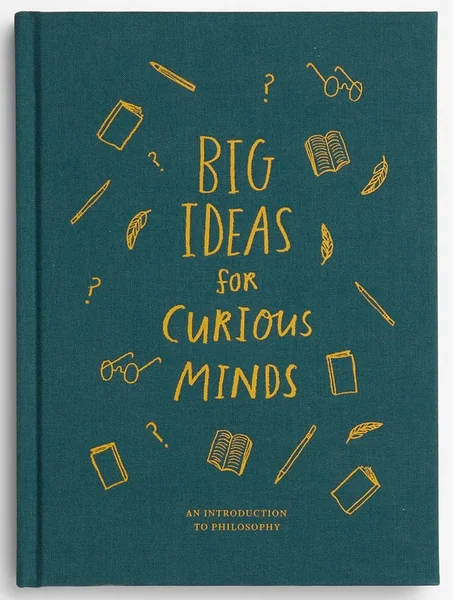
Big Ideas for Curious Minds
An illustrated introduction to ideas from 25 philosophers across history, framed around the everyday emotional experiences of children.
Best for
Children aged 9–12 — and their parents — who want a warm, conversational first encounter with philosophy as a guide to emotional intelligence and everyday decision-making, rather than as a formal academic discipline.
Our full verdict ↓At a glance
Be one of the first readers to answer.
Read it? Was it right for you?
LuvemBooks Verdict
Best for: Children aged 9–12 — and their parents — who want a warm, conversational first encounter with philosophy as a guide to emotional intelligence and everyday decision-making, rather than as a formal academic discipline.
Worth it? Skip it? Read the full verdict →Preview the book


Ask LuvemBooks
Was this helpful?
- Is it worth reading?
- For curious readers aged 9–12 encountering philosophy for the first time, Big Ideas for Curious Minds earns its strong critical reception: the Guardian named it among its Best Children's Books of 2018, Foreword Reviews praised it as proof that "philosophy isn't useless, boring, or just for grownups," and the Youth Services Book Review recommended it specifically for "introspective, thoughtful kids ages 8 and up." The consistent chapter architecture — concept, scenario, biography, reflection prompts — keeps every entry focused and digestible. The key caveat is scope: Publishers Weekly's "useful, if narrow" verdict holds, as logic, epistemology, and political philosophy are largely absent in favor of emotional well-being. Adults, too, may find the ideas worth revisiting, according to Role Models reviewer Louise Treherne.
- Similar books
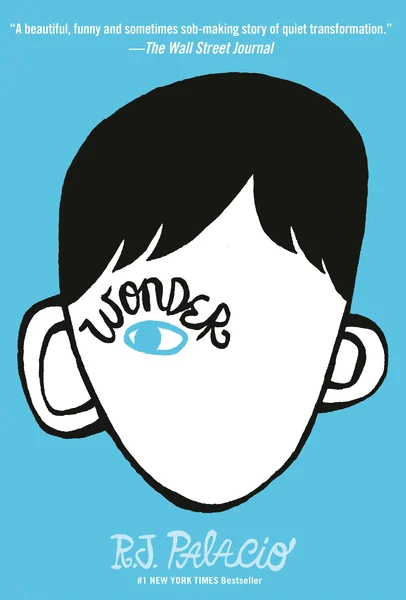
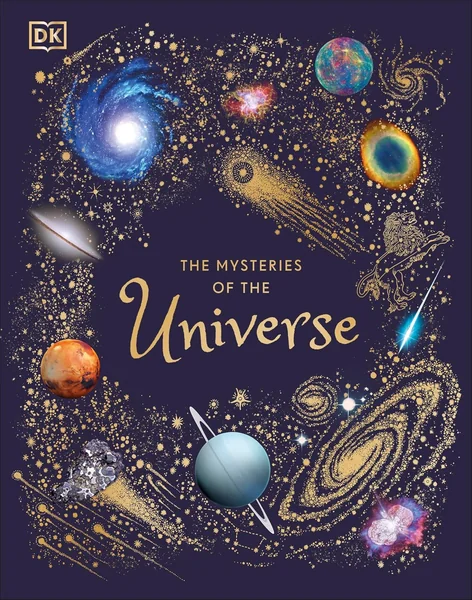
- Readers drawn to Big Ideas for Curious Minds for its blend of big questions and approachable writing may enjoy several titles. The Mysteries of the Universe by Will Gater offers a similarly illustrated, chapter-by-chapter approach to large ideas — science rather than philosophy — for the same curious preteen audience. Wonder by R. J. Palacio and Matilda by Roald Dahl both engage children in questions of empathy, identity, and fairness through narrative, offering a story-driven complement to the direct philosophical instruction here. Charlotte's Web by E. B. White raises enduring questions about friendship, mortality, and what makes a life meaningful in a form younger readers in the 8–10 range can absorb naturally.
- Who should read this?
- The book is best matched to curious, introspective children aged 9–12 who are encountering philosophy for the first time and respond well to relatable, emotionally grounded framing. The Youth Services Book Review specifically highlighted "introspective, thoughtful kids ages 8 and up," and the Guardian's endorsement was sparked by a nine-year-old's genuine engagement with Mary Wollstonecraft's chapter. It also works well as a classroom or school-library resource for that age band. Older or more analytically inclined readers may find some chapters less demanding than they would like, and adults or parents hoping for coverage of logic, epistemology, or political theory should know those fields are largely absent.
- What age is it for?
- Best for ages 9 and up. The book's conversational prose and relatable school-day scenarios are calibrated for confident readers in the 9–12 range, and the Youth Services Book Review specifically recommends it for "introspective, thoughtful kids ages 8 and up." Younger readers at the lower end of that band are well served by the accessible entry point; older or more advanced readers may find some chapters less challenging than they would like.
- About The School of Life
- The School of Life is a British multinational publishing and education company founded in 2008 by British author and public speaker Alain de Botton. LuvemBooks has also reviewed A Simpler Life: A guide to greater serenity, ease, and clarity by The School of Life.
- What are the main themes?
- The book's overarching theme is the practical application of philosophical wisdom to the emotional landscape of childhood and early adolescence. Individual chapter titles — "Know Yourself," "People Are Unhappy, Not Mean," "Learn to Say What's on Your Mind," "Politeness Matters," and "Don't Expect Too Much" — signal how consistently ancient and early-modern ideas are mapped onto everyday decision-making and emotional intelligence. Rather than engaging with philosophy as a formal academic discipline, the book treats it as a toolkit for living wisely, which is both its defining strength and the source of its noted narrowness.
- How does this compare to A Simpler Life by The School of Life?
- Big Ideas for Curious Minds and A Simpler Life share The School of Life's signature approach — philosophy and psychology applied practically to everyday well-being — but they target very different audiences. Big Ideas for Curious Minds is designed for children aged 9 and up, with illustrated chapters, biographical spreads, and reflection prompts calibrated for the 9–12 range. A Simpler Life addresses adult readers seeking greater serenity, ease, and clarity. Both reflect the organization's commitment to making ideas accessible rather than academically exhaustive.
Summarize this book
Follow up
Synthesized from verified book data & published reviews · How we review
What would you like to know about Big Ideas for Curious Minds?
Answers come from our editorial notes on this book. If we haven't covered something, we'll say so.
Readers often ask
Editorial Review
Big Ideas for Curious Minds: An Introduction to Philosophy, written by The School of Life, edited by Alain de Botton, and illustrated by Anna Doherty, distills ideas from 25 philosophers into accessible, self-help-framed chapters designed to help children ages 9 and up engage with fundamental questions about how to live. Publishers Weekly called it "a useful, if narrow, introduction to emotional intelligence via philosophical thought," named it among its Best Children's Books of 2018 — a strong reception for an illustrated children's philosophy title with a distinctly practical bent.
Read the Full ReviewReader reviews
No reader reviews yet
Read it? Be the first to say what you thought.
Books like Big Ideas for Curious Minds
Curated picks for readers who enjoyed Big Ideas for Curious Minds, with our reasoning for each match.
If you liked Big Ideas for Curious Minds