At a glance
LuvemBooks Verdict
Best for: Readers who want to understand the emotional and behavioural forces that shape their financial decisions — particularly those who have bounced off jargon-heavy personal finance books and prefer short, story-driven essays they can read in any order.
Worth it? Skip it? Read the full verdict →Ask LuvemBooks
Was this helpful?
- Is it worth reading?
- The Psychology of Money is widely considered a landmark in personal finance writing, and its reception — Sunday Times Number One Bestseller, over 10 million copies sold globally — reflects genuine reader impact rather than hype. Its greatest strength is accessibility: the prose is concise and jargon-free, and it articulates distinctions — such as the difference between being rich and being wealthy — that most popular finance books leave unstated. The key caveat is that it offers mindset shifts, not a step-by-step financial plan; readers who come expecting actionable portfolio advice will be disappointed, but those open to examining the behavioural roots of their financial decisions will find it rewarding.
- Similar books
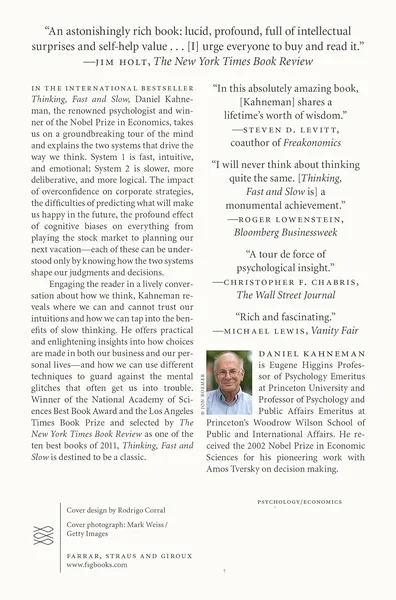
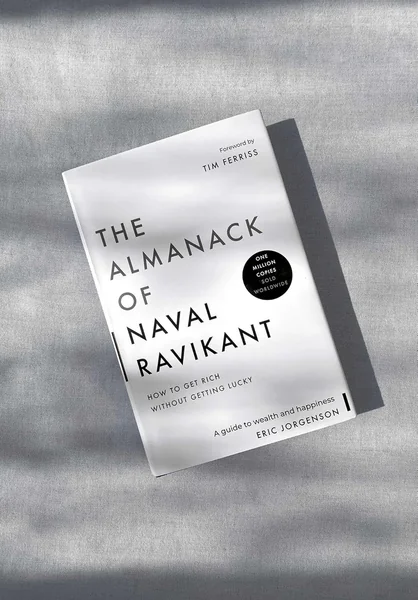
- Readers who connect with The Psychology of Money often turn next to Thinking, Fast and Slow by Daniel Kahneman, which provides deeper academic grounding in the cognitive biases and dual-process thinking that Housel draws on throughout his essays. The Almanack of Naval Ravikant by Eric Jorgenson shares the same aphoristic, essay-like structure and focuses on building long-term wealth through mindset rather than tactics. For those who want something more strategy-oriented, The Simple Path to Wealth by JL Collins and A Random Walk Down Wall Street by Burton G. Malkiel offer the practical, step-by-step investment guidance that Housel deliberately withholds — making them ideal companion reads.
- Who should read this?
- The Psychology of Money is best suited to general adult readers who are curious about their own relationship with money but find traditional personal finance books inaccessible, jargon-heavy, or prescriptive. It is particularly well-matched to readers who have bounced off longer, more rule-based finance books — the self-contained essay format and jargon-free prose lower the barrier to entry significantly. Those already deeply versed in behavioural economics (the work of Daniel Kahneman or Richard Thaler, for instance) may find some ground familiar, and readers who want a specific investment system or portfolio blueprint will be better served elsewhere.
- What are the main themes?
- The book's central theme is that financial success is primarily a behavioural challenge, not a technical one — decisions about money are shaped by personal history, ego, and emotion rather than rational calculation. Key recurring ideas include the distinction between being rich (high current income) and being wealthy (unspent money that preserves optionality), the asymmetric skills required to get money versus keep it, and the underrated power of simply staying invested through market swings. Luck and risk receive dedicated treatment, with figures like Bill Gates and Paul Allen illustrating how circumstance intersects with effort, while Warren Buffett's career is used to examine the mechanics of long-term compounding and patience.
- What's the difference between rich and wealthy?
- One of the book's most discussed distinctions is between being rich — defined as having a high current income — and being wealthy, which Housel frames as having unspent money that preserves future optionality. The distinction matters because the two states require different behaviours: getting rich often demands risk-taking and visible spending, while building wealth requires restraint, humility, and the discipline to leave gains untouched. This separation is presented as one of the conceptual insights rarely articulated clearly in popular personal finance writing.
- Do you need to read it cover to cover?
- No — the essay structure is one of the book's most deliberately reader-friendly features. Each of the 19 chapters is self-contained, which means readers can engage with individual essays in any order or at their own pace without losing narrative momentum. This format is noted as particularly well-suited to readers who have previously struggled with longer, more prescriptive personal finance books, though it does mean individual ideas receive less development than a reader seeking deep analytical rigour might prefer.
Summarize this book
Follow up
Synthesized from verified book data & published reviews · How we review
Press Enter to ask. Answers come from our editorial Q&A — start typing to see related questions.
Age & Reading Level
Recommended age
Adult
Reading level
Adult
who it suits
Skip if you want a concrete, step-by-step investment plan or specific portfolio strategies rather than a mindset-focused exploration of financial behaviour.
Editorial Review
Morgan Housel's The Psychology of Money makes a compelling case that financial success is driven less by technical knowledge than by behaviour, temperament, and the stories people tell themselves about wealth — and its global reach of over 10 million copies sold suggests that argument has resonated widely.
Read the Full ReviewBooks like The Psychology of Money
Curated picks for readers who enjoyed The Psychology of Money, with our reasoning for each match.
If you liked The Psychology of Money