At a glance
LuvemBooks Verdict
Best for: Investors at any stage — from first 401(k) to retirement — who want a rigorous, data-driven case for passive index-fund investing grounded in fifty years of academic research rather than market-beating tips.
Worth it? Skip it? Read the full verdict →Ask LuvemBooks
Was this helpful?
- Is it worth reading?
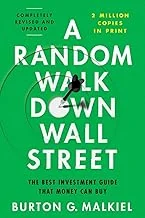
- For investors seeking a rigorous, data-driven foundation for long-term financial decision-making, the editorial consensus is clear: A Random Walk Down Wall Street earns its place on nearly every must-read investment list and has done so for fifty years. The New York Times has pointed readers toward it even when evaluating newer personal-finance titles, suggesting it is durable enough to outlast freshly published alternatives. Its defining quality — what the publisher calls 'gimmick-free' — is a refusal to sell shortcuts, grounding every recommendation in academic research rather than anecdote. The caveat is equally direct: readers drawn to active trading or market-beating systems will find Malkiel's entire argument a sustained counterpoint to their goals.
- Similar books
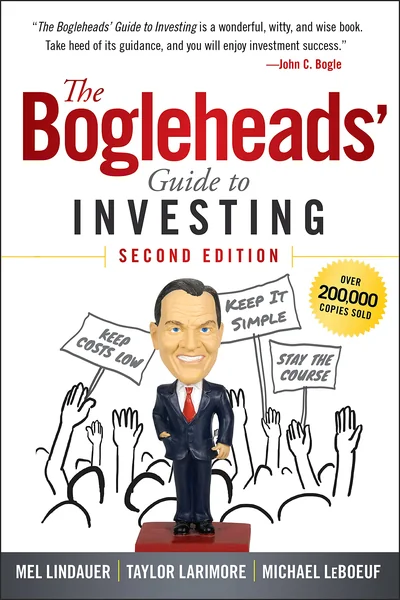
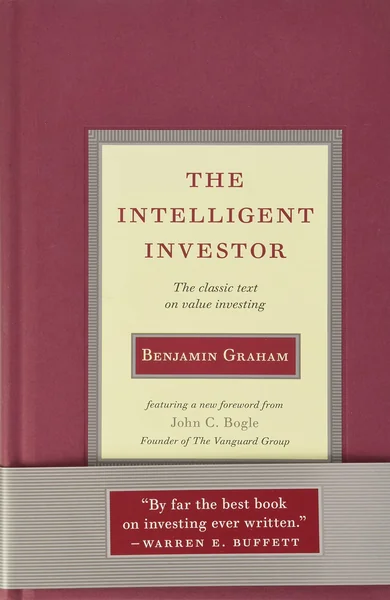
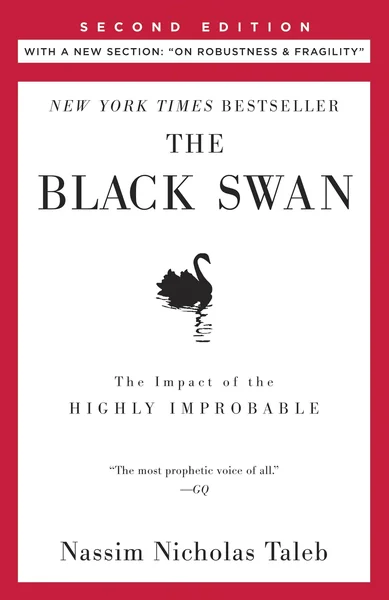
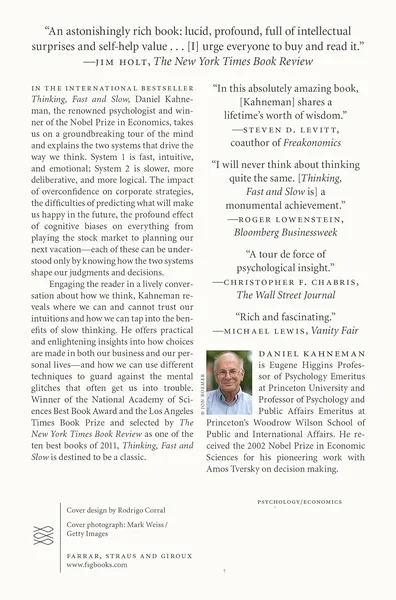
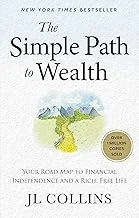
- Readers who respond to Malkiel's passive-investing thesis often turn next to The Bogleheads' Guide to Investing by Mel Lindauer, Taylor Larimore, and Michael LeBoeuf, which builds practical portfolio strategy on the same index-fund philosophy. J.L. Collins' The Simple Path to Wealth offers a more conversational take on the same passive-investing framework. For a deeper engagement with market rationality and its limits, Nassim Nicholas Taleb's The Black Swan: The Impact of the Highly Improbable provides a pointed counterpoint, while Daniel Kahneman's Thinking, Fast and Slow examines the behavioral-finance dimensions that Malkiel's efficient-market framework largely brackets. Benjamin Graham's The Intelligent Investor stands as the essential alternative perspective — the foundational text for value investing and active fundamental analysis that Malkiel's book systematically challenges.
- Who should read this?
- The publisher explicitly designed the thirteenth edition to serve investors at every stage — from those making an initial 401(k) contribution to those navigating retirement — and Malkiel's accessible, jargon-free prose makes the book viable for complete beginners and experienced investors alike. It is especially well-suited to readers who want a rigorous, research-grounded foundation for a passive, index-fund-based investment approach. Readers already committed to active trading or market-beating strategies are the clearest mismatch: Malkiel's entire intellectual architecture is a sustained argument against those approaches. Those already deeply versed in factor investing, ESG portfolios, or risk parity may find the thirteenth edition's treatment of those subjects more introductory than they require.
- About Burton G. Malkiel
- Burton Gordon Malkiel is an American economist, financial executive, and writer most noted for his classic finance book A Random Walk Down Wall Street.
- What is the efficient-market hypothesis?
- The efficient-market hypothesis — the academic framework at the center of Malkiel's book — holds that asset prices at any given moment reflect all available information, making it impossible for any investor to consistently exploit mispricings to beat the market. Malkiel uses this premise to examine and systematically dismantle both technical analysis (predicting prices from historical patterns) and fundamental analysis (valuing stocks on underlying business data), finding that academic research shows both approaches produce inferior results compared to passive index strategies. The book is widely credited with popularizing the random walk hypothesis — the closely related idea that price movements are essentially unpredictable — at a time when active stock-picking was the dominant retail philosophy.
- What new topics does the 13th edition cover?
- The thirteenth edition, released in 2023 to coincide with the book's fiftieth anniversary, is described by the publisher as a substantive update rather than a reprint. Malkiel has added coverage of factor investing, risk parity, and ESG (Environmental, Social, and Governance) portfolios — three areas of investment management that gained significant mainstream attention after earlier editions were published — and has expanded guidance on how to be a tax-smart investor. The edition is explicitly positioned to serve investors across every age, experience level, and risk tolerance, from first 401(k) contributions to retirement planning. Readers already deeply versed in factor investing or ESG may find the treatment more introductory than comprehensive, as these subjects were grafted onto an intellectual architecture built in 1973.
Summarize this book
Follow up
Synthesized from verified book data & published reviews · How we review
Press Enter to ask. Answers come from our editorial Q&A — start typing to see related questions.
Age & Reading Level
Recommended age
Adult
Reading level
Adult
who it suits
Skip if you are looking for guidance on active trading strategies, stock-picking systems, or beating the market.
Editorial Review
Burton G. Malkiel's A Random Walk Down Wall Street, now in its thirteenth edition published by W.…
Read the Full ReviewBooks like A Random Walk Down Wall Street
Curated picks for readers who enjoyed A Random Walk Down Wall Street, with our reasoning for each match.
If you liked A Random Walk Down Wall Street