
8 min read
4.6
· 4,202 Amazon ratingsShare This Review
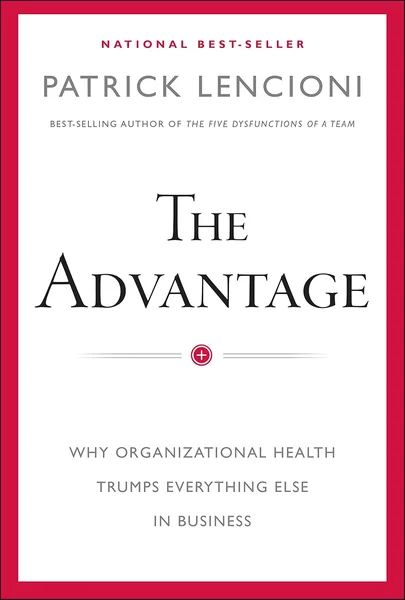
The Advantage by Patrick M. Lencioni Review: A Practical Blueprint for Organizational Health
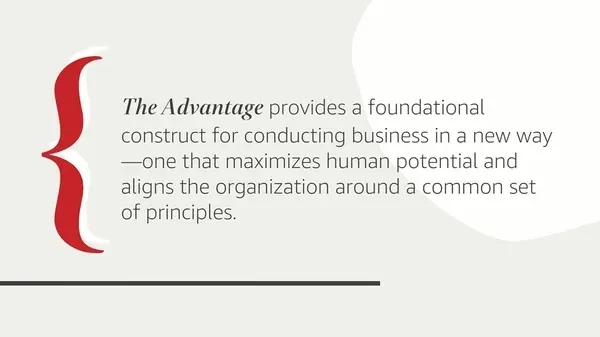
Patrick M. Lencioni's The Advantage: Why Organizational Health Trumps Everything Else in Business makes a direct, focused case that the most powerful competitive differentiator available to any organization is not strategy, innovation, or talent — it is organizational health. Published by Jossey-Bass in 2012, the book is a comprehensive business guide that synthesizes themes from across Lencioni's prior work into a single, actionable framework built around four disciplines and six critical questions of clarity.
 Tap to enlarge
LuvemBooks Verdict
Best for
Senior leaders, executives, and managers who are responsible for shaping organizational culture and performance at a systemic level and want a single, unified framework that consolidates Lencioni's thinking on team cohesion, clarity, and alignment.
Worth it if
You're looking for a comprehensive leadership philosophy — grounded in concrete disciplines and a directly applicable six-question clarity model — rather than a narrow fix for one isolated management problem.
Skip if
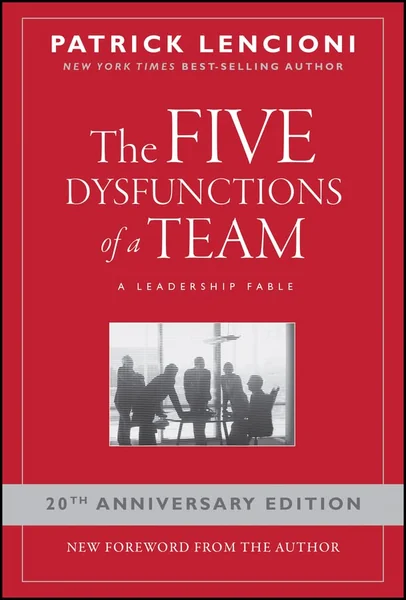
You're already deeply familiar with Lencioni's earlier work (particularly The Five Dysfunctions of a Team) and are hoping for substantially new territory, or you're a front-line employee without influence over team structure and strategic direction.
What readers & critics say
Publishers Weekly, as quoted on wiley.com, called the book "smart, pithy, and practical" and named it "a must-read for executives and other businesspeople who need to get their proverbial ducks back in a row." A reviewer at gordonconwell.edu highlighted it as Lencioni's first straightforward management book (without a fable wrapper) and noted its ambition to deliver a cohesive, comprehensive exploration of organizational health — a first in his body of work.
“Smart, pithy, and practical — a must-read for executives who need to get their proverbial ducks back in a row.”
— Publishers WeeklyAsk LuvemBooks
Press Enter to ask. Answers come from our editorial Q&A — start typing to see related questions.
Age & Reading Level
Recommended age
Adult
Reading level
Adult
who it suits
Skip if you're looking for a narrow tactical fix to a single management problem rather than a broad organizational philosophy.
Our Review
What the Book Argues and How It Is Structured

Significance and Place in Lencioni's Body of Work
Genuine Strengths: Practicality and Clarity of Framework
Honest Limitations: Familiarity and the Trust-Building Question
Who This Book Is For
Sources & Further Reading
The key facts and claims in this review are grounded in the retrieved, verified sources listed below.
- Cited in this review
- 1
- 2
- 3
- Further reading
- 4
Patrick M. Lencioni, Wikipedia
- 5
- 6
confidentchangemanagement.com
- 7
Books like The Advantage
Curated picks for readers who enjoyed The Advantage, with our reasoning for each match.
If you liked The Advantage
Why It’s Trending
The Advantage Is Back in Business Conversations as Teams Rethink How They Work
Lencioni's classic on organizational health keeps finding new audiences as leaders look for practical ways to build stronger, more aligned teams. With workplace dynamics still in flux, the book's core message feels more relevant than ever.