At a glance

LuvemBooks Verdict
Best for: Curious non-specialists — whether in ecology, management, programming, or policy — who want a rigorous yet mathematically light conceptual framework for understanding why complex systems behave the way they do.
Worth it? Skip it? Read the full verdict →Ask LuvemBooks
Was this helpful?
- Is it worth reading?
- For anyone who wants to understand why complex systems — from ecosystems to organizations to economies — behave as they do, Thinking in Systems is among the most valuable books available. Forbes called it 'a fabulous book' that 'opened my mind and reshaped the way I think about investing,' and its reception spans programmers, ecologists, management thinkers, and policymakers, attesting to genuine cross-disciplinary utility. The key caveat is scope: readers seeking quantitative modeling tools or advanced systems dynamics methods will find the book intentionally out of range, and those already steeped in Jay Forrester's MIT Systems Dynamics tradition may encounter significant conceptual overlap with material they already know.
- Similar books
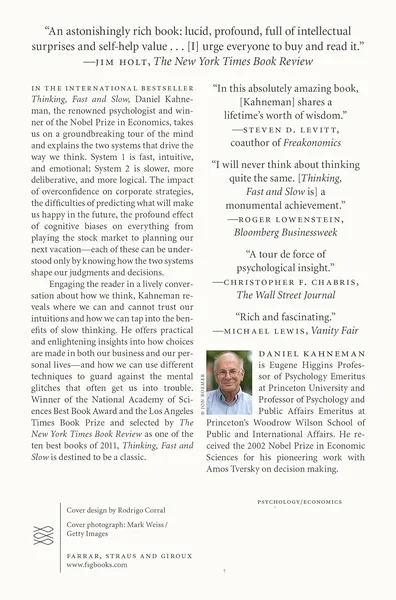
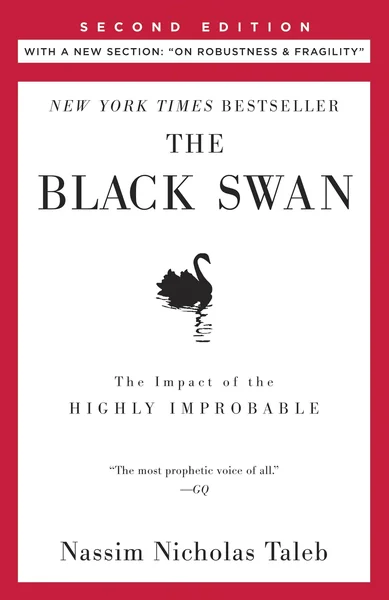
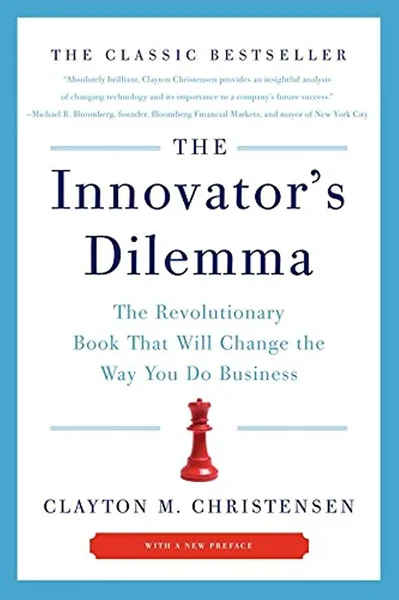
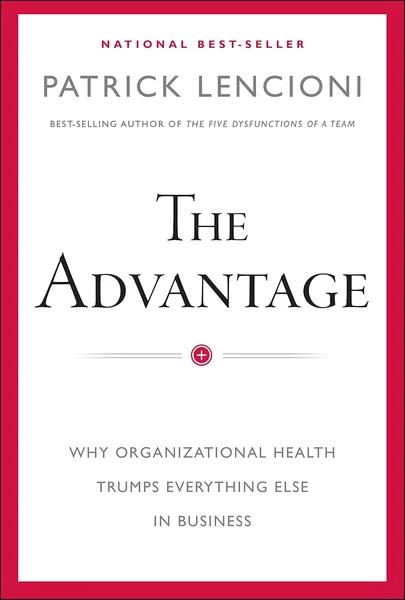
- Readers drawn to Thinking in Systems for its blend of rigorous frameworks and accessible prose will find natural companions in several books curated below. Daniel Kahneman's Thinking, Fast and Slow similarly reframes how readers understand decision-making through a structural lens, while Nassim Nicholas Taleb's The Black Swan: The Impact of the Highly Improbable addresses how complex systems produce extreme, unpredictable outcomes. For those interested in applying systemic thinking to business and innovation, Clayton M. Christensen's The Innovator's Dilemma offers a landmark framework for understanding why successful organizations fail, and Patrick M. Lencioni's The Advantage explores organizational health as a systemic priority. Freakonomics by Steven D. Levitt and Stephen J. Dubner also shares the spirit of reframing surface-level events through underlying structural causes.
- Who should read this?
- Thinking in Systems is ideally suited to curious generalists — readers in ecology, management, public policy, technology, or any field where understanding complex, feedback-driven behavior matters. Wikipedia's reception summary notes it is frequently cited as a key influence by programmers and computer scientists as well as people working in other disciplines, an unusual breadth for a book rooted in environmental science. It is less suited to technical practitioners seeking mathematical modeling tools or those already deeply familiar with Jay Forrester's MIT Systems Dynamics literature, who may find the conceptual terrain familiar.
- About Donella H. Meadows
- Donella Hager 'Dana' Meadows was an American environmental scientist, educator, and writer.
- What are the main themes?
- The book's animating theme is the shift from blaming outside forces to understanding internal structure: Meadows argues that system behaviors are determined by the connections and feedback loops within a system, not by external events. Key conceptual pillars include stocks and flows, feedback loops, types of system behavior, and — most influentially — leverage points, the places within a system where intervention produces the greatest change. These ideas are illustrated through examples spanning ecology, management, farming, demographics, and real-world current events drawn from the International Herald Tribune.
- What are the book's limitations?
- Three genuine limitations are worth weighing. First, the book is deliberately nontechnical — readers seeking mathematical modeling or quantitative systems dynamics methods will find it explicitly out of scope. Second, those already steeped in Jay Forrester's MIT Systems Dynamics tradition may find significant conceptual overlap with material they already know, since the book is openly positioned as an introduction to that tradition. Third, the posthumous editing process — while handled by close colleagues at the Sustainability Institute — means the text carries the shape of a manuscript that Meadows herself did not finalize for publication, a circumstance some readers may weigh when evaluating it as a complete and authoritative statement of her thinking.
Summarize this book
Follow up
Synthesized from verified book data & published reviews · How we review
Press Enter to ask. Answers come from our editorial Q&A — start typing to see related questions.
Age & Reading Level
Recommended age
Adult
Reading level
Adult
who it suits
Skip if you're looking for quantitative modeling tools or mathematical systems dynamics methods rather than a conceptual introduction.
Editorial Review
Donella H. Meadows' Thinking in Systems is a landmark nontechnical primer on systems thinking — originally drafted in 1993, published posthumously in 2008, and now widely regarded as the definitive introduction to a discipline that cuts across ecology, management, computer science, and global policy.
Read the Full ReviewBooks like Thinking in Systems
Curated picks for readers who enjoyed Thinking in Systems, with our reasoning for each match.
If you liked Thinking in Systems