
B
Burton G. Malkiel
American
Born 1932
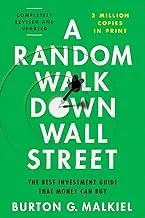
Burton Gordon Malkiel is an American economist, financial executive, and writer most noted for his classic finance book A Random Walk Down Wall Street.
On LuvemBooks, we've reviewed A Random Walk Down Wall Street.
1
Books ReviewedBurton G. Malkiel books in order
8 books. Dates and covers from Amazon.
 1969Strategies and rational decisions in the securities options marketAmazon ↗
 1980The Inflation-Beater's Investment GuideAmazon ↗
 1982Expectations and the Structure of Share PricesAmazon ↗
 1985A Random Walk Down Wall Street, 4th EditionAmazon ↗
 1999Earn MoreAmazon ↗
 2000The Index Fund SolutionAmazon ↗
 2003The Random Walk Guide To InvestingAmazon ↗
 2009The Elements of InvestingAmazon ↗
Ask LuvemBooks about Burton G. Malkiel
Burton G. Malkiel is an American economist best known for arguing, in A Random Walk Down Wall Street, that stock prices move unpredictably enough that a passive index-fund strategy consistently outperforms active stock-picking. LuvemBooks has reviewed one of his works, which carries a reader rating of 4.7/5 on Amazon — a reflection of how durably Malkiel's case for low-cost, long-term investing has resonated with readers across decades.
- Where should I start?
- There is really only one place to start: A Random Walk Down Wall Street, which is both Malkiel's most celebrated work and the book LuvemBooks has reviewed. It builds its argument from the ground up, explaining market theory, investment history, and practical portfolio strategy in a way that works for complete beginners while still holding the attention of experienced investors. Its 4.7/5 Amazon reader rating across hundreds of reviews suggests it delivers on that promise consistently.
- What's their writing style?
- Malkiel writes with the clarity of a professor who genuinely wants his audience to leave better informed — he layers in historical market data and academic research without letting the prose become dry or technical. His tone is measured and evidence-led; he tends to build arguments incrementally, anticipating common counterarguments (such as the appeal of active stock-picking) and dismantling them with data before offering his own conclusions. The result reads more like a well-structured lecture from a trusted teacher than either a dense textbook or a hype-driven financial self-help book.
- Books we've reviewed
- LuvemBooks has reviewed one book by Malkiel: A Random Walk Down Wall Street, his landmark argument for passive, index-fund investing that has remained in print and in active revision since 1973. It holds a reader rating of 4.7/5 on Amazon from 761 ratings.
- What genre do they write?
- Malkiel writes in the Business and Economics genre, specifically within the subspace of personal finance and investment strategy. His work sits closer to evidence-based financial education than to motivational money advice — he draws on academic economic research and decades of market data to make practical recommendations for individual investors. Readers who enjoy writers like John Bogle or William Bernstein are likely to find his approach similarly rigorous.
- What should I read after A Random Walk Down Wall Street?
- After A Random Walk Down Wall Street, most readers find it natural to move toward books that either deepen the passive-investing philosophy or broaden their understanding of portfolio construction. John Bogle's The Little Book of Common Sense Investing reinforces Malkiel's core argument with the perspective of the man who actually created the first index fund, while William Bernstein's The Four Pillars of Investing adds more detail on market history, valuation, and behavioral pitfalls. For readers who want to push further into the academic underpinnings, Eugene Fama and Kenneth French's research papers are frequently cited by Malkiel himself.
Who is Burton G. Malkiel?
Where should I start?
What's their writing style?
Books we've reviewed
What genre do they write?
What should I read after A Random Walk Down Wall Street?
Who is Burton G. Malkiel?
Burton Gordon Malkiel is an American economist, financial executive, and writer who has spent his career making the case for evidence-based, passive investing over active stock selection. He is best known for A Random Walk Down Wall Street, first published in 1973 and updated across multiple editions, which helped popularize the efficient market hypothesis for a general audience. Malkiel has also served on the boards of major financial institutions and as a professor at Princeton University, lending his work a grounding in both academic research and real-world finance.
Follow up
What is the efficient market hypothesis?
Has Malkiel updated his views over time?
Synthesized from verified book data & published reviews · How we review
Press Enter to ask. Answers come from our editorial Q&A — start typing to see related questions.
Authors Like Burton G. Malkiel

Benjamin Graham
Business & Economics
Benjamin Graham's The Intelligent Investor presents a value-investing framework that serves as a foundational counterpoint to Burton G. Malkiel's focus on market efficiency.
1 book reviewed
J
J. L. Collins
Business & Economics
The Simple Path to Wealth by J. L. Collins turns Malkiel's academic case for index investing into a simple, practical approach focused on low costs and one fund.
1 book reviewed

Nassim Nicholas Taleb
Business & Economics
Nassim Nicholas Taleb's The Black Swan extends Malkiel's market-unpredictability argument into rare, catastrophic events that no financial model anticipates.
1 book reviewed
M
Mel Lindauer
Business & Economics
Mel Lindauer's The Bogleheads' Guide to Investing applies passive-investing philosophy and index-fund principles to a concrete, step-by-step personal finance plan.
1 book reviewed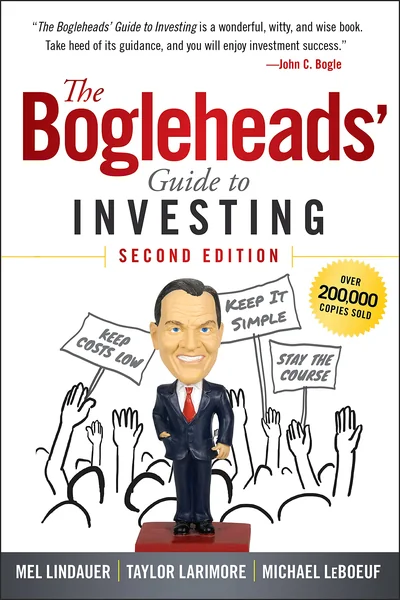
T
Taylor Larimore
Business & Economics
Taylor Larimore's The Bogleheads' Guide to Investing applies Malkiel's index-fund thesis to a concrete, step-by-step personal finance plan.
1 book reviewedM
Michael LeBoeuf
Business & Economics
Michael LeBoeuf's The Bogleheads' Guide to Investing applies passive-investing and index-fund philosophy to a concrete, step-by-step personal finance plan.
1 book reviewed