
In This Article
- What the Event Is and How It Started
- The Book at the Centre of the Event
- Context: Haley's Place in American Letters
- What the Read-A-Thon Represents for the Book's Legacy
A Boston community event is doing what the best literary gatherings always do: transforming a book from a solitary reading experience into a shared civic act. As reported in a May 2026 feature by the Bay State Banner, the second annual Malcolm X Read-A-Thon is inviting the public to read aloud or listen to passages from The Autobiography of Malcolm X — the landmark 1965 collaboration between Malcolm X and Alex Haley.
What the Event Is and How It Started
The Read-A-Thon asks participants to gather around The Autobiography of Malcolm X in a format modelled on public reading events already established in Boston. According to the Bay State Banner, the organiser drew inspiration from an existing Moby-Dick Read-A-Thon in the city, reasoning: "Why not have a Black author? Why not Malcolm X?"
The event ran for the first time in 2025, timed to coincide with the centenary of Malcolm X's birth, and has now returned for a second year.
The Book at the Centre of the Event
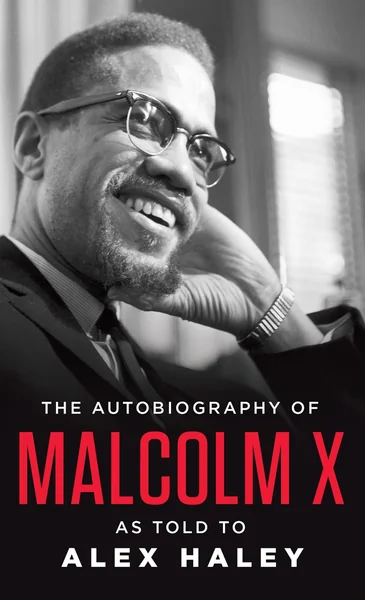
The Autobiography of Malcolm X was released posthumously on October 29, 1965 — nine months after Malcolm X's assassination — and is built from a series of in-depth interviews Haley conducted with Malcolm X between 1963 and 1965. According to Wikipedia's entry on the book, it functions as a religious conversion narrative outlining Malcolm X's philosophy of Black pride, Black nationalism, and pan-Africanism, tracing his life from childhood in Omaha, Nebraska, through imprisonment, his rise as the Nation of Islam's foremost spokesman, and his eventual founding of the Organization of Afro-American Unity.
The collaboration between the two men was editorially complex. As Wikipedia notes, modern scholars regard Haley not merely as a ghostwriter but as an essential collaborator who deliberately muted his own authorial voice to create the effect of Malcolm X speaking directly to readers — at one point persuading Malcolm X to favour "suspense and drama" over rewriting earlier chapters as a polemic against the Nation of Islam, which he had by then left.
When The New York Times reviewer Eliot Fremont-Smith assessed it upon publication, he called it "a brilliant, painful, important book." In 1998, Time named it one of ten required-reading nonfiction books of the twentieth century.
For a full assessment of the text, see our review.
Context: Haley's Place in American Letters
Alex Haley, who conducted the interviews underpinning the autobiography, went on to write Roots: The Saga of an American Family in 1976 — a book Wikipedia describes as drawing an ABC television adaptation that reached a record-breaking audience of 130 million viewers and broadly raised public awareness of Black American history. According to Wikipedia's entry on Haley, The Autobiography of Malcolm X was his first book, and the interviews on which it was based were not always straightforward: early sessions frustrated Haley because Malcolm X spoke primarily about Nation of Islam leader Elijah Muhammad rather than his own life.
The finished book, shaped through nearly two years of collaboration, is described by Penguin Random House as "the definitive statement of a movement and a man whose work was never completed but whose message is timeless." Malcolm X had told Haley during the process that he did "not expect to live long enough to read this book in its finished form."
What the Read-A-Thon Represents for the Book's Legacy
The communal reading format places The Autobiography in a tradition of civic literary engagement, and the choice of this particular title is explicitly grounded in its ongoing relevance. A commemorative edition published on the centenary of Malcolm X's birth — the same milestone that prompted the Read-A-Thon's inaugural year, per the Bay State Banner — frames the book as both a historical document and a lens for examining present-day questions about race and the American Dream.
The event's return for a second year indicates the organisers intend it as a recurring fixture in Boston's literary calendar, though the Bay State Banner coverage does not specify plans beyond the current edition.
Frequently Asked Questions
Is The Autobiography of Malcolm X worth reading in 2026?
Absolutely. The Autobiography of Malcolm X remains essential reading for anyone seeking to understand American civil rights history, systemic racism, and the politics of identity. We rate it 4.5 out of 5 stars — its combination of personal candor and political clarity is unmatched in the memoir genre. Events like Boston's Read-A-Thon continue to demonstrate its relevance to contemporary readers.
What is the main message of The Autobiography of Malcolm X?
At its core, The Autobiography of Malcolm X is a story of transformation — from poverty and crime to political awakening and finally to a broader global humanism in the final chapters. It argues that identity, belief, and moral purpose are not fixed, and that systems of racial oppression must be named and confronted directly. Malcolm X and Alex Haley together make the case that personal change and political change are inseparable.
Who should read The Autobiography of Malcolm X?
The book is essential reading for adults and mature teens interested in American history, civil rights, race, and politics. Our review notes that mature themes — including violence and ideological extremism — make thoughtful guidance advisable for younger readers. Educators, historians, and anyone exploring biography as a form will also find it deeply rewarding.
Who wrote The Autobiography of Malcolm X — was it Malcolm X or Alex Haley?
The book is a collaboration: Alex Haley conducted extensive interviews with Malcolm X over several years and shaped those conversations into the narrative we know today. Malcolm X reviewed and approved the manuscript, but he was assassinated in February 1965 before publication. Both authors deserve credit — Haley's editorial craft is as important to the book's power as Malcolm X's remarkable life story.
What is the Malcolm X Read-A-Thon in Boston?
The Malcolm X Read-A-Thon is an annual community event in Boston that invites members of the public to read aloud or listen to passages from The Autobiography of Malcolm X. Now in its second year, the event was covered by the Bay State Banner in May 2026. It aims to keep the book in active community engagement rather than treating it as a static historical artifact.
How does The Autobiography of Malcolm X compare to other landmark biographies?
The Autobiography of Malcolm X is widely considered one of the great American memoirs — comparable in ambition and moral seriousness to landmark works like Robert A. Caro's The Power Broker. Where Caro examines power from the outside, Malcolm X's account works from the inside, making it a uniquely intimate and urgent document. Our reviews of both books explore how biography can function as political and moral argument.
No Discussion Yet
Be the first to share your thoughts on this news article.