

8 min read
4.6
· 20 Amazon ratingsShare This Review
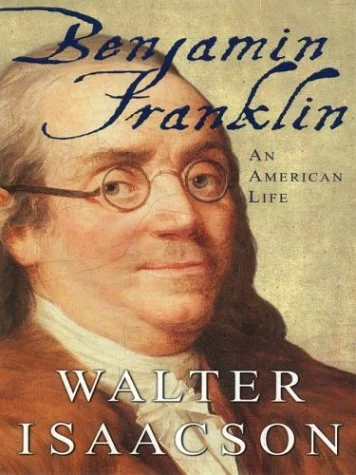
Benjamin Franklin: An American Life by Walter Isaacson Review: A Richly Researched Portrait of a Founding Father
Walter Isaacson's Benjamin Franklin: An American Life is a comprehensive biography of Benjamin Franklin — statesman, scientist, printer, and Founding Father — that traces the full arc of his remarkable life while arguing for his enduring relevance to American identity, pragmatism, and political thought.
LuvemBooks Verdict
Best for
Readers who want a single, sweeping authoritative biography of Benjamin Franklin that covers his full range as printer, scientist, inventor, diplomat, and Founding Father — and who are drawn to narrative-driven, accessible biography over academic scholarship.
Worth it if
Worth reading if you want an enthusiastic, well-sourced portrait of Franklin that also advances a compelling thesis about how each era reinterprets his legacy as a reflection of its own values.
Skip if
Skip it if you're seeking a skeptical or revisionist account of Franklin — Isaacson's openly admiring stance and the biography's ambitious breadth mean critical distance and granular depth in any single area are occasionally sacrificed.
What readers & critics say
Kirkus Reviews called it "a solid contribution to Frankliniana" and a "nicely done life" of Franklin, while noting it is "a little less sophisticated" than H.W. Brands's competing biography. Wikipedia's summary of critical reception records praise from multiple publications including Foreign Affairs and The Guardian, and the New York Times review (retrieved via thebestbiographies.com) observed that Isaacson engages in "a bit of scholarly overkill" with its extensive apparatus of appendices and notes.
“A little less sophisticated than H.W. Brands's The First American, but a solid contribution to Frankliniana all the same.”
— Kirkus ReviewsAge & Reading Level
Recommended age
Adult
Reading level
Adult
who it suits
Skip if you want a skeptical, revisionist, or critically distanced account of Franklin's life and legacy.
Benjamin Franklin: An American Life by Walter Isaacson is Trending
Benjamin Franklin Adaptation Heading to Prime Video in 2026
A new Benjamin Franklin drama adaptation is listed on Amazon MGM Studios' 2026 Prime Video release schedule, putting fresh eyes on one of the best Franklin biographies out there. If you want the full story before you watch, Isaacson's book is the go-to.
A Benjamin Franklin dramatic adaptation is in the works at Amazon MGM Studios, with a 2026 release slated for Prime Video. The project is listed as completed on Prime Video's 2026 release schedule, meaning viewers could be watching it very soon — and that kind of buzz naturally sends readers back to the books.
Isaacson's biography is one of the most accessible and well-regarded accounts of Franklin's life, covering everything from his days as a printer and inventor to his crucial role in shaping the United States. It's the kind of book that pairs perfectly with a screen adaptation — you get the full picture that a limited series can't always fit in.
Worth noting: there was already a 2024 Apple TV+ miniseries called *Franklin*, though that one focused specifically on his time in France. The new Prime Video project appears to be a separate production, so Franklin fans are getting multiple chances to revisit this Founding Father on screen. Isaacson's biography covers the whole life, making it a solid companion to either adaptation.
In This Review
- What Works & What Doesn't
- What the Book Is and What It Argues
- Scope and the Breadth of Franklin's Legacy
- Isaacson's Central Thesis on Franklin's Enduring Resonance
- Critical Reception and Strengths
- Who This Book Is For and One Noted Limitation
What Works & What Doesn't
What Works
- Praised by Critics as 'a lively, readable, and affecting book,' and also commended by Foreign Affairs
- Engages Franklin's full range — as printer, scientist, inventor, diplomat, and statesman — rather than reducing him to a single role
- Advances a thought-provoking thesis about how each era reinterprets Franklin as a reflection of its own values
- Presents a nuanced personal portrait, addressing both Franklin's emotional distance as a father and his genuine intellectual warmth in friendship
- Publisher describes the narrative as 'colorful and intimate,' designed to convey the full sweep of Franklin's life
What Doesn't
- Isaacson's deep admiration for Franklin has been noted as tipping toward celebration over critical distance, which may disappoint readers seeking a more skeptical biographical perspective
- The biography's ambitious scope — spanning science, politics, printing, and diplomacy — means individual areas receive less granular depth than a more focused study might provide
What the Book Is and What It Argues
Scope and the Breadth of Franklin's Legacy
Isaacson's Central Thesis on Franklin's Enduring Resonance
Critical Reception and Strengths
Who This Book Is For and One Noted Limitation
Frequently Asked Questions
Sources & Further Reading
The key facts and claims in this review are grounded in the retrieved, verified sources listed below.
- Cited in this review
- 1
classicbooksandephemera.com
- 2
theinvestorspodcast.com
- 3
- Further reading
- 4
Walter Isaacson, Wikipedia
- 5
- 6
en.wikipedia.org
- 7
repositories.lib.utexas.edu
- 8
nytimes.com
- 9
- 10
- 11
Related Reviews
Reviews of books we picked for readers who enjoyed Benjamin Franklin.

Reader Comments
No comments yet
Be the first to share your thoughts!