BOOKS
Published

Read Time

3 min read

Curated & edited by

LuvemBooks Editorial

How we create our reviews →
Share This Review

The Beatles: The Biography by Bob Spitz Review: Ambitious, Contested, and Compulsively Readable

Bob Spitz's The Beatles: The Biography is a sweeping, deeply researched account of John Lennon, Paul McCartney, George Harrison, and Ringo Starr — originally published by Little, Brown and Company in 2005 and later reissued in paperback — that drew generally favorable reviews from major outlets including The New York Times and The Washington Post, while also attracting sustained criticism from journalists and dedicated fans who identified factual errors and questioned the author's editorial impartiality.

LuvemBooks Verdict

Best for

General readers seeking a richly detailed, narrative-driven introduction to the full sweep of the Beatles' story — particularly those coming to it fresh or without deep prior knowledge of Beatles historiography.

Worth it if

You want an ambitious, large-canvas popular biography grounded in extensive reported research — including roughly 650 interviews and access to private Lennon tapes — and can accept that it reads as compelling narrative rather than rigorous scholarly history.

Skip if

You have deep existing knowledge of Beatles history or require the biographical record to hold up under close factual scrutiny — documented errors, the author's evident editorial slant against Lennon's relationship with Yoko Ono, and Spitz's dismissive response to correction make it an unreliable primary source for knowledgeable readers.

What readers & critics say

Kirkus Reviews called it an "overblown account" and compared Spitz's rough treatment of his subjects to Albert Goldman's, concluding that completists may want it but others should consider Hunter Davies's biography instead. On the other hand, encyclopedia.com records that a critical coverage reviewer called it "the best of the bunch" and Bob Cannon in critical coverage named it "the most vivid portrait [of the Beatles] ever," while barnesandnoble.com's product copy reflects the book's mainstream reception as "irresistible," "riveting," and "masterful" according to major outlets quoted there.

For completists, a necessity. Others will want to consult Hunter Davies's The Beatles.

Kirkus Reviews

An overblown account — Spitz seems taken only with the always affable Ringo Starr.

Kirkus Reviews

The first third of this opus is a treasure chest of revelation — Spitz demonstrates his deep research and writing chops.

csmonitor.com
Sources: Kirkus Reviews, encyclopedia.com, barnesandnoble.com
4.6from 1,334 Amazon ratings— reader ratings, not a LuvemBooks score

Look inside the book

Preview the actual pages, via Google Books
In This Review
  • What Works & What Doesn't
  • What the Book Is and What It Sets Out to Do
  • The Research Behind the Narrative
  • Reception and Cultural Significance
  • The Factual Accuracy Controversy
  • Who This Book Is Best Suited For

What Works & What Doesn't

What Works
  • Six years of reported research, including approximately 650 interviews and access to private John Lennon tapes, gives the book an unusually broad sourcing base for a popular biography
  • Received generally favorable reviews from major outlets, with The New York Times, The Washington Post, and the Boston Globe all offering significant praise
  • Positioned as a corrective to decades of Beatles mythology, it aims to present the four members as complex, flawed individuals rather than icons
  • One of the first major Beatles biographies published after the band's own Anthology project, staking out fresh interpretive ground for a general readership
What Doesn't
  • Journalists and dedicated fans identified factual errors throughout the text, and Beatles historian Erin Torkelson Weber has written that these inaccuracies damaged the book's standing as a historical source
  • Spitz's editorialization — particularly a documented disapproval of John Lennon's relationship with Yoko Ono — undermines the book's credibility as an impartial account, according to Weber
  • Spitz's dismissive public response to critics who catalogued errors raised further questions about the book's accountability to correction
A genuinely ambitious biography of the Fab Four, The Beatles: The Biography earns its scope through extraordinary research but carries real limitations that any informed reader should weigh before treating it as the definitive record.

What the Book Is and What It Sets Out to Do

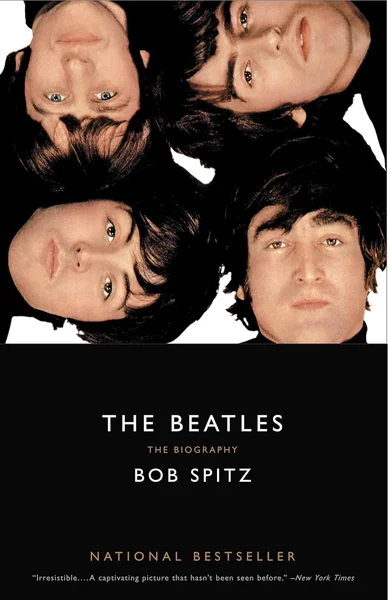
The Beatles: The Biography by Bob Spitz front cover
First published by Little, Brown and Company on November 1, 2005, The Beatles: The Biography is a full-scale narrative biography of John Lennon, Paul McCartney, George Harrison, and Ringo Starr — tracing the band's story from their origins through the arc of their collective and individual careers. Bob Spitz positioned the work as a fresh interpretation of the Beatles' story, one designed to cut through the carefully managed mythology that accumulated around the band almost from the moment they became famous. The publisher's own framing, echoed across promotional materials, frames the book as a corrective to decades of spin — an attempt to reach the human beings behind the "lovable moptop image," in the words of Carlo Wolff writing for the Boston Globe. The paperback reprint edition, issued by Little, Brown Paperbacks on October 10, 2006, made that argument available to an even wider audience.

The Research Behind the Narrative

What gives the book its particular weight is the reported scale of its sourcing. Spitz spent six years on the project, conducting what he described as 650 interviews. That research included cooperation from Paul McCartney and the late George Harrison, as well as interviews with figures whose accounts had not previously entered the mainstream Beatles biographical record. Spitz also drew from private tapes made by John Lennon before his death in 1980. The result, according to the Boston Globe's Wolff, is a book that "fleshed out fully" the story of four "flawed, singularly creative human beings," and that does "exceptionally well" at contextualizing their rise. The book was also among the first major Beatles biographies to follow the band's own Anthology multimedia project, whose authorized book appeared in 2000 — giving Spitz both the challenge and the opportunity of staking out independent interpretive ground after the band's own preferred narrative had been set.

Reception and Cultural Significance

The Beatles: The Biography received generally favorable reviews upon publication, with particular praise from The New York Times and The Washington Post. The Boston Globe called it "masterly … a deep, serious, and accomplished account." That mainstream critical welcome, combined with its bestselling status, established the book as a landmark of popular music biography for a general readership. Its significance is also historical in a different sense: as Wikipedia notes, it was the first major Beatles biography to appear after the rise of internet fan forums, fanzines, and online publications — a new environment that made scrutiny faster, broader, and more organized than anything previous biographies had faced. That context shaped how the book was received and debated in ways that older biographies simply never encountered.

The Factual Accuracy Controversy

The book's most consequential limitation is well documented. Journalists and dedicated Beatles fans identified factual errors throughout the text, and the online environment amplified those findings significantly. Beatles historian Erin Torkelson Weber has written that the book's standing suffered as a direct result of these basic factual inaccuracies. Spitz's response to critics did little to reassure skeptics: when an editor at the Beatles fanzine Daytrippin' submitted a list of errors, Spitz replied, "You need an enema. Really! Do something useful with your life." That exchange became a notable data point in assessments of the author's relationship to correction and accountability. Weber further notes that Spitz's credibility as a historical source was compounded by his tendency toward editorialization — most notably a discernible disapproval of John Lennon's relationship with Yoko Ono that surfaces across the text. According to Weber, Jonathan Gould's biography Can't Buy Me Love subsequently proved more persuasive to "knowledgeable readers" on those contested grounds.

Who This Book Is Best Suited For

The tension between the book's genuine strengths and its documented weaknesses makes audience calibration important. For general readers seeking a richly detailed, narrative-driven introduction to the full sweep of the Beatles' story — one grounded in extensive interviews and written with evident ambition — Spitz's biography remains a substantial and engaging entry point. Major mainstream outlets endorsed it as exactly that. For readers with deep existing knowledge of Beatles history, or those who require the biographical record to hold up under close factual scrutiny, the acknowledged errors and the author's editorial slant toward Lennon's personal life introduce friction that is difficult to ignore. The book is best understood as a compelling, large-canvas popular biography rather than a work of rigorous scholarly history — a distinction that matters considerably depending on what a reader brings to it and what they expect to take away.

Sources & Further Reading

The key facts and claims in this review are grounded in the retrieved, verified sources listed below.

  1. Cited in this review
  2. 1
  3. 2
  4. 3
  5. Further reading
  6. 4
    Bob Spitz — author profileHigh-authority source

    Bob Spitz, Wikipedia

  7. 5
  8. 6
  9. 7
  10. 8
  11. 9
  12. 10
  13. 11
  14. 12