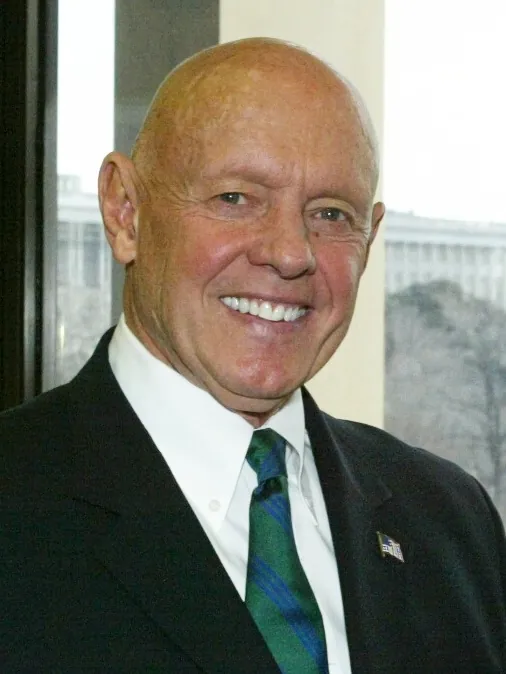
Stephen R. Covey
1
Books ReviewedAsk LuvemBooks about Stephen R. Covey
- Where should I start?
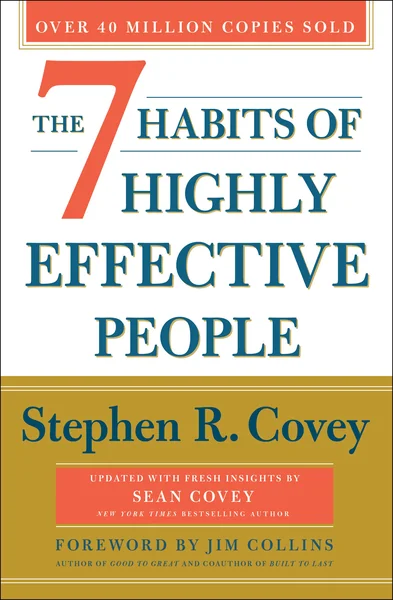
- The 7 Habits of Highly Effective People is the natural and obvious starting point — it is Covey's foundational text and the work that introduced the principle-centered framework all his subsequent books build upon. Covey moves readers through a deliberate progression from personal responsibility and goal-setting through to collaborative and empathetic relationship-building, so the sequential structure rewards reading it from beginning to end rather than dipping in. With an Amazon reader rating of 4.8/5 from over 16,000 ratings, it also happens to be one of the most consistently well-regarded self-development books in its category. If you engage with its ideas, Covey's later works offer natural next steps.
- What's their writing style?
- Covey writes in a methodical, teacher's voice — structured and didactic rather than conversational, with each concept introduced, defined, and then illustrated through real-world anecdotes and practical exercises. He favors numbered frameworks and clear hierarchies, which makes his arguments easy to follow but also means the books read more like an extended seminar than a flowing narrative. His tone is earnest and at times philosophical, drawing on a range of sources from business case studies to ancient wisdom traditions to make the case that his principles are universal rather than culturally specific. Readers who respond well to structured nonfiction with actionable takeaways tend to find his approach highly effective.
- Books we've reviewed
- LuvemBooks has reviewed one Stephen R. Covey title to date. The 7 Habits of Highly Effective People (Self-Help & Personal Development) lays out a sequential, principle-centered framework for effectiveness, arguing that sustainable success depends on character and values rather than techniques alone — it holds an Amazon reader rating of 4.8/5 from over 16,000 ratings.
- What genre do they write?
- Covey wrote primarily in the self-help and personal development genre, with a strong overlap into business and leadership literature. His books are less motivational in the pop-psychology sense and more prescriptive and framework-driven — closer to structured professional development than to inspirational memoir. The 7 Habits of Highly Effective People is the title that defines his place in the canon, and it sits comfortably alongside works by authors like Peter Drucker and Dale Carnegie in terms of its ambition and tone.
- What should I read after The 7 Habits?
- If The 7 Habits resonated, Covey's own The 8th Habit is the most direct continuation, extending the framework into questions of meaning and contribution in an information-age workplace. For readers wanting to go deeper on specific habits, First Things First — co-authored by Covey — expands substantially on the time-management and prioritization principles introduced in Habit 3. Outside Covey's own catalog, James Clear's Atomic Habits offers a more behaviorally grounded take on the mechanics of habit formation that pairs well with Covey's values-first perspective.
Who is Stephen R. Covey?
Follow up
Synthesized from verified book data & published reviews · How we review
Press Enter to ask. Answers come from our editorial Q&A — start typing to see related questions.
Authors Like Stephen R. Covey
Josie Grand
Josie Grand is a bold and versatile author with a deep passion for storytelling. Her books span a wide range of genres—from erotic romance and psychological thrillers to religious fiction and children's literature.
1 book reviewed

Carol S. Dweck
Carol S. Dweck, Ph.D., is an American psychologist and author best known for her research on mindset, motivation, and success. She coined the term "growth mindset" and brought it mainstream with her 2006 book *Mindset: The New Psychology of Success*. She has held professorships at Columbia and Harvard Universities, has lectured worldwide, and is married to David Goldman, a national theatre director and founder of the National Center for New Plays at Stanford.
1 book reviewed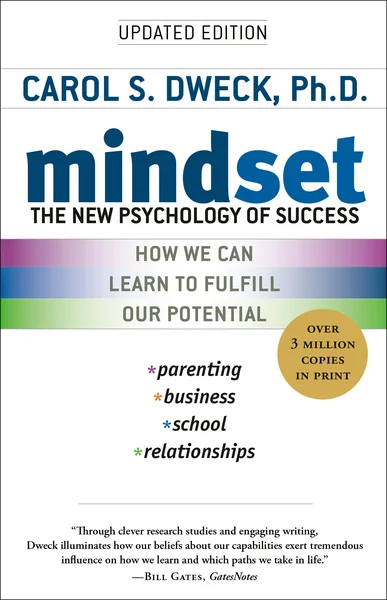
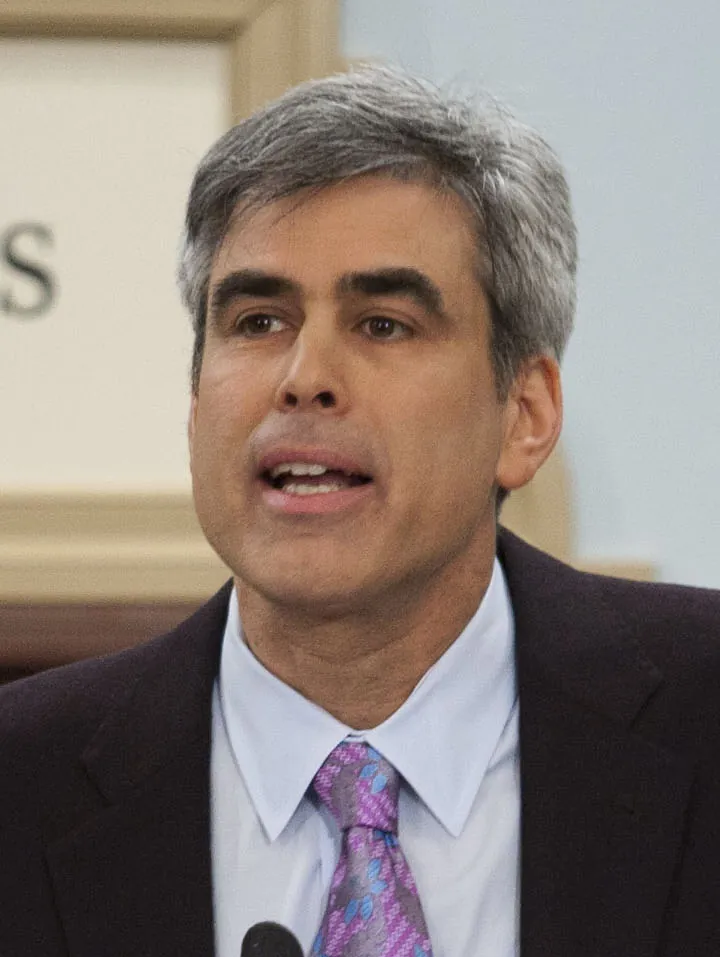
Jonathan Haidt
Jonathan David Haidt is an American social psychologist and author.
3 books reviewed


Daron Acemoglu
Kamer Daron Acemoğlu is a Turkish-American economist of Armenian descent who has taught at the Massachusetts Institute of Technology since 1993, where he is currently the Elizabeth and James Killian Professor of Economics, and was named an Institute Professor at MIT in 2019.
1 book reviewed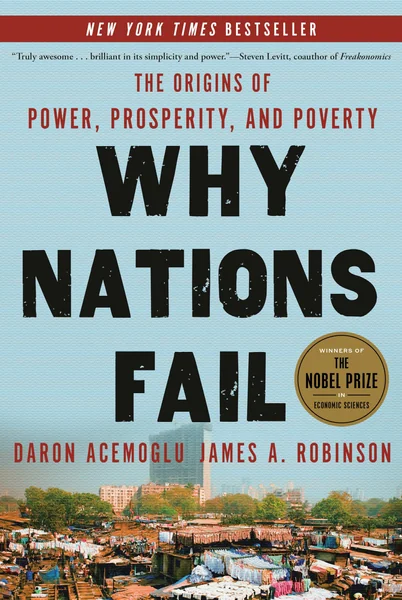

James A. Robinson
James Alan Robinson is a British-American economist and political scientist.
1 book reviewed
Thomas Piketty
Thomas Piketty is a French economist who is a professor of economics at the School for Advanced Studies in the Social Sciences, associate chair at the Paris School of Economics (PSE) and Centennial Professor of Economics in the International Inequalities Institute at the London School of Economics (LSE)..
1 book reviewed