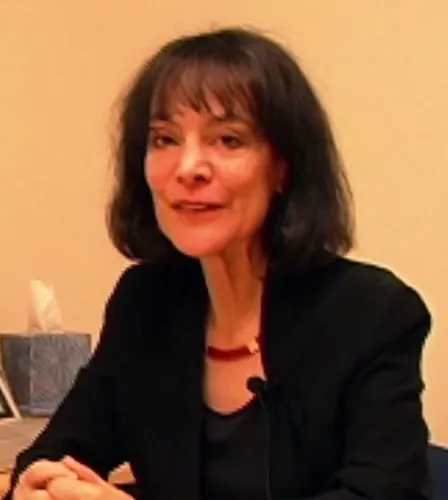
Carol S. Dweck
Born 1946
Carol S. Dweck, Ph.D., is an American psychologist and author best known for her research on mindset, motivation, and success. She coined the term "growth mindset" and brought it mainstream with her 2006 book Mindset: The New Psychology of Success. She has held professorships at Columbia and Harvard Universities, has lectured worldwide, and is married to David Goldman, a national theatre director and founder of the National Center for New Plays at Stanford.
Biographical details sourced from Wikipedia.
On LuvemBooks, we've reviewed Mindset.
1
Books ReviewedCarol S. Dweck books in order
2 books; 1 reviewed on LuvemBooks. Dates and covers from Amazon.
 1999Self-theoriesAmazon ↗
 2006Our review →
Ask LuvemBooks about Carol S. Dweck
Carol S. Dweck is a Stanford psychologist whose research on motivation and intelligence shaped one of the most widely discussed ideas in modern education and self-development. LuvemBooks has reviewed one book by Dweck — Mindset: The New Psychology of Success, which makes the case, backed by decades of her own research, that believing abilities can be developed through effort fundamentally changes how people respond to challenges and failure. Her writing translates controlled psychological studies into practical frameworks, using case studies from sports, business, parenting, and schooling to show how a single underlying belief shapes achievement across almost every domain of life.
- Where should I start?
- Mindset: The New Psychology of Success is the natural starting point — and as the only Dweck title we've reviewed, it's also the definitive entry into her work. It lays out her core thesis clearly and accessibly, moving through evidence drawn from education, business, sports, and parenting to show how a growth mindset plays out in real life. Readers with no prior background in psychology find it approachable, while those familiar with self-development literature tend to appreciate that the arguments are grounded in actual research rather than anecdote. It holds an Amazon reader rating of 4.6 out of 5 across more than 23,000 ratings, which speaks to how broadly it resonates.
- What's their writing style?
- Dweck writes in a clear, measured academic-popular voice — authoritative without being jargon-heavy. Her approach is to anchor every major claim in research findings, often her own longitudinal and experimental studies, before illustrating those findings with recognizable real-world examples drawn from classrooms, locker rooms, and boardrooms. The tone is direct and at times prescriptive, structured around helping readers diagnose their own mindset and understand the practical consequences of changing it. She does not rely on dramatic storytelling or personal memoir; the persuasion comes from the cumulative weight of evidence rather than narrative momentum.
- Books we've reviewed
- We have reviewed one book by Carol S. Dweck on LuvemBooks: Mindset: The New Psychology of Success (Amazon reader rating 4.6/5 from 23,503 ratings) — a research-backed argument that the belief in developable ability, rather than fixed talent, is the single most reliable predictor of long-term achievement across education, sport, business, and parenting.
- What genre does Carol S. Dweck write?
- Dweck's reviewed work on LuvemBooks sits in the Health & Wellness category, but that label undersells the scope of Mindset. The book is more precisely a work of popular psychology and applied behavioral science — it uses experimental research to make an argument about human development that touches on education, parenting, sport, and organizational leadership. Readers who gravitate toward popular science, self-development grounded in evidence, or the social science writing of authors like Daniel Kahneman or Angela Duckworth tend to find it a natural fit.
- What should I read after Mindset?
- If Mindset resonated with you, the most natural next step depends on what specifically engaged you. For readers drawn to the evidence on effort and achievement, Angela Duckworth's Grit: The Power of Passion and Perseverance covers adjacent ground with a similar research-backed approach. Those more interested in the educational applications of Dweck's work might explore the writing of educational psychologist John Hattie, whose large-scale research into what actually improves learning outcomes complements Dweck's framework. For a broader grounding in the psychology of motivation, Edward Deci and Richard Ryan's work on self-determination theory provides a rigorous academic backdrop to many of Mindset's core claims.
Who is Carol S. Dweck?
Where should I start?
What's their writing style?
Books we've reviewed
What genre does Carol S. Dweck write?
What should I read after Mindset?
Who is Carol S. Dweck?
Carol S. Dweck, Ph.D., is an American psychologist and professor at Stanford University, previously holding positions at Columbia and Harvard. She is best known for developing the concept of the "growth mindset" — the idea that people who believe their abilities can be developed through effort and learning outperform those who see their abilities as fixed. Her 2006 book Mindset: The New Psychology of Success brought this research to a mainstream audience and has since influenced schools, sports programs, and corporations worldwide. She has lectured globally and her work remains one of the most cited frameworks in educational psychology.
Follow up
Where does Dweck currently work?
What is the "growth mindset" in simple terms?
Synthesized from verified book data & published reviews · How we review
Press Enter to ask. Answers come from our editorial Q&A — start typing to see related questions.
Authors Like Carol S. Dweck
D
Daniel J. Siegel
Science & Nature
Self-Help & Personal Development
Daniel J. Siegel's The Whole-Brain Child translates neuroscience into practical strategies for fostering healthy brain development and raising resilient, growth-oriented children.
2 books reviewed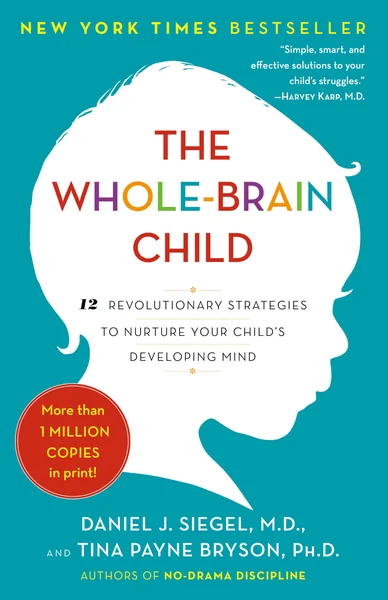
T
Tina Payne Bryson
Science & Nature
Self-Help & Personal Development
Tina Payne Bryson's The Whole-Brain Child applies neuroscience to parenting, offering practical strategies for raising resilient, growth-oriented kids that complement Carol S. Dweck's research on mindset.
2 books reviewedD
Daniel Kahneman
Science & Nature
Business & Economics
Daniel Kahneman’s Thinking, Fast and Slow shares an empirical, research-first tone, examining how unconscious mental patterns and cognitive biases drive human decision-making.
1 book reviewed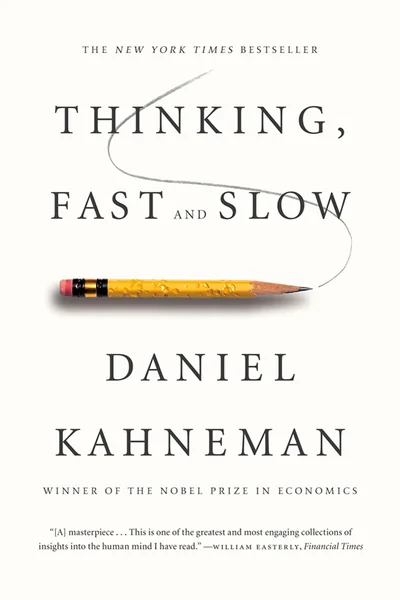
B
Bob Burg
Self-Help & Personal Development
Business & Economics
Bob Burg's The Go-Giver mirrors Dweck's focus on mindset, showing how an internal shift toward giving changes outcomes before tactics do.
1 book reviewed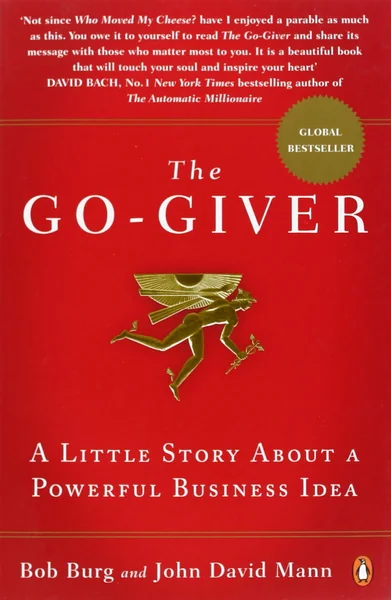
J
Jon Kabat-Zinn
Science & Nature
Self-Help & Personal Development
Jon Kabat-Zinn's Full Catastrophe Living complements Dweck's framework by providing concrete, practice-first techniques for changing how you respond to challenge and stress.
3 books reviewed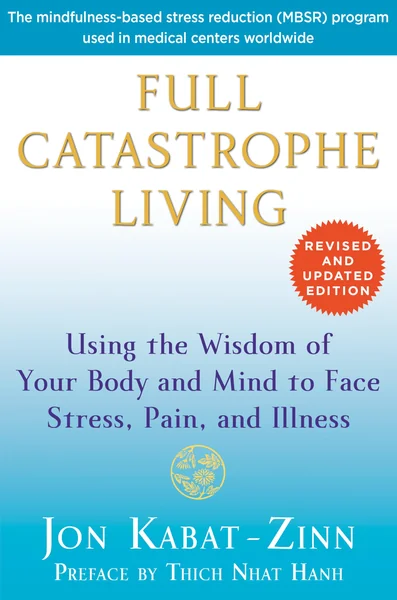



Mark Manson
Self-Help & Personal Development
Mark Manson (born March 9, 1984) is an American self-help author and blogger. As of 2026, he has authored or co-authored four books, three of which, The Subtle Art of Not Giving a Fuck, Everything Is Fucked: A Book About Hope, and Will, were New York Times bestsellers.
2 books reviewed