C
Clayton M. Christensen
Clayton M. Christensen (1952–2020) was a Harvard Business School professor and one of the most influential thinkers in business and innovation. He authored the bestselling The Innovator's Dilemma and co-founded multiple ventures, including Rose Park Advisors, Innosight, and CPS Technologies. He was also a founder of the Jobs to Be Done development methodology.
Biographical details sourced from Wikipedia.
On LuvemBooks, we've reviewed The Innovator's Dilemma.
1
Books ReviewedClayton M. Christensen books in order
13 books. Dates and covers from Amazon.
 1997The Innovator's Dilemma 1stAmazon ↗
 1999Innovation and the General ManagerAmazon ↗
 2004The Innovator's SolutionAmazon ↗
 2004Seeing What's NextAmazon ↗
 2008The Innovator's PrescriptionAmazon ↗
 2010Innovation KillersAmazon ↗
 2010Disrupting Class, Expanded EditionAmazon ↗
 2011The Innovative UniversityAmazon ↗
 2012How Will You Measure Your Life?Amazon ↗
 2016Clayton M. Christensen ReaderAmazon ↗
 2019The Prosperity ParadoxAmazon ↗
 2019The Innovator's DNA, Updated, with a New PrefaceAmazon ↗
 2024The Disruptive Innovation SetAmazon ↗

Ask LuvemBooks about Clayton M. Christensen
Clayton M. Christensen is represented on LuvemBooks by one reviewed title, The Innovator's Dilemma, which holds an Amazon reader rating of 4.4/5 from over 500 ratings. Across his work, Christensen builds arguments through detailed case studies of real industries — from disk drives to steel — using them to demonstrate how successful companies can fail precisely because they listen too closely to existing customers and ignore emerging, lower-margin markets. His writing is analytical and research-grounded rather than anecdotal, making it essential reading for anyone trying to understand how markets shift.
- Where should I start?
- If you are new to Christensen's work, The Innovator's Dilemma is the natural starting point — and fortunately it is the title we have reviewed. Published in 1997, it lays out the core theory of disruptive innovation with enough historical case study detail to make the argument genuinely convincing rather than merely assertive. Readers with a background in business will find it immediately applicable; readers without one will still find the logic accessible because Christensen builds it methodically from the ground up.
- What's their writing style?
- Christensen writes in the tradition of rigorous business academia made readable — he builds each argument from empirical evidence, typically grounding it in longitudinal case studies of specific companies and technologies before drawing broader conclusions. His tone is measured and precise rather than evangelical, which gives his claims more weight but also means his books require active engagement rather than passive reading. He avoids the motivational-speaker register common in popular business writing; instead, he writes as someone who genuinely wants the reader to understand a mechanism, not just be persuaded of a conclusion.
- Books we've reviewed
- We have reviewed one book by Christensen on LuvemBooks: The Innovator's Dilemma, which carries an Amazon reader rating of 4.4/5 from 517 ratings and makes the case — through detailed industry case studies — that market-leading companies fail not from incompetence but from rational decisions that leave them exposed to disruption from below.
- What genre do they write?
- Christensen writes primarily in the Business and Economics genre, with a specific focus on innovation theory, competitive strategy, and organizational behavior. His work sits closer to the scholarly end of business publishing — it is built on academic research and data — but is written to be useful to practitioners, not just academics. Readers who enjoy books that explain systemic patterns in markets, rather than offering tactical how-to advice, are typically the best fit for his writing.
- What should I read after The Innovator's Dilemma?
- After The Innovator's Dilemma, the most natural next step within Christensen's own catalog is The Innovator's Solution, which shifts from diagnosing why disruption happens to offering guidance on how companies can deliberately pursue it. For readers who want to broaden into related thinking from other authors, Geoffrey Moore's Crossing the Chasm addresses the adjacent problem of how new products gain traction in mainstream markets — a question The Innovator's Dilemma raises but does not fully answer.
Who is Clayton M. Christensen?
Where should I start?
What's their writing style?
Books we've reviewed
What genre do they write?
What should I read after The Innovator's Dilemma?
Who is Clayton M. Christensen?
Clayton M. Christensen (1952–2020) was a professor at Harvard Business School and one of the most cited thinkers in modern business strategy. He is best known for developing the theory of disruptive innovation, which describes how smaller competitors using simpler, cheaper products can eventually overturn established industry leaders. Beyond academia, he co-founded multiple ventures including Innosight and Rose Park Advisors, and was a founder of the Jobs to Be Done methodology, which has shaped how product teams think about customer motivation worldwide. He passed away in January 2020, but his frameworks remain deeply embedded in how business schools and startups alike approach innovation.
Follow up
What is the Jobs to Be Done methodology?
What companies or industries has Christensen's work influenced?
Synthesized from verified book data & published reviews · How we review
Press Enter to ask. Answers come from our editorial Q&A — start typing to see related questions.
Authors Like Clayton M. Christensen

Eric Ries
Business & Economics
Eric Ries's The Lean Startup operationalizes disruption theory from the startup perspective, detailing how small, fast-moving teams can outflank established incumbents.
1 book reviewed
J
Jim Collins
Business & Economics
In Good to Great, Jim Collins uses a similarly rigorous empirical approach to explain how companies sustain excellence, serving as a direct counterpoint to Christensen's study of firm failure.
1 book reviewed

Donella H. Meadows
Business & Economics
Donella H. Meadows’s Thinking in Systems provides the systems-thinking vocabulary to understand why Christensen’s disruption cycles repeat across universal structural patterns.
1 book reviewed
A
Andrew Lenti
Business & Economics
Andrew Lenti's The Intrapreneur's Playbook provides hands-on tactics for professionals driving change inside large organizations, translating corporate-innovation principles into day-to-day practice.
1 book reviewed
D
Daniel Kahneman
Business & Economics
Daniel Kahneman's Thinking, Fast and Slow explores the psychological biases and decision-making mechanisms driving the organizational failures Clayton M. Christensen documents.
1 book reviewed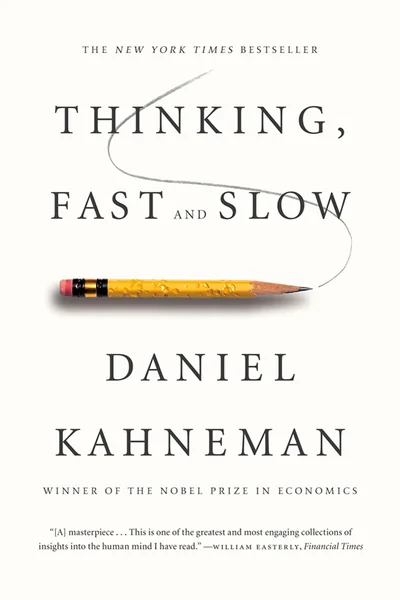
P
Patrick M. Lencioni
Business & Economics
Patrick M. Lencioni’s The Advantage shifts from Christensen's market-facing innovation to internal business and team management, offering a culture-first perspective on running organizations.
2 books reviewed