Skip to content
Benjamin Graham, author portrait
Photo:AnonymousUnknown author·Public domain·
Commons

Benjamin Graham

American
1894 – 1976
Benjamin Graham was an English-American financial analyst, economist, accountant, investor and professor. He is widely known as the "father of value investing", and wrote two of the discipline's founding texts: Security Analysis (1934) with David Dodd, and The Intelligent Investor (1949). His investment philosophy stressed independent thinking, emotional detachment, and careful security analysis, emphasizing the importance of distinguishing the price of a stock from the value of its underlying business.
On LuvemBooks, we've reviewed The Intelligent Investor.
1
Books Reviewed

In Benjamin Graham's own words

Benjamin Graham and Dean Courtney Brown conduct a seminar on stock market valuation and investor psychology at Columbia University in 1955.

Uploaded by GrahamValue, 2023 · Watch on YouTube ·

Market Valuation Driven by Investor Psychology

Graham asserts that dramatic rises in stock prices cannot be explained by mathematics or underlying earnings, but by investor psychology. When investors look through rose-colored glasses, speculative fever returns, posing significant risks to newcomers.

Curbing Speculation with 100% Margin Requirements

Graham suggests that before introducing broader restrictions on the market, the Federal Reserve should completely eliminate borrowing for stock purchases by enforcing a full cash requirement.

Wall Street Forecasts Equal Coin Tosses

Graham observes that long-term studies show following expert consensus produces results no better than flipping a coin. He explains that Wall Street professionals are so competent that their collective knowledge is already priced in, leaving future movements driven by the unknown.

The Human Flaw in Dollar-Cost Averaging

Graham argues that while dollar-cost averaging succeeds mathematically over time, it frequently fails in practice due to human nature. Investors struggle to stay disciplined, turning into speculators during bull runs and panicking rather than buying when prices fall.

Chapters · from GrahamValue

  1. See It Now's Introduction

  2. Dean Courtney Brown on Speculation

  3. Professor Benjamin Graham on Investor Psychology

  4. Dean Brown on Inefficient Markets

  5. Dean Brown on Bond Yields

  6. Professor Graham on Investing on Margin

In order

Benjamin Graham books in order

9 books; 1 reviewed on LuvemBooks. Dates and covers from Amazon.

  1. Security Analysis cover
    1951
    Security Analysis
    Amazon ↗
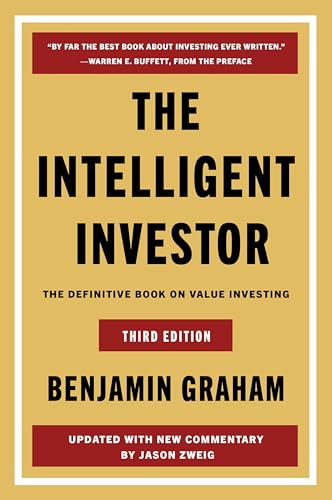
  2. The Intelligent Investor cover
    1965
    Our review →
  3. The Interpretation of Financial Statements cover
    1987
    The Interpretation of Financial Statements
    Amazon ↗
  4. The Memoirs of the Dean of Wall Street cover
    1996
    The Memoirs of the Dean of Wall Street
    Amazon ↗
  5. Storage and Stability cover
    1997
    Storage and Stability
    Amazon ↗
  6. World Commodities and World Currencies: The Original 1944 Edition cover
    1998
    World Commodities and World Currencies: The Original 1944 Edition
    Amazon ↗
  7. Benjamin Graham on Investing cover
    2009
    Benjamin Graham on Investing
    Amazon ↗
  8. Current Problems in Security Analysis cover
    2010
    Current Problems in Security Analysis
    Amazon ↗
  9. World Commodities & World Currency cover
    2010
    World Commodities & World Currency
    Amazon ↗

Ask LuvemBooks about Benjamin Graham

Benjamin Graham was an English-American financial analyst and professor who fundamentally shaped modern investing theory. His seminal work The Intelligent Investor introduced the concept of value investing—identifying undervalued securities through rigorous financial analysis—and remains the definitive text for investors seeking a disciplined, data-driven approach to building wealth.
Where should I start?
The Intelligent Investor is the essential entry point. Originally published in 1949 and updated multiple times, it lays out Graham's complete philosophy and practical framework for security analysis in a format accessible to individual investors. Whether you're a beginner or experienced trader, this book has shaped how professional investors think about risk and value.
What's their writing style?
Graham writes with precision and restraint, prioritizing clarity over flourish. He constructs arguments methodically, supporting claims with historical examples and financial data rather than rhetoric. His tone is direct and professorial—the voice of someone accustomed to teaching and explaining complex ideas without oversimplification.
Books we've reviewed
We've reviewed one major work by Benjamin Graham: The Intelligent Investor (4.6/5 reader rating), the cornerstone text introducing value investing principles and the margin of safety concept that has guided professional investors for over seven decades.
What genre do they write?
Graham writes in the business and economics genre, specifically financial analysis and investment instruction. His work is non-fiction grounded in empirical research, case studies, and mathematical principles rather than narrative or theory alone.
Why does Graham still matter?
The Intelligent Investor remains the foundation of value investing decades after publication because its core principles—analyzing financial fundamentals, demanding a margin of safety, and managing risk—transcend market cycles. Warren Buffett has called it the best book on investing ever written, and professional investors continue to reference and teach Graham's framework.
Who is Benjamin Graham?

Who is Benjamin Graham?

Benjamin Graham (1894–1976) was an English-American financial analyst, economist, and professor at Columbia Business School. He's widely regarded as the father of value investing and security analysis. Graham developed a systematic methodology for evaluating stocks based on intrinsic value rather than market sentiment, influencing generations of investors including Warren Buffett.

Follow up

What makes Graham's approach different from other investment philosophies?
Did Graham work in practice or just theory?

Synthesized from verified book data & published reviews · How we review

​

Press Enter to ask. Answers come from our editorial Q&A — start typing to see related questions.