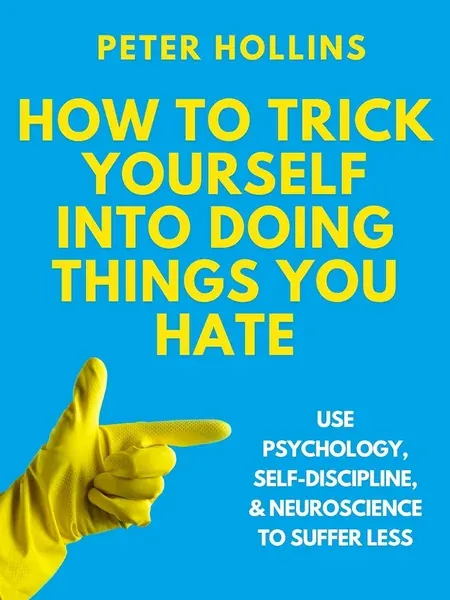
The Psychology-First Approach
Hollins builds his framework on established psychological principles rather than motivational platitudes. The book argues that traditional productivity advice fails because it ignores the neurological reality of how our brains process unpleasant stimuli. Instead of fighting your natural avoidance responses, the strategies focus on psychological tricks that make difficult tasks feel less threatening to your subconscious mind.
The neuroscience component provides compelling context without overwhelming readers with technical jargon. Hollins explains why willpower depletes quickly and how cognitive load affects our decision-making around challenging tasks. This scientific grounding distinguishes the book from generic self-help approaches that rely purely on enthusiasm and determination.
Practical Strategies That Actually Work
The book's strength lies in its actionable techniques rather than abstract concepts. Hollins presents specific methods like task bundling, environmental design, and what he calls "psychological momentum building." These aren't revolutionary concepts, but they're presented with enough detail to implement immediately.
The research-backed strategies include techniques borrowed from cognitive behavioral therapy, particularly around reframing negative associations with necessary tasks. Unlike many productivity books that assume readers have unlimited time for complex systems, these methods integrate into existing routines without requiring major lifestyle overhauls.
However, the practical exercises sometimes feel repetitive across chapters. Hollins occasionally restates similar concepts with slightly different framing, which may frustrate readers seeking efficiency in their productivity reading.
Where Scientific Method Meets Self-Help
The book succeeds in bridging the gap between academic psychology and practical application. Hollins cites legitimate research studies while maintaining accessibility for general readers. The scientific backing adds credibility to strategies that might otherwise sound like generic productivity hacks.
The main weakness emerges in the book's scope—while the psychological insights are valuable, the advice sometimes feels limited to straightforward procrastination scenarios. Complex projects requiring sustained creative effort receive less attention than routine tasks most people avoid.
The neuroscience discussions, while interesting, occasionally oversell the certainty of the underlying research. Productivity psychology remains a developing field, and some claims about brain function feel more definitive than current evidence supports.
Worth the Investment for Chronic Procrastinators
Is this book worth reading? For readers who've tried multiple productivity systems without lasting success, the psychology-focused approach offers genuine value. The strategies work particularly well for people who understand their avoidance patterns but struggle with implementation despite good intentions.
The book performs best for experienced productivity readers who want to understand the "why" behind their resistance to difficult tasks. Beginners might benefit from starting with more foundational productivity texts before diving into the psychological mechanics.
The bottom line: This represents solid addition to the productivity literature, though not a revolutionary breakthrough. Hollins delivers practical psychology without the overselling common in self-help publishing, making it a reliable resource for anyone serious about addressing avoidance behaviors through scientific understanding rather than willpower alone.
You can find How to Trick Yourself Into Doing Things You Hate at Amazon, your local bookstore, or through major online retailers.