Lewis's Analytical Framework
C. S. Lewis structures his exploration methodically, treating each love as a distinct phenomenon worthy of separate analysis. His approach reflects both his academic background and his conversion experience—he writes as someone who understands love both intellectually and personally.
The prose maintains Lewis's signature clarity without sacrificing depth. He avoids both clinical detachment and sentimental romanticism, instead offering philosophical observations drawn from literature, philosophy, and theology. His examination of friendship, for instance, challenges modern assumptions about intimacy by arguing for friendship's unique value independent of romantic or familial bonds.
What distinguishes this from typical self-help approaches is C. S. Lewis's willingness to acknowledge love's darker aspects. He doesn't present love as uniformly positive—instead, he explores how each type can become distorted or destructive when elevated beyond its proper place in the human hierarchy of values.
The Four Categories Explored
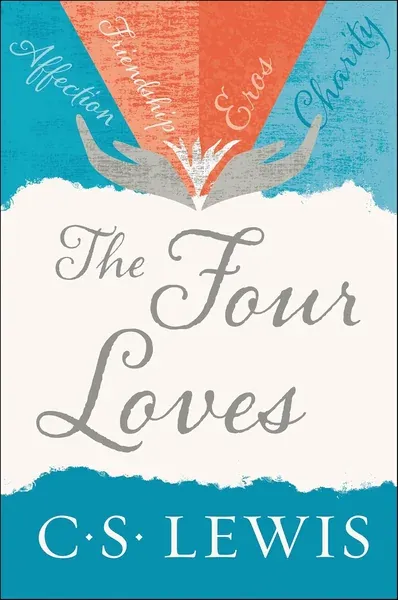
Lewis's taxonomy provides a framework that many readers find genuinely useful for understanding their own relationships. Storge encompasses familial affection and the comfortable love between people who've shared experiences. Philia represents the meeting of minds in friendship—what Lewis considers the least biological and most spiritual of human loves.
His treatment of eros proves particularly nuanced, discussing romantic love's capacity for both transcendence and obsession. Writing in 1960, C. S. Lewis addresses sexuality with a frankness that drew criticism from American audiences at the time, yet his perspective remains thoughtful rather than provocative.
Agape—divine love—serves as both the book's culmination and its measuring stick for human love. Lewis argues that all human loves, while good in themselves, require the context of divine love to avoid becoming idolatrous or destructive.
Theological Depth and Practical Insight
Where this book succeeds is in bridging abstract theology with philosophical insights about relationships. C. S. Lewis doesn't merely define his four categories—he explores how they interact, compete, and potentially corrupt one another. His analysis of how family affection can become possessive or how friendship can exclude outsiders provides genuinely helpful insights for readers navigating their own relationships.
The theological framework never feels imposed. Even readers skeptical of Lewis's Christian worldview often find value in his psychological observations about human behavior. His discussion of how romantic love can demand total devotion from partners offers timeless warnings about relationship dynamics that transcend religious belief.
However, Lewis's 1960s perspective shows its age in places. His assumptions about gender roles and family structures reflect their historical moment, potentially limiting relevance for contemporary readers seeking relationship guidance that acknowledges diverse family forms and partnership models.
Where It Falls Short
The book's main weakness lies in its occasionally abstract tone when dealing with lived human experience. C. S. Lewis writes as a scholar analyzing love rather than as someone offering practical guidance for specific relationship challenges. Readers seeking philosophical guidance for improving marriages or friendships may find the theoretical approach less immediately helpful than more direct self-help texts.
Additionally, Lewis's emphasis on hierarchy—placing divine love above human love—may feel constraining to readers from different faith traditions or secular worldviews. While his arguments are carefully reasoned, they assume Christian theological premises that not all readers will share.
The book also reflects the social limitations of its era. Lewis's examples and assumptions about relationships, while not overtly prejudiced, don't fully account for the diversity of human experience that contemporary readers expect from relationship literature.
Our Assessment
The Four Loves succeeds as thoughtful theological reflection rather than practical relationship guidance. C. S. Lewis offers a framework for thinking about love that many readers find genuinely illuminating, particularly those interested in Christian perspectives on human relationships and spiritual growth.
The book works best for readers who appreciate philosophical approaches to personal questions and don't require immediate practical solutions. It's ideal for book clubs or study groups willing to engage with Lewis's theological assumptions, and valuable for anyone seeking to understand how Christian thought addresses fundamental human experiences.
While not a comprehensive guide to modern relationship dynamics, it provides intellectual tools for reflection that have proven durable across decades. For readers drawn to C. S. Lewis's other works or interested in how faith traditions analyze human love, this book offers rewards that justify its more abstract moments.