
BOOKS
Published
Read Time
8 min read
Share This Review

Our review
Wherever You Go, There You Are by Jon Kabat-Zinn Review: A Foundational Mindfulness Guide That Endures
Originally published in 1994 and now in its 11th edition, Wherever You Go, There You Are remains one of the most enduring and widely read introductions to mindfulness meditation in everyday life, drawing on Jon Kabat-Zinn's medical research background to make the practice accessible to beginners and seasoned practitioners alike. This review is based on the book's documented content and published reception, not hands-on application.
In This Review
- What Works & What Doesn't
- What the Book Actually Is and Argues
- Significance and Place in the Field
- Strengths: Accessibility and Scope of Audience
- Kabat-Zinn's Voice and Conceptual Approach
- Who It Is For — and Where It Has Limits
What Works & What Doesn't
What Works
- Draws on Kabat-Zinn's medical research background at UMass to ground mindfulness in science, not just tradition
- Designed for both first-time meditators and longtime practitioners, making it a durable reference across experience levels
- Exercises are written to be practiced anywhere, at any time, without specialized equipment or environment
- Originally published in 1994 and now in its 11th edition — a documented national bestseller with over 750,000 copies sold, reflecting lasting impact
- Presents mindfulness as a non-dogmatic, non-judgmental orientation to daily life rather than a belief system
What Doesn't
- Organized around reflective essays rather than a step-by-step curriculum, which may frustrate readers seeking a structured, week-by-week program
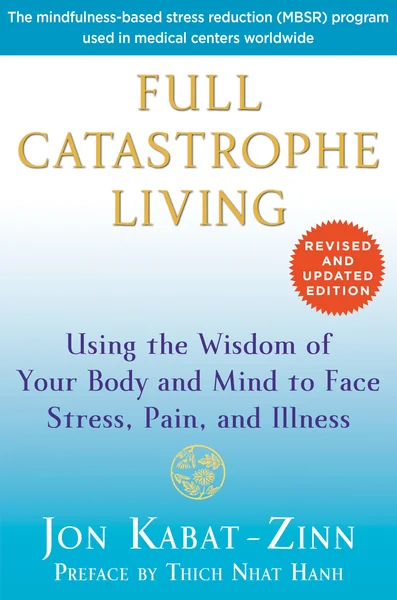
- More philosophical in register than clinical works like Kabat-Zinn's own Full Catastrophe Living — readers wanting a prescriptive technique manual may find the approach too discursive
This review covers the book's documented content and published reception; it does not reflect hands-on use or testing of the practices described.
What the Book Actually Is and Argues
Wherever You Go, There You Are: Mindfulness Meditation in Everyday Life is a self-help non-fiction book in which Jon Kabat-Zinn, professor of medicine emeritus at the University of Massachusetts Medical School and founding executive director of its Center for Mindfulness in Medicine, Health Care, and Society, lays out his framework for cultivating mindfulness through meditation. The book's central argument is that mindfulness — defined as paying attention moment by moment, intentionally, and with curiosity and compassion — is not a destination but a way of being present with life as it already is. As one passage from the text reads, "The best way to capture moments is to pay attention. This is how we cultivate mindfulness." Kabat-Zinn frames meditation not as a retreat from the world but as a practice woven into the fabric of daily existence, applicable anywhere, at any time, by anyone.
Significance and Place in the Field
When the book first appeared in 1994, it arrived before mindfulness had become a cultural fixture. It went on to become a national bestseller and sold over 750,000 copies, according to documentation on record. That trajectory reflects the book's unusual position: it was among the earliest mainstream texts to present meditation as a scientifically grounded practice — capable of reducing stress and improving cognitive function — rather than a purely spiritual or religious pursuit. Kabat-Zinn, who also founded the Stress Reduction Clinic at UMass Medical School, brought institutional credibility to a subject that was still regarded with skepticism in mainstream medicine. Thirty years on, Wherever You Go, There You Are is described by publishers as a foundational guide to the field, and its continued reissue through a now-11th edition published by Balance in December 2023 reflects its sustained relevance.
Strengths: Accessibility and Scope of Audience
One of the book's most consistently noted design attributes is its deliberate breadth of intended audience. Wikipedia's overview of the work notes that it is structured for those coming to meditation for the first time as well as for longtime practitioners — a range that few introductory volumes attempt to serve simultaneously. The exercises Kabat-Zinn presents are written to be practiced without specialized equipment, dedicated spaces, or prior training. His approach to mindfulness as learning to cultivate a non-judgmental attitude toward whatever arises in the mind positions the book as less a step-by-step program and more an ongoing orientation — one that readers can re-enter at different life stages and find different things. This layered quality is central to its longevity.
Kabat-Zinn's Voice and Conceptual Approach
Kabat-Zinn's background as a researcher and clinician shapes the book's tone in a distinctive way. Rather than asking readers to adopt a belief system, the book presents mindfulness as a practice supported by evidence — rooted in the author's own medical research — while also drawing on deeper contemplative traditions. The book makes clear that meditation is not just about seated practice; it encompasses an entire orientation to daily experience. This integration of scientific framing with accessible, non-dogmatic guidance is central to what has made the book a reference point for both clinical and general audiences. Published sources, including Wikipedia's reception summary, position the book as helping move mindfulness discourse from purely personal self-help into broader conversations about community and health.
Who It Is For — and Where It Has Limits
Readers seeking a structured, week-by-week curriculum with measurable milestones will find that Wherever You Go, There You Are is not that kind of book. Its format is more reflective and discursive than prescriptive, organized around short meditative essays rather than a linear program. Some readers drawn to Kabat-Zinn's other work, such as Full Catastrophe Living, which addresses stress, pain, and illness in a more clinical framework, may find this volume more philosophical in register. That is a genuine difference in approach, not a flaw — but readers expecting a tightly structured how-to manual should approach this title with that distinction in mind. Its value, as the record of its reception makes plain, lies in its ability to reframe the reader's relationship to attention and presence, not in delivering a rigid sequence of techniques.
Frequently Asked Questions
Is Wherever You Go, There You Are worth reading?
The review positions it as a foundational guide to mindfulness with sustained relevance across 30 years and 11 editions, making it a strong choice for readers open to a reflective, essay-based approach. Its value lies in reframing the reader's relationship to attention and presence rather than delivering a rigid sequence of techniques. At its current price, it represents a well-documented, enduring entry point into the field.
Who is this book written for?
The review notes that the book is deliberately structured to serve both first-time meditators and longtime practitioners simultaneously, a range that few introductory volumes attempt. Because the exercises require no specialized equipment, dedicated spaces, or prior training, it is positioned as accessible to virtually anyone. Readers at different life stages can re-enter the book and find different things, which is described as central to its longevity.
What is the central argument of the book?
Kabat-Zinn's central argument is that mindfulness is not a destination but a way of being present with life as it already is. The book defines mindfulness as paying attention moment by moment, intentionally, and with curiosity and compassion. Meditation is framed not as a retreat from the world but as a practice woven into the fabric of daily existence, applicable anywhere, at any time, by anyone.
What are the main themes of the book?
The book's primary themes are presence, attention, and non-judgmental awareness of whatever arises in the mind. It also engages with the integration of scientific evidence and contemplative tradition, arguing that mindfulness can reduce stress and improve cognitive function without requiring adherence to a belief system. The review highlights that the book helped move mindfulness discourse from purely personal self-help into broader conversations about community and health.
How is the book structured?
Rather than following a linear, week-by-week curriculum, the book is organized around short meditative essays that are more reflective and discursive than prescriptive. The review describes this format as an ongoing orientation rather than a step-by-step program, meaning readers are not walked through measurable milestones. This structure is what gives the book its layered, re-readable quality.
What is Kabat-Zinn's writing style like?
The review describes Kabat-Zinn's tone as shaped by his background as a researcher and clinician, resulting in guidance that is evidence-based yet accessible and non-dogmatic. He does not ask readers to adopt a belief system, instead presenting mindfulness as a practice supported by his own medical research while also drawing on deeper contemplative traditions. This integration of scientific framing with approachable prose is identified as central to the book's appeal across both clinical and general audiences.
Does the book have a scientific basis?
Yes, the review emphasizes that Kabat-Zinn's institutional credentials — professor of medicine emeritus at the University of Massachusetts Medical School and founding executive director of its Center for Mindfulness in Medicine, Health Care, and Society — give the book a strong scientific grounding. He also founded the Stress Reduction Clinic at UMass Medical School, and the book draws on his own medical research to present mindfulness as capable of reducing stress and improving cognitive function. This credibility helped bring meditation into mainstream medicine at a time when it was still regarded with skepticism.
How does this book compare to Kabat-Zinn's Full Catastrophe Living?
The review notes that Full Catastrophe Living addresses stress, pain, and illness within a more clinical framework, whereas Wherever You Go, There You Are is more philosophical in register. Readers drawn to the structured, clinical approach of Full Catastrophe Living may find this volume operates at a different level of abstraction. The review frames this as a genuine difference in approach rather than a flaw in either book.
Is this book suitable for beginners to meditation?
The review explicitly states that the book is structured for those coming to meditation for the first time, and that the exercises require no specialized equipment, dedicated spaces, or prior training. Kabat-Zinn's approach to mindfulness as cultivating a non-judgmental attitude toward whatever arises in the mind makes the entry point low. However, the reflective, essay-based format means beginners should not expect a tightly structured how-to manual.
Can experienced meditators get something out of this book too?
Yes, the review specifically notes that the book is structured to serve longtime practitioners as well as beginners, a range it describes as unusual for an introductory volume. The layered quality of the text means readers can re-enter it at different life stages and find different things. This dual accessibility is identified as one of the key reasons for the book's enduring relevance.
Sources & Further Reading
The key facts and claims in this review are grounded in the retrieved, verified sources listed below.
- 1
- 2
- 3
- 4
spiritualityandpractice.com
- 5
- 6
mentalhealthathome.org
- 7
- 8
- 9
- 10
Related Reviews
Reviews of books we picked for readers who enjoyed Wherever You Go, There You Are.


Reader Comments
No comments yet
Be the first to share your thoughts!