BOOKS
Published

Read Time

8 min read

Reader rating

4.6

· 11,650 Amazon ratings
reader ratings, not a LuvemBooks score
Curated & edited by

LuvemBooks Editorial

How we create our reviews →
Share This Review

Our review

When Things Fall Apart by Pema Chödrön Review: Enduring Buddhist Wisdom for Hard Times

When Things Fall Apart: Heart Advice for Difficult Times by Pema Chödrön draws on traditional Tibetan Buddhist teachings to argue that moving toward pain, fear, and groundlessness — rather than away from it — is the only path to lasting relief. Critics called it "the Tibetan Buddhist equivalent of Harold Kushner's When Bad Things Happen to Good People," a comparison that captures both its accessibility and its weight. It remains Chödrön's most beloved and acclaimed work.

LuvemBooks Verdict

Best for

Readers navigating grief, fear, or personal crisis who are open to a Buddhist-rooted framework and want something warmer and more philosophical than a clinical self-help guide.

Worth it if

You're drawn to the idea that leaning into difficulty — rather than escaping it — might be the most honest path through it, and you're willing to engage with Tibetan Buddhist concepts on their own terms.

Skip if

You need a secular, evidence-based toolkit for anxiety or grief — one grounded in psychology or CBT — or you're already deeply versed in Tibetan Buddhist teaching and looking for advanced doctrinal material rather than an accessible bridge text.

Publishers Weekly, as quoted on pemachodronfoundation.org and skylightbooks.com, described the book as demonstrating "how effective the Buddhist point of view can be in bringing order into disordered lives," while Spirituality & Health called it "incredibly wise and poignantly practical" — a phrase surfaced across multiple retailer and publisher pages including skylightbooks.com and parnassusbooks.net.

Sources: Pema Chodron Foundation, Skylight Books, Parnassus Books, The Bibliophage, Spirituality & Practice, Head Butler
4.6from 11,650 Amazon ratings— reader ratings, not a LuvemBooks score
Buy on Amazon

Age & Reading Level

Recommended age

Adult

Reading level

Adult

Skip if You are looking for secular, evidence-based tools — such as those grounded in cognitive behavioral therapy or clinical psychology — for managing anxiety, grief, or trauma.

In This Review
  • What Works & What Doesn't
  • What the Book Actually Teaches
  • Structure and Range of the Content
  • Reception and Cultural Standing
  • Genuine Strengths: Accessibility and Radical Compassion
  • Limitations and Who May Struggle With It

What Works & What Doesn't

What Works
  • Draws on traditional Tibetan Buddhist teachings while remaining genuinely accessible to readers with no prior background in Buddhist philosophy
  • Twenty-two chapters cover a wide range of difficult human experiences — from fear and loneliness to death, chaos, and ego dissolution — giving the book unusual breadth
  • Critical coverage and Spirituality & Health both praised its practical wisdom and its effectiveness in applying Buddhist thought to the realities of modern life
  • The 2016 anniversary edition includes a new afterword, adding context for readers coming to the text two decades after its original publication
  • Chödrön's central argument — that moving toward pain rather than away from it leads to lasting relief — is consistently framed with both clarity and compassion
What Doesn't
  • Readers seeking secular, evidence-based tools for managing anxiety or grief will find the framework is theological and philosophical rather than clinical or psychological
  • Those already well-versed in Tibetan Buddhist teaching may find the content introductory rather than advanced
This review is based on the book's published content, chapter structure, and critical reception from named sources — not hands-on application of its teachings.
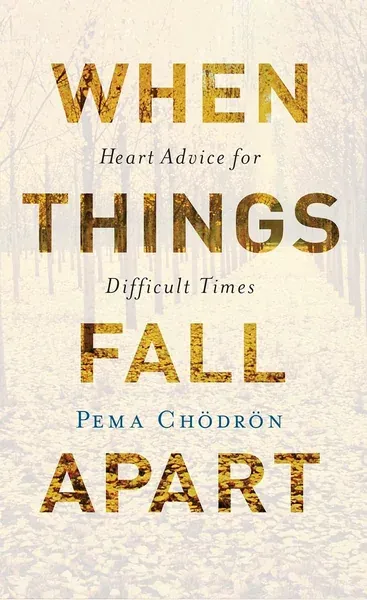
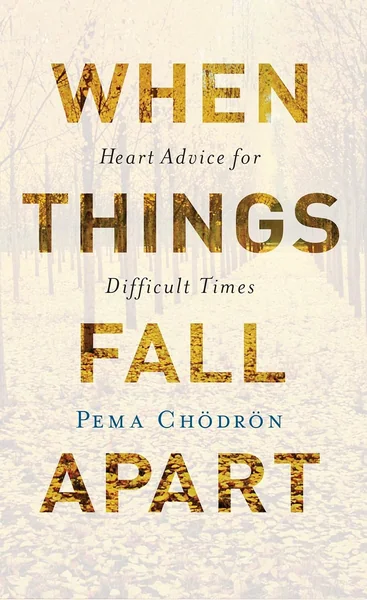
When Things Fall Apart: Heart Advice for Difficult Times by Pema Chodron front cover

What the Book Actually Teaches

When Things Fall Apart is built around a single, counterintuitive argument: that suffering is not an obstacle to overcome but a doorway to move through. Pema Chödrön, an American Buddhist nun trained in the Tibetan tradition, draws on the concept of maitri — loving-kindness toward oneself — as the foundation of the practice. Her central claim, rooted in years of study after a year-long sabbatical in 1995, is that fear is a universal, natural emotion, and that the habitual response of pulling away from it only deepens it. The antidote, she teaches, is to relax into what she calls "the essential groundlessness of our entire situation" — to lean into difficulty rather than flee it. The book opens with a metaphor that sets this tone precisely: "Embarking on the spiritual journey is like getting into a very small boat and setting out on the ocean to search for unknown lands."
“Embarking on the spiritual journey is like getting into a very small boat and setting out on the ocean to search for unknown lands.”

Structure and Range of the Content

The book's twenty-two chapters are notably varied in scope, moving through subjects that include intimacy with fear, loneliness, hopelessness, death, the "eight worldly dharmas," nonaggression, the four maras, and the dissolution of "us versus them" thinking. Later chapters address working with chaos through three specific methods, the concept of choicelessness, and what Chödrön calls "reversing the wheel of samsara." The final chapter, "The Path Is the Goal," ties these threads together. This breadth means the book is not a single-topic guide but a sustained exploration of how Buddhist practice applies to the full range of human difficulty — from internal emotional states to interpersonal conflict to existential uncertainty.

Reception and Cultural Standing

Originally published by Shambhala in 1997, the book has accumulated a reception that places it firmly among the most influential Western-facing Buddhist texts of its era. Critics described it as demonstrating "how effective the Buddhist point of view can be in bringing order into disordered lives," and Spirituality & Health called it "incredibly wise and poignantly practical." Shambhala released an anniversary edition in 2016, which includes an afterword to the twentieth-anniversary edition, signaling the book's sustained relevance across two decades. That longevity is not incidental — the teachings are framed around perennial human experiences rather than any particular cultural moment.

Genuine Strengths: Accessibility and Radical Compassion

One of the most consistently noted qualities in published commentary is the book's accessibility. Chödrön, who spent years as an elementary school teacher before becoming a nun, writes for general readers rather than scholars of Buddhist philosophy. The Shambhala description characterizes her advice as "radical and compassionate," going "against the grain of our usual habits and expectations." Chödrön does not soften the Buddhist framework into self-help platitudes; she presents concepts like impermanence, groundlessness, and the dissolving of ego as genuinely demanding — but frames them with enough warmth and clarity that readers without prior Buddhist background can follow the argument. The Spirituality & Health phrase "poignantly practical" reflects how the book is designed to function: not as doctrinal instruction but as actionable heart advice.

Limitations and Who May Struggle With It

Readers seeking a secular, evidence-based framework for managing difficult emotions — the kind grounded in cognitive behavioral therapy or contemporary psychology — will find that When Things Fall Apart operates in a different register entirely. Its premises are theological and philosophical, rooted in Tibetan Buddhist concepts that require some willingness to engage on their own terms. The book does not map neatly onto clinical approaches to anxiety, grief, or trauma, and readers who need that kind of scaffolding may find the teachings abstract despite Chödrön's accessible prose. Similarly, those already immersed in advanced Buddhist study may find the material introductory rather than deepening. It is best understood as a bridge text — substantial enough to be transformative for many, but calibrated toward the uninitiated rather than the specialist.

Sources & Further Reading

The key facts and claims in this review are grounded in the retrieved, verified sources listed below.

  1. Cited in this review
  2. 1
  3. 2
  4. 3
  5. Further reading
  6. 4
  7. 5
  8. 6
  9. 7
  10. 8
  11. 9
  12. 10
  13. 11
  14. 12
  15. 13
  16. 14