
BOOKS
Published
Read Time
6 min read
Our Rating
3.5
Reviewed by
LuvemBooks
Share This Review
The 48 Laws of Power by Robert Greene - Book Review
Our Rating
3.5
A brilliantly researched but morally problematic guide to power dynamics that offers valuable psychological insights while raising serious ethical concerns about manipulation and exploitation.
Trending Now
Trending
The 48 Laws Of Power by Robert Greene is Trending
Updated May 27, 2026In This Review
- What Works & What Doesn't
- A Historian's Approach to Human Nature
- The Arsenal of Influence
- The Moral Minefield
- Where Psychology Meets History
- A Polarizing Legacy
What Works & What Doesn't
What Works
- Extensive historical research provides rich, compelling examples
- Sophisticated understanding of human psychology and social dynamics
- Practical insights into how power actually works in real-world situations
- Engaging writing style that makes complex concepts accessible
- Timeless relevance across cultures and historical periods
What Doesn't
- Explicitly amoral approach ignores serious ethical implications
- Could easily be misused for manipulation and exploitation
- Lacks guidance on responsible use of power
- May appeal to readers with sociopathic tendencies
A Historian's Approach to Human Nature
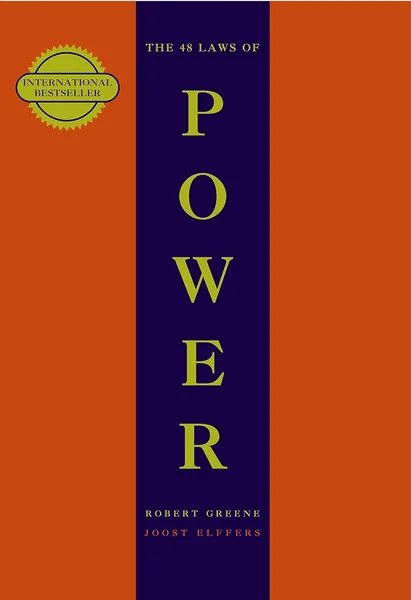
Genuinely unsettling and genuinely useful — Greene's unflinching catalogue of how power actually operates is more honest than most leadership books dare to be. Greene structures his argument around 48 distinct laws, each illustrated through historical examples ranging from ancient Chinese strategists to modern political figures. The book features verified historical figures including Carl von Clausewitz, Queen Elizabeth, Henry Kissinger, and P. T. Barnum, using their successes and failures to demonstrate timeless principles of influence.
What sets Greene apart from other strategy writers is his meticulous research methodology. Rather than relying on contemporary business case studies, he mines history's most dramatic power struggles for insights. The result feels less like a business book and more like a dark mirror held up to human civilization—one that reflects our species' consistent patterns of dominance, submission, and strategic thinking.
The writing itself maintains a compelling balance between scholarly authority and narrative engagement. Greene avoids academic jargon while never dumbing down complex historical contexts or psychological concepts.
The Arsenal of Influence
Each law receives its own chapter, complete with historical examples, counterexamples, and practical applications. Some laws feel intuitively correct—"Never Outshine the Master" resonates with anyone who's navigated corporate hierarchies. Others prove more controversial, like "Use Selective Honesty and Generosity to Disarm Your Victim" or "Crush Your Enemy Totally."
The book's strength lies in its comprehensive scope. Greene doesn't just tell you what to do; he shows you why these strategies work by examining how they've played out across cultures and centuries. The historical examples span from ancient Rome to Hollywood — the chapter on Louis XIV's court, for instance, reads as a precise diagram of how proximity to power becomes power itself.
For business leaders, the applications are obvious but ethically complex. The strategies Greene outlines can certainly help someone navigate office politics or negotiate better deals. But they can just as easily be used for manipulation and exploitation.
The Moral Minefield
Here's where The 48 Laws of Power becomes genuinely controversial. Greene presents his laws without moral judgment, treating them as neutral tools that can be used for good or ill. This amoral stance has drawn criticism from readers who argue the book essentially provides a blueprint for sociopathic behavior.
The ethical concerns aren't unfounded. Many of the laws explicitly encourage deception, emotional manipulation, and the exploitation of others' weaknesses. "Play to People's Fantasies" and "Enter Action with Boldness" might serve legitimate purposes, but "Pose as a Friend, Work as a Spy" ventures into darker territory.
The main weakness of Greene's approach is his failure to grapple seriously with the ethical implications of his teachings. While he occasionally notes that power can be used for noble purposes, the overwhelming focus remains on gaining and maintaining control over others, regardless of the human cost.
Where Psychology Meets History
Despite its moral ambiguity, the book succeeds as a work of applied psychology. Greene's historical examples effectively demonstrate how cognitive biases, social dynamics, and emotional responses create predictable patterns that skilled manipulators can exploit. The book functions almost like an anthropological study of human weakness and strength.
Unlike most strategy books, Greene acknowledges that power isn't just about competence or hard work—it's about understanding and influencing human nature. This psychological sophistication elevates the work beyond simple "success tips" into something more substantive and, frankly, more dangerous.
The historical lens also provides valuable perspective on contemporary power structures. Reading about how courtiers maneuvered around Louis XIV helps illuminate modern political and corporate dynamics in ways that feel genuinely insightful.
A Polarizing Legacy
Is this book recommended? That depends entirely on your intentions and moral framework. For readers seeking to understand how power actually works—rather than how we wish it worked—Greene offers unparalleled insights. The laws on court politics and perception management alone repay close reading for anyone studying human psychology or political strategy.
However, this isn't appropriate for readers looking for ethical leadership guidance or those prone to using manipulation themselves. The book's amoral stance and explicit focus on controlling others makes it potentially harmful in the wrong hands — approach it as a diagnostic, not a manual.
The bottom line: The 48 Laws of Power earns its place on the shelf for readers willing to engage critically with morally uncomfortable material — if that's you, the Amazon link in the sidebar has the current price.
Frequently Asked Questions
Is The 48 Laws Of Power by Robert Greene worth reading in 2026?
Based on my 3.5/5 rating, it's a solid read with valuable insights into human nature and power dynamics. Greene's historian's approach using verified historical figures makes the concepts compelling, though some laws may feel outdated in today's workplace culture.
Who should read The 48 Laws Of Power?
This book is perfect for business professionals, history enthusiasts, and anyone interested in understanding strategic thinking and human psychology. It's particularly valuable for those in leadership roles or competitive environments who want to recognize power dynamics.
How does The 48 Laws Of Power compare to other Robert Greene books?
This is Greene's breakout work that established his signature style of combining historical examples with strategic principles. It's more controversial than his later works like Mastery or The Art of Seduction, focusing specifically on power acquisition rather than skill development.
What's the main takeaway from The 48 Laws Of Power?
The core message is that power dynamics govern all human interactions, and understanding these patterns through historical examples can help you navigate complex social and professional situations. Greene argues that awareness of these laws protects you whether you choose to apply them or not.
What historical figures are featured in The 48 Laws Of Power?
Greene draws from verified historical figures including Carl von Clausewitz, Queen Isabella, and ancient Chinese strategists to illustrate each law. The book spans centuries of history, from ancient civilizations to modern political figures, making each principle concrete through real-world examples.
At $22.12, is The 48 Laws Of Power worth buying?
At this price point, it's reasonably priced for a comprehensive guide with 48 distinct strategies backed by extensive historical research. The book's enduring popularity and practical applications make it a worthwhile investment for serious readers of strategy and psychology.
Are the strategies in The 48 Laws Of Power ethical to use?
This is one of the book's most debated aspects - Greene presents these laws descriptively rather than prescriptively, showing how power has been wielded throughout history. The ethical application depends entirely on the reader's intentions and how they choose to use this knowledge in their own life.
BEST DEAL
Related Reviews
Reviews of books we picked for readers who enjoyed The 48 Laws Of Power.

Reader Comments
No comments yet
Be the first to share your thoughts!