BOOKS
Published

Read Time

8 min read

Reader rating

4.6

· 106,377 Amazon ratings
reader ratings, not a LuvemBooks score
Curated & edited by

LuvemBooks Editorial

How we create our reviews →
Share This Review

Two Twisted Crowns by Rachel Gillig Review: A Duology Finale That Swings for the Fences

Two Twisted Crowns is the New York Times bestselling conclusion to Rachel Gillig's The Shepherd King duology, picking up directly from the cliffhanger of One Dark Window as Elspeth and Ravyn race to gather the final Providence Cards — a quest that drives them into a cursed forest for a potentially ruinous bargain with the Spirit of the Wood. This review covers the book's content, structure, and reception from published sources, not hands-on use.

LuvemBooks Verdict

Best for

Readers who finished One Dark Window and want a darker, more expansive conclusion — especially fans of atmospheric, morally complicated fantasy in the vein of Hannah Whitten's For the Wolf or Alexis Henderson's The Year of the Witching.

Worth it if

You loved the mist-soaked world and the Elspeth–Nightmare dynamic in book one and are ready for a wider cast, higher stakes, and a definitive, emotionally earned ending to the duology.

Skip if

You haven't read One Dark Window (this is structurally inaccessible as a standalone), found Elspeth's back-and-forth with the Nightmare frustrating in book one, or are sensitive to violence, gore, and terror.

Fantasybookcritic.blogspot.com notes that widening from a single POV to four is the sequel's most significant improvement over One Dark Window, while sprinklingofcreativity.wordpress.com finds it a worthy but slightly uneven follow-up, calling the ending predictable and the expanded cast occasionally too crowded. On the positive end, reviews.readingtrolls.com praises the final act's intense action and calls the conclusion "satisfying and well-earned," and bookishgoblin.com describes Gillig as an "insta-buy author" whose plot is "so well crafted" readers will wish for more chapters.

Sources: Fantasy Book Critic, Sprinkling of Creativity, Reading Trolls, Bookish Goblin, Girl in the Pages, A Literary Escape, Dark Side of the Word, Blogging with Dragons, The Reading Nook
4.6from 106,377 Amazon ratings— reader ratings, not a LuvemBooks score

Look inside the book

Preview the actual pages, via Google Books
In This Review
  • What Works & What Doesn't
  • What the Book Is and What Happens
  • Structure and Narrative Expansion
  • The Magic System and Thematic Core
  • Reception and Place in the Genre
  • Genuine Limitations and Who It's For

What Works & What Doesn't

What Works
  • An instant New York Times bestseller that delivers on the duology's promise with a high-stakes, definitive conclusion
  • Booklist praises the distinctive magic system and the story's exploration of how power is abused — and how redemption remains possible
  • Expands from a single POV to four, opening up the world of Blunder and distributing narrative weight more broadly than book one
  • Designed for readers of dark, atmospheric fantasy in the vein of Hannah Whitten's For the Wolf and Alexis Henderson's The Year of the Witching
  • The audiobook edition, narrated by Lisa Cordileone, runs 14 hours and 12 minutes — a substantial, complete listen
What Doesn't
  • Structurally dependent on One Dark Window — not accessible as a standalone entry point
  • Elspeth's ongoing push-pull relationship with the Nightmare, a point of friction for some readers in book one, continues throughout the sequel
  • Violence, gore, blood, and terror content (as disclosed on the author's own website) makes this unsuitable for younger or sensitive readers
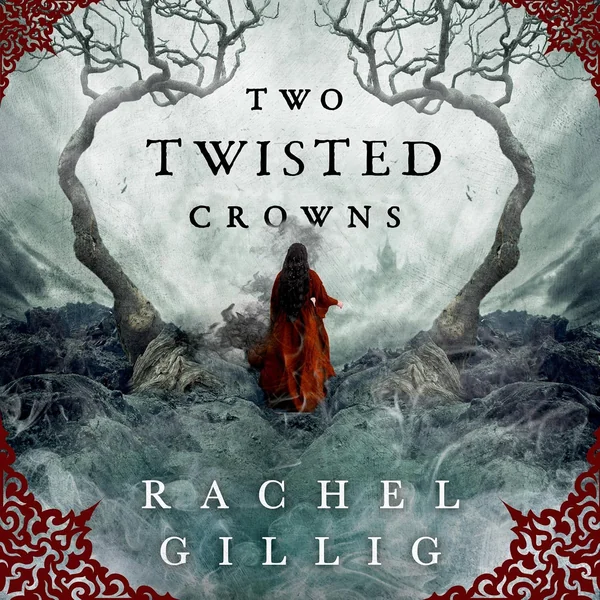
Two Twisted Crowns is a New York Times bestseller and a confident, darker expansion of everything its predecessor established — a duology closer whose ambitions match its atmosphere.
Two Twisted Crowns by Rachel Gillig front cover

What the Book Is and What Happens

Two Twisted Crowns is the second and final volume of Rachel Gillig's The Shepherd King duology, published by Orbit Books on October 17, 2023. The story resumes exactly where One Dark Window left off: Elspeth and Ravyn have gathered most of the twelve Providence Cards, the magical artifacts central to the kingdom of Blunder's fate, but one card remains. To find it, they must venture into the heart of a cursed forest and strike a deal with the Spirit of the Wood — a bargain the story frames as potentially costing them everything. Elspeth simultaneously grapples with the consequences of what she has already unleashed, carrying within her the entity known as the Nightmare, a dark spirit whose violent interventions are as necessary as they are horrifying. The stakes are existential, the setting is mist-covered and treacherous, and the novel is designed as a page-turning sprint to a definitive resolution.
has created a distinctive form of magic, explored how humanity would abuse it, and offered a chance of redemption.

Structure and Narrative Expansion

One of the most discussed structural choices in Two Twisted Crowns is its shift from a single point of view to four. In One Dark Window, Elspeth carried the entire narrative weight alone — a decision that, for some readers, made her internal contradictions more pronounced and her repeated arguments with the Nightmare repetitive. The sequel deliberately widens the lens, distributing perspective across multiple characters and opening up the world of Blunder considerably. Some readers, as noted by the blog Bookish Goblin, found this expansion to be the sequel's most significant improvement: rather than filtering every event through one ambivalent consciousness, the story can now dramatize its consequences from multiple angles and pay off plot seeds planted much earlier in the duology.

The Magic System and Thematic Core

Booklist singled out Gillig's magic system as one of the duology's defining achievements, writing that she "has created a distinctive form of magic, explored how humanity would abuse it, and offered a chance of redemption." The Providence Cards are not merely a MacGuffin; they are the thematic architecture of the series, binding questions of power, corruption, and moral compromise into the plot's forward movement. The novel's central tension — Elspeth's relationship with the Nightmare — embodies this directly. Themes of sacrifice and redemption run throughout, particularly as Elspeth continues to negotiate the terms of a symbiosis she did not fully choose and cannot fully control. These are not background concerns; they are the engine of the story.

Reception and Place in the Genre

Two Twisted Crowns landed as an instant New York Times bestseller, and its Audible edition ranks highly in Gothic Fiction and Dark Fantasy categories. Critical reception for the duology as a whole has been strong. Critics described the series as a "page turner" whose characters are "painfully aware of their flaws," and praised the chance of redemption woven into its resolution. Comparisons from the publisher position the book alongside Hannah Whitten's For the Wolf and Alexis Henderson's The Year of the Witching — works that share a commitment to lush, menacing atmosphere and morally complicated protagonists. Reader commentary collected by Bookish Goblin describes Gillig as an "insta-buy author" and praises the duology for "paying off early story seeds and landing the ending with satisfying impact."

Genuine Limitations and Who It's For

The book carries content that includes violence, gore, blood, and terror — details Gillig discloses on her own website, where a full content warnings page is maintained. The romance is described by The Reading Nook as mild, with moments that may not suit younger readers, making this a better fit for adult or older young-adult fantasy audiences than for middle-grade readers. The multi-POV expansion, while widely welcomed, does mean that readers who bonded specifically with the claustrophobic interiority of Elspeth's solo narration in book one will experience a notably different rhythm in the sequel. And because Two Twisted Crowns picks up mid-story without recapping extensively, it is structurally inaccessible to anyone who has not read One Dark Window first — this is not a standalone entry point to the series. Readers who found Elspeth's back-and-forth with the Nightmare frustrating in book one will want to know that dynamic continues here, even if the wider cast dilutes its repetitive qualities somewhat.

Sources & Further Reading

The key facts and claims in this review are grounded in the retrieved, verified sources listed below.

  1. Cited in this review
  2. 1
  3. 2
  4. 3
  5. Further reading
  6. 4

    Rachel Gillig, Wikipedia

  7. 5
  8. 6
  9. 7
  10. 8
  11. 9
  12. 10
  13. 11
  14. 12