9 min read
4.7
· 1,629 Amazon ratingsShare This Review
The Invisible Life of Addie LaRue by V.E. Schwab Review: A Sweeping, Genre-Defying Fantasy Triumph
V.E. Schwab's The Invisible Life of Addie LaRue is a New York Times bestseller published by Tor Books on October 6, 2020, following a young French woman who trades her freedom for immortality only to be cursed so that no one who meets her can ever remember her — a premise that drives a centuries-spanning fantasy novel about legacy, erasure, and the stubborn human will to leave a mark on the world.
LuvemBooks Verdict
Best for
Readers who love lyrical, emotionally patient fantasy — particularly fans of The Time Traveler's Wife or Life After Life — who are drawn to a centuries-spanning premise that doubles as a meditation on women's erasure from history.
Worth it if
You're willing to surrender to a slow-burn, meditative dual timeline and let three hundred years of cumulative emotional weight do its work before the two storylines fully converge.
Skip if
You prefer tightly propulsive, plot-driven fantasy — the centuries-long flashback sections are deliberately expansive and contemplative, and impatient readers may find the middle stretch more atmospheric than urgent.
What readers & critics say
According to en.wikipedia.org, the novel was nominated for the 2021 Locus Award for Best Fantasy Novel and remained a major bestseller well into 2021. Us.macmillan.com documents the book's extraordinary sweep of "Best Of" placements — from Oprah Magazine and NPR to Kirkus Reviews, Lambda Literary, and io9 — as well as starred reviews from Publishers Weekly, Library Journal, Booklist, and Kirkus, reflecting unusually broad critical reach across both genre and literary audiences.
Sources: Wikipedia, MacmillanAsk LuvemBooks
Was this helpful?
- Is it worth reading?
- For readers drawn to lyrical, meditative fantasy with serious thematic ambition, LuvemBooks considers The Invisible Life of Addie LaRue a strong recommendation — it earned 37 consecutive weeks on the New York Times Best Seller list and placed on year-end "Best Of" lists from Oprah Magazine, NPR, CNN, Kirkus Reviews, and dozens more, reflecting unusually broad critical resonance. Jodi Picoult described it as something that "completely absorbed me enough to make me forget the real world." The key caveat is patience: the novel's emotional rewards are cumulative, and readers who need plot momentum from the first pages may find the centuries-long flashback sections more expansive than urgent. For those who meet it on its own terms, the payoff is substantial.
- Similar books
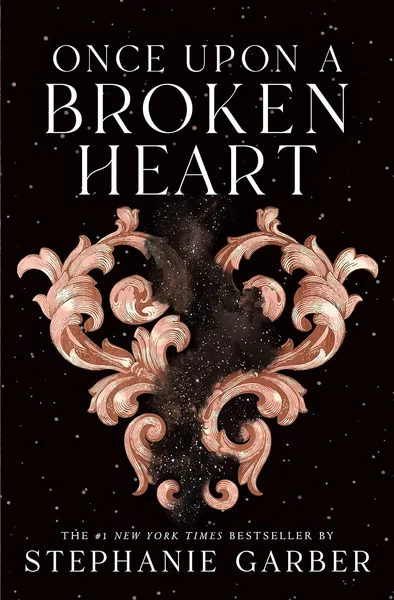
- Readers who loved The Invisible Life of Addie LaRue frequently gravitate toward books that blend lush atmosphere with emotionally complex bargains or nonlinear time. Erin Morgenstern's The Night Circus shares the same lyrical, atmospheric quality and features a fateful deal with high personal stakes. Anthony Doerr's All the Light We Cannot See offers a similarly sweeping historical scope and meditative pacing for readers drawn to the novel's WWII-era flashbacks and quiet emotional architecture. Olivie Blake's The Atlas Six appeals to fans of morally complicated characters navigating dangerous magical arrangements. For those who enjoyed the Faustian-bargain thread and darkly romantic tension with Luc, Stephanie Garber's Once Upon a Broken Heart delivers a similarly charged dynamic between a young woman and a god-like figure. Terry Pratchett's Mort offers a lighter but thematically resonant take on a mortal striking a deal with a supernatural force.
- Who should read this?
- The natural audience for The Invisible Life of Addie LaRue is adult readers of lyrical, literary-leaning fantasy — particularly those who responded to the emotional architecture of Audrey Niffenegger's The Time Traveler's Wife or Kate Atkinson's Life After Life. Readers who appreciate thematic depth around women's erasure from history, morally complicated protagonist-antagonist relationships, and cumulative emotional payoffs will find this richly rewarding. Those who prefer tightly propulsive, plot-driven fantasy are less well-served; the novel's centuries-long flashback sections are deliberately meditative. The book's cross-demographic critical reception — from genre outlets to literary venues to Oprah Magazine — reflects an unusually wide potential readership.
- About V.E. Schwab
- Victoria Elizabeth Schwab is an American writer.
- What are the main themes?
- At its core, The Invisible Life of Addie LaRue uses its central curse — immortality paired with total unrememberability — to examine the erasure of women from recorded history and the ways legacy accrues only to those permitted to be seen. A Slate review, as surfaced in the novel's reception summary, called it "an elegant comment on the erasure of women from recorded history, but not a pointed one; you never feel that Addie LaRue is a metaphor" — meaning the thematic inquiry never overwhelms the story itself. The novel also explores memory, identity, and the stubborn human will to leave a mark, with Henry Strauss's parallel storyline — rooted in crushing familial pressure and a near-fatal crisis — deepening the theme of invisibility beyond Addie's literal curse. The centuries-long relationship between Addie and Luc adds a further strand about power, refusal, and what it means to be genuinely seen by another person.
- Awards and critical reception
- The Invisible Life of Addie LaRue achieved rare simultaneous placement on the New York Times, USA Today, Washington Post, and National Indie bestseller lists upon publication, and remained on the New York Times Best Seller list for 37 consecutive weeks through July 2021. It was a "#1 Library Reads Pick" and "#1 Indie Next Pick" for October 2020, a Book of the Year finalist for Book of the Month Club, and was nominated for the 2021 Locus Award for Best Fantasy Novel. Year-end "Best Of" recognition came from a wide range of outlets including Oprah Magazine, CNN, NPR, Amazon Editors, Goodreads, Kirkus Reviews, the Chicago Tribune, io9, SyFy Wire, LitHub, and Lambda Literary, reflecting the novel's unusual cross-demographic reach.
Summarize this book
Follow up
Synthesized from verified book data & published reviews · How we review
Press Enter to ask. Answers come from our editorial Q&A — start typing to see related questions.
Age & Reading Level
Recommended age
Adult
Reading level
Adult
2 content notes · who it suits
Content to know about
Skip if you want a plot-driven fantasy with consistent forward momentum rather than a meditative, dual-timeline character study.
Our Review
What the Novel Is and What It Does
Scope, Structure, and Historical Reach
Reception and Critical Recognition
Thematic Depth and What Distinguishes It
Who Will Love It and Where It Asks for Patience
Sources & Further Reading
The key facts and claims in this review are grounded in the retrieved, verified sources listed below.
- Cited in this review
- 1
- 2
en.wikipedia.org
- 3
us.macmillan.com
- Further reading
- 4
V.E. Schwab, Wikipedia
- 5
- 6
openbooksummary.com
- 7
takestwotobookreview.com
- 8
- 9
- 10
Books like The Invisible Life of Addie LaRue
Curated picks for readers who enjoyed The Invisible Life of Addie LaRue, with our reasoning for each match.
If you liked The Invisible Life of Addie LaRue