Mastering the Art of French Cooking, Volume 1 by Julia Child, Louisette Bertholle & Simone Beck Review: A Landmark Cookbook That Redefined American Kitchens
A New York Times bestseller first published by Knopf in 1961 and still in print, Mastering the Art of French Cooking, Volume 1 is a foundational French cookbook co-authored by Julia Child, Simone Beck, and Louisette Bertholle, designed to translate the full logic of classic French cuisine for the American home cook — and widely credited with reshaping how the country thinks about food.
LuvemBooks Verdict
Best for
Cooks who want to understand French technique from first principles — and anyone interested in the history of American food culture who wants both a practical reference and a primary document of a culinary turning point.
Worth it if
You approach the kitchen as a discipline and are willing to invest sustained time and attention in learning why a technique works, not just what to do.
Skip if
You need quick weeknight solutions or a book that accommodates contemporary dietary approaches and pantry realities, because this text makes no concessions to speed or convenience and carries the ingredient assumptions of its 1961 context.
What readers & critics say
Wikipedia's detailed entry credits historian David Strauss's 2011 claim that the publication did "more than any other event in the last half century to reshape the gourmet dining scene," and also documents the book's direct role in launching Julia Child's television career on WGBH. The app.ckbk.com reader community describes it as the ultimate instructional cookbook, with readers noting that working through it imparted foundational techniques that improved every aspect of their cooking lives.
Strengths: Structure, Scope, and Accessibility by Design
Genuine Limitations: Ambition Has a Price
Who This Book Is For
What Works & What Doesn't
What Works
524 recipes organised by themes and variations, building technique cumulatively rather than offering isolated, disconnected dishes
Over 100 instructive illustrations by Sidonie Coryn support step-by-step written guidance by design
Explicitly written for the American home cook — not a translation for a French audience with assumed knowledge, servants, or native-ingredient access
Documented cultural landmark: historian David Strauss credited it with doing more than any other event in the last half century to reshape the American gourmet dining scene
Praised by critical coverage as 'what a cookbook should be: packed with sumptuous recipes, detailed instructions, and precise line drawings'
What Doesn't
Many instructions are, by Entertainment Weekly's own account, 'daunting' — classical French technique is genuinely demanding, and the book makes no concessions to speed or convenience
The book's original 1961 framing reflects mid-twentieth-century American kitchen assumptions that do not map cleanly onto contemporary pantry realities or dietary approaches
A cookbook of genuine, documented historic importance, Mastering the Art of French Cooking, Volume 1 remains a benchmark against which all subsequent French culinary instruction in English is measured.
What the Book Actually Is — and Does
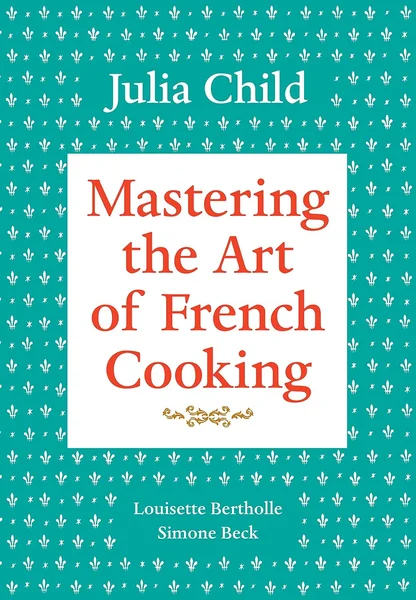
Mastering the Art of French Cooking, Volume 1: A Cookbook by Julia Child, Louisette Bertholle, Simone Beck front cover
Mastering the Art of French Cooking is a comprehensive, technique-forward French cookbook written for the American home cook. Julia Child, an American who had studied at Le Cordon Bleu in Paris, joined French cooking teachers Simone Beck and Louisette Bertholle — both Cordon Bleu-trained — to produce a guide that was explicitly not a translation of existing French recipe texts. The problem with those earlier translations, as Wikipedia's detailed history of the book makes clear, was that they assumed a French middle-class reader already fluent in technique, familiar with native ingredients, and often cooking with household staff. This book was built to do something structurally different: to explain French cooking from first principles to an American audience with none of those assumed advantages.
“something for everyone, from seasoned experts to beginners who love good food and long to reproduce the savory delights of French cuisine”
The result, published by Knopf in 1961, contains 524 recipes accompanied by more than 100 instructive illustrations by Sidonie Coryn. Rather than organising itself as a sprawling catalogue, the book, as Penguin Random House's synopsis describes, breaks "the classic foods of France into a logical sequence of themes and variations" — moving from foundational techniques and key preparations outward to their elaborations, covering everything from historic Gallic masterpieces to, in the publisher's own words, "the seemingly artless perfection of a dish of spring-green peas."
Historical Significance and Cultural Impact
Few cookbooks in American publishing history can claim the chain of consequences that followed this one. Volume 1's success led directly to Julia Child being given her own television programme, The French Chef, one of the first cooking shows on American public television, launched by Boston's WGBH in 1963. The ripple effects on American food culture were substantial: historian David Strauss stated in 2011, as Wikipedia records, that the publication of Mastering the Art of French Cooking "did more than any other event in the last half century to reshape the gourmet dining scene." That is a striking claim, and it reflects the consensus position the book occupies in culinary history — not merely a popular cookbook but a cultural turning point.
Thomas Keller of The French Laundry, quoted in Penguin Random House's own edition materials, put it this way: Child "has slowly but surely altered our way of thinking about food. She has taken the fear out of the term 'haute cuisine.'" James Beard's endorsement — "I only wish that I had written it myself" — has also accompanied the book's promotional record. These are not minor voices; they represent the establishment of American gastronomy lending its full weight to the book's legacy.
Strengths: Structure, Scope, and Accessibility by Design
This review assesses the book's content, organisation, and documented reception from published sources, not from kitchen testing. On the structural question, the sources are consistent: the book's organising logic is one of its defining achievements. The architecture of themes and variations — teaching a core technique, then demonstrating how it extends — is designed to build a cook's understanding cumulatively rather than delivering isolated recipes. Entertainment Weekly, quoted in Penguin Random House's edition materials, called it precisely "what a cookbook should be: packed with sumptuous recipes, detailed instructions, and precise line drawings." The inclusion of over 100 illustrations by Sidonie Coryn is part of that instructional design, providing visual support for the step-by-step written guidance.
Child herself, in the book's introduction, is quoted as saying: "If you can read, you can cook." That statement of intent — democratising haute cuisine through clear instruction rather than assumed expertise — is the guiding philosophy the entire volume is built around.
Genuine Limitations: Ambition Has a Price
Honest assessment requires acknowledging that this book is not designed for speed or convenience. At 524 recipes with extensive technique instruction, it is a demanding, time-intensive text. Some of the instructions, as critics noted in its own review, "look daunting." That is not a flaw in design — it reflects the genuine complexity of classical French cookery — but readers approaching the book for quick weeknight solutions will find it misaligned with their needs. The book's ambition is comprehensive mastery, not efficient shortcuts, and the time and skill investment required is substantial.
Additionally, the book's original 1961 context means that some ingredient assumptions and cultural framings carry the era in which it was written. The book was designed for a mid-twentieth-century American market, and readers today bring different pantry realities, dietary considerations, and kitchen contexts that the text does not account for.
Who This Book Is For
Mastering the Art of French Cooking, Volume 1 is best suited to cooks who approach the kitchen as a discipline — readers who want to understand why a technique works, not just what to do. The publisher positions it as offering "something for everyone, from seasoned experts to beginners who love good food and long to reproduce the savory delights of French cuisine," though the level of detail and the complexity of many preparations make it particularly rewarding for those willing to invest sustained attention. It is also an essential volume for anyone interested in the history of American food culture, functioning as both a practical reference and a primary document of a pivotal moment in that history. The 40th Anniversary Edition, available in Kindle format through Knopf, brings this text to a new generation of readers — a New York Times bestseller across six decades and counting.
Reader Comments
0
No comments yet
Be the first to share your thoughts!
Frequently Asked Questions
is Mastering the Art of French Cooking, Volume 1: A Cookbook by Julia Child, Louisette Bertholle, Simone Beck worth buying in 2024
It depends on what you want from a cookbook. If you're serious about understanding classical French technique from the ground up, it's hard to argue with a book that historian David Strauss called the single event that "did more than any other event in the last half century to reshape the gourmet dining scene" — and that Thomas Keller credits with taking "the fear out of the term 'haute cuisine'." If you want quick weeknight recipes, though, the review is clear that this book is misaligned with that goal — it's built for sustained, time-intensive learning, not shortcuts.
Is this book good for beginners
It was specifically designed to teach French cooking from first principles to Americans with no assumed expertise — Julia Child's guiding philosophy, stated in the book's own introduction, was "If you can read, you can cook." That said, the review notes honestly that many instructions "look daunting" and the complexity of classical French cookery means the book is particularly rewarding for beginners who are genuinely willing to invest sustained attention, not those looking for a gentle or fast on-ramp.
What is this book actually about
It's a 524-recipe French cookbook co-authored by Julia Child, Simone Beck, and Louisette Bertholle that was built to translate the full logic of classic French cuisine for the American home cook — not as a translation of existing French texts, but from first principles. Rather than a sprawling recipe catalogue, it breaks "the classic foods of France into a logical sequence of themes and variations," teaching core techniques and then showing how they extend, with over 100 instructive illustrations by Sidonie Coryn supporting the written guidance.
Is this book too long and complicated to actually use
The review is upfront that this is "a demanding, time-intensive text" and that some instructions "look daunting" — so yes, complexity is real. But the review frames that as a feature of the book's ambition rather than a flaw: it was never designed for convenience, but for comprehensive mastery of classical French cookery, which is genuinely complex. Readers who approach cooking as a discipline rather than a chore will find the length and detail rewarding rather than off-putting.
Why is this book considered such a big deal historically
Its cultural footprint goes well beyond cookbook sales — its success directly led to Julia Child being given her own television programme, The French Chef, one of the first cooking shows on American public television, launched by Boston's WGBH in 1963. The review describes it not just as a popular cookbook but as "a primary document of a pivotal moment" in American food history, with Entertainment Weekly calling it precisely "what a cookbook should be: packed with sumptuous recipes, detailed instructions, and precise line drawings."
Does this book hold up if you have modern dietary restrictions or a different pantry
This is a genuine limitation the review flags honestly: the book was written for a mid-twentieth-century American market, and its ingredient assumptions and cultural framings carry the era of its 1961 publication. Readers today with different pantry realities, dietary considerations, or kitchen contexts will find the text doesn't account for those — something worth knowing before you buy.
How does this book differ from other French cookbooks
The core difference is structural intent: earlier French cookbooks translated into English assumed a reader already fluent in technique, familiar with native ingredients, and often cooking with household staff. This book was built specifically to do something different — to explain French cooking from first principles to an American audience with none of those assumed advantages, which is why James Beard famously said of it, "I only wish that I had written it myself."
Sources & Further Reading
The key facts and claims in this review are grounded in the retrieved, verified sources listed below.

Reader Comments
No comments yet
Be the first to share your thoughts!