The Philosophy Behind Less
McKeown builds his framework on three core principles that form the foundation of essentialist thinking. The first principle involves discerning the vital few from the trivial many—a concept that requires honest evaluation of what truly moves the needle. The second principle focuses on eliminating the non-essential with systematic discipline rather than wishful thinking. The third principle creates systems that make execution effortless rather than exhausting.
The author distinguishes between the disciplined pursuit of less and simple minimalism. Where minimalism often focuses on physical possessions, essentialism targets life choices across all domains. This approach works best for overwhelmed professionals who find themselves saying yes to everything and accomplishing nothing meaningful.
Practical Applications That Work
The book's strength lies in translating philosophy into actionable frameworks. McKeown provides decision-making tools that help readers evaluate opportunities against their highest priorities. The "90 Percent Rule" offers a particularly effective filter—if an opportunity doesn't score at least 90 percent against your criteria, it's an automatic no.
The most valuable exercises involve identifying your essential intent and creating boundaries that protect it. McKeown walks readers through methods for gracefully declining requests, renegotiating commitments, and designing systems that default to focus rather than distraction. Unlike productivity books that add complexity, this approach actively reduces decision fatigue.
Where the Method Shines and Struggles
Essentialism excels at helping readers break free from the busy-but-not-productive trap. McKeown's writing style remains clear and accessible, avoiding the academic jargon that plagues many business books. The real-world examples demonstrate how essentialist thinking applies across contexts—from career decisions to family time allocation.
However, the main weakness emerges in the book's assumption that readers have significant control over their choices. The framework works brilliantly for executives and entrepreneurs but offers limited guidance for those facing systemic constraints. McKeown also underestimates the emotional difficulty of saying no, particularly for people-pleasers or those in hierarchical organizations.
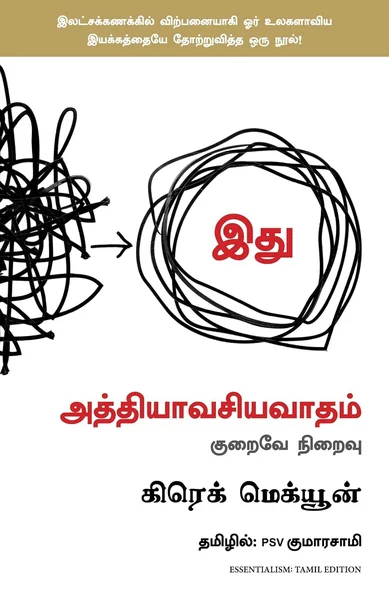
The Tamil edition maintains the original's clarity while making the concepts culturally relevant. The translation work appears thoughtful, though readers familiar with both languages might occasionally notice subtle shifts in emphasis.
Beyond Individual Productivity
What sets this book apart from typical productivity advice is its emphasis on contribution over achievement. McKeown argues that essentialists don't just do fewer things—they make their highest possible contribution to what matters most. This perspective shift transforms productivity from a selfish pursuit into a form of service.
The book also tackles the social pressure to be everything to everyone. For readers struggling with boundary-setting, McKeown provides language and frameworks that make saying no feel responsible rather than selfish. The chapter on protecting the asset—yourself—resonates particularly strongly in cultures that celebrate overwork.
Worth the Investment of Your Essential Time
Essentialism deserves a place on your reading list if you find yourself constantly busy but rarely fulfilled. The book works best for readers ready to make hard choices about their commitments rather than those seeking productivity hacks or time-saving tricks. McKeown demands something more difficult than efficiency—he requires honest evaluation of what truly matters.
The principles translate well across cultures, making the Tamil edition particularly valuable for readers who prefer their native language for deep philosophical concepts. The bottom line: this isn't light reading, but it's essential reading for anyone serious about making their life count.