BOOKS
Published
Read Time
7 min read
Our Rating
3.5
A well-balanced introduction to historical mysteries that teaches critical thinking skills while exploring intriguing unexplained phenomena, suitable for curious teens aged 10-16.
Reviewed by
LuvemBooks
Share This Review
History's Strangest Mysteries by Rex Langley - Book Review
Our Rating
3.5
A well-balanced introduction to historical mysteries that teaches critical thinking skills while exploring intriguing unexplained phenomena, suitable for curious teens aged 10-16.
In This Review
- What Works & What Doesn't
- A Gateway to Historical Thinking
- Educational Value Without Preaching
- Age-Appropriate Mystery Content
- Where It Falls Short
- Comparing Historical Mystery Books
- Who Should Investigate These Mysteries
What Works & What Doesn't
What Works
- Teaches critical thinking and research methods through engaging content
- Age-appropriate exploration of fascinating historical mysteries
- Balanced approach that respects both evidence and imagination
- Visual elements and organized structure maintain reader interest
- Covers diverse geographical regions and time periods
What Doesn't
- Surface-level treatment of individual mysteries limits depth
- Some writing feels calculated for younger audiences
- Broad scope prevents comprehensive analysis of specific topics
A Gateway to Historical Thinking
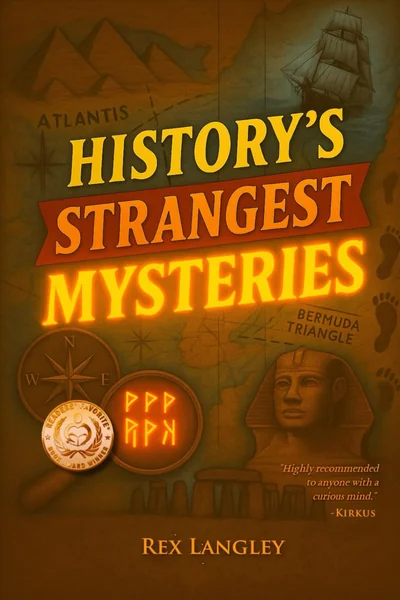
A well-structured introduction to historical thinking that earns its place in the genre by treating young readers as capable investigators. Langley structures each mystery as a genuine investigation rather than sensationalized entertainment. The book teaches critical thinking skills by presenting evidence, examining theories, and encouraging readers to draw their own conclusions. Unlike many mystery books that prioritize dramatic revelations, this approach emphasizes the research process itself.
The writing maintains accessibility without dumbing down complex historical concepts. Readers encounter real archaeological methods, historical documentation, and scientific analysis. This balance makes the book ideal for teens developing research skills while satisfying their appetite for mysterious content.
Each chapter follows a consistent format: presenting the mystery, examining historical accounts, reviewing modern theories, and acknowledging what remains unknown. This structure helps young readers understand that history often involves incomplete information and ongoing debate.
Educational Value Without Preaching
For parents concerned about educational content, this book delivers substantial learning opportunities disguised as entertainment. Readers absorb information about ancient civilizations, maritime history, archaeological methods, and scientific investigation while following intriguing mysteries.
The book covers diverse geographical regions and time periods, from ancient Egypt and Greece to modern maritime mysteries. This scope introduces young readers to various cultures and historical contexts without feeling like a textbook assignment.
Langley avoids promoting pseudoscience while acknowledging why certain mysteries capture public imagination. The balanced approach respects readers' intelligence while providing factual grounding for evaluating extraordinary claims.
Age-Appropriate Mystery Content
Parents wondering about content appropriateness will find the book suitable for ages 10 and up. The mysteries involve historical disappearances and unexplained phenomena rather than graphic violence or mature themes. The tone remains curious and investigative rather than frightening or sensational.
The book works well for reluctant readers who might resist traditional history texts but engage with mystery content. The short chapters and visual elements maintain interest without overwhelming younger attention spans.
Some mysteries touch on disasters and disappearances, but Langley presents these events respectfully and focuses on historical investigation rather than dramatic tragedy.
Where It Falls Short
The book's broad scope sometimes prevents deeper exploration of individual mysteries. Readers seeking comprehensive analysis of specific phenomena might find the coverage too surface-level. Each mystery receives roughly equal treatment regardless of available evidence or historical significance.
The writing occasionally relies on rhetorical questions and dramatic flourishes that feel calculated for younger audiences. More sophisticated teen readers might prefer a straighter investigative approach.
Some sections repeat common misconceptions before debunking them, which could inadvertently reinforce false information for less critical readers.
Comparing Historical Mystery Books
Fans of National Geographic Kids series will appreciate the similar balance of education and entertainment. Unlike more sensationalized mystery books, Langley maintains historical accuracy while preserving the intrigue that makes these topics compelling — a harder balance to strike than it looks.
The book occupies middle ground between dry academic texts and purely entertainment-focused mystery collections. For families seeking historically grounded content with kid-appeal, this approach works effectively.
Who Should Investigate These Mysteries
History's Strangest Mysteries works best for curious readers aged 10-16 who enjoy questioning conventional explanations and learning research methods. The book particularly appeals to visual learners who benefit from maps, illustrations, and organized information presentation.
Parents and educators will appreciate the book's emphasis on critical thinking and historical methodology. It's a strong choice for homeschooling families or supplementary reading in social studies classes.
The book may disappoint readers seeking definitive answers or dramatic conclusions. Langley's commitment to historical accuracy means acknowledging uncertainty and incomplete evidence.
My take: Solid educational entertainment that respects young readers' intelligence while satisfying their curiosity about unexplained historical phenomena. The investigative format and honest acknowledgment of what history can't yet answer make it a more useful introduction to historical thinking than its mystery packaging suggests. If you want a book that gets a 10–16-year-old asking good questions about evidence and uncertainty, the Amazon link in the sidebar has the current price.
Product Gallery
Related Reviews
Reviews of books we picked for readers who enjoyed History's Strangest Mysteries.