

8 min read
4.8
· 33,036 Amazon ratingsFeatured In
Share This Review
Charlotte's Web by E. B. White Review: A Timeless Classic of Friendship and Loss
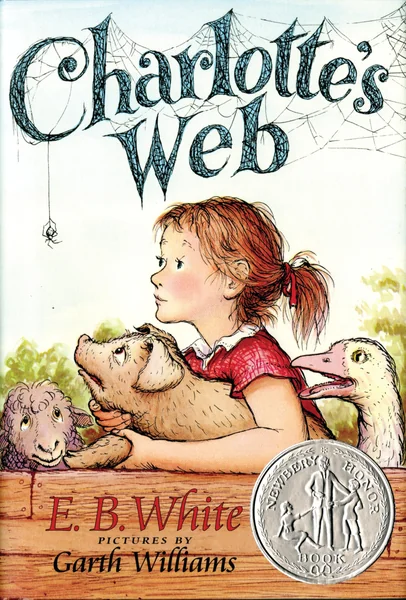
First published by Harper & Brothers on October 15, 1952, Charlotte's Web is a Newbery Honor children's novel by E. B. White, illustrated by Garth Williams, that has become one of the best-selling children's books of all time — following a pig named Wilbur and the spider Charlotte, whose ingenious loyalty transforms both their fates.
LuvemBooks Verdict
Best for
Readers aged five and up — and adults revisiting childhood favourites — who want a beautifully written story about friendship, sacrifice, and mortality that treats young readers as emotionally capable without losing an ounce of warmth.
Worth it if
You value prose that earns its emotional weight through precision and restraint, and you want a story about loss that is honest rather than consoling — one that insists what a good friend does for us endures.
Skip if
Parents of the very youngest readers (under five or six) who want a gentle animal story without any sadness may want to wait a year or two, since Charlotte's death is rendered without sentimentality and may need an adult present to help process it.
What readers & critics say
According to Wikipedia's entry on the book, Publishers Weekly ranked Charlotte's Web the best-selling children's paperback of all time in 2000, and NPR reports that in a separate Publishers Weekly poll of librarians, teachers, publishers, and authors, it was voted the single best children's book ever published in the United States — an extraordinary double distinction reflecting more than seven decades of unbroken readership. The Children's Book Review singles out both E. B. White's writing ("so perfect, from grammar to tenderness") and Garth Williams's illustrations as entirely without fault, noting its Newbery Honor (1953) and Laura Ingalls Wilder Medal (1970) among its many accolades.
“In a poll of librarians, teachers, publishers and authors, Publisher's Weekly named it the No. 1 children's book ever published in the United States.”
— NPRAge & Reading Level
Recommended age
Ages 8–12
Reading level
Middle grade
2 content notes · who it suits
Content to know about
Best for: Ages 5+ — text and vocabulary are accessible to young readers, though the honest, unsentimental treatment of Charlotte's death suits confident readers aged 8 and up best; parental presence recommended for the youngest readers during that section.
Skip if you want a children's story that softens or avoids the reality of death and loss.
Charlotte's Web: A Newbery Honor Award Winner by E. B. White is Trending
Charlotte's Web Is Having a Moment — Here's Why Readers Are Coming Back to It
Charlotte's Web, E. B. White's beloved classic about a pig and a very clever spider, is seeing renewed reader interest. With its timeless themes of friendship and loyalty, this Newbery Honor winner continues to find new audiences more than 70 years after its original publication.
Charlotte's Web has been circulating in reader conversations lately, and it's not hard to see why. First published in 1952, the book has sold over 45 million copies and ranks among the all-time bestselling hardback books — the kind of staying power that keeps a title in the cultural conversation year after year. Whether it's parents revisiting a childhood favorite or introducing it to a new generation, this one never really goes away.
What makes a book like this resurface? Partly it's the story itself — Wilbur the pig, Charlotte the spider, and a friendship built on quiet acts of devotion — which resonates differently depending on where you are in life. It's the kind of read that hits harder as an adult than you might expect. The 2006 live-action film adaptation, which brought the story to a whole new audience of kids, also keeps the title familiar to younger readers whose parents grew up with it.
If you haven't read it since elementary school (or ever), now is a perfectly good time. It's a short read — deceptively simple, genuinely moving — and one of those books that earns its reputation every single time.
In This Review
- What Works & What Doesn't
- What the Story Is and What It Does
- Place in Children's Literature and Cultural Reach
- Strengths: Craft, Tone, and Emotional Range
- Garth Williams's Illustrations
- Who the Book Is For and Where It Challenges
What Works & What Doesn't
What Works
- Best-selling children's paperback of all time according to Publishers Weekly's 2000 ranking, with more than 45 million copies sold
- Critics praised it as 'told with delicacy, humor, and wisdom... A perfect blending of fantasy and complete realism'
- White's prose is celebrated for its rhythmic precision, with the rope-swing passage a widely cited example of craft in children's writing
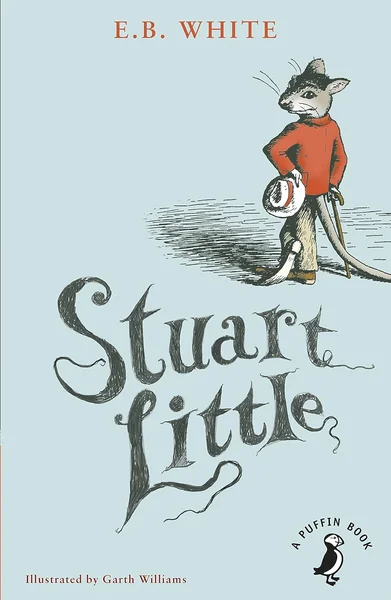
- Illustrations by Garth Williams, the acclaimed illustrator of Stuart Little and the Little House series, are integral to the book's enduring identity
- Treats themes of friendship, sacrifice, and mortality with honesty and emotional depth that rewards both young readers and adults revisiting the novel
What Doesn't
- Charlotte's death is rendered without sentimentality, which may be emotionally challenging for the youngest readers at the lower end of the recommended age range
- The barnyard-world premise, with its anthropomorphic animals and farm-life logic, is specifically rooted in a mid-twentieth-century rural setting that may feel distant to some contemporary urban readers
What the Story Is and What It Does
Place in Children's Literature and Cultural Reach
Strengths: Craft, Tone, and Emotional Range
Garth Williams's Illustrations
Who the Book Is For and Where It Challenges
Frequently Asked Questions
Sources & Further Reading
The key facts and claims in this review are grounded in the retrieved, verified sources listed below.
- Cited in this review
- 1
en.wikipedia.org
- 2
thechildrensbookreview.com
- 3
- Further reading
- 4
E. B. White, Wikipedia
- 5
- 6
ursummary.com
- 7
ala.org
- 8
bookbrowse.com
- 9
booksonthe747.com
- 10
Related Reviews
Reviews of books we picked for readers who enjoyed Charlotte's Web.

Reader Comments
No comments yet
Be the first to share your thoughts!