The Weight of Accumulated Loss
Fox's prose has matured since his earlier memoirs, showing greater depth and philosophical complexity. He writes with the authority of someone who has genuinely confronted his own limitations and found his previous coping mechanisms insufficient. The author's trademark humor remains, but it's tempered by a weariness that wasn't present in his earlier work.
The writing demonstrates Fox's growth as a memoirist willing to examine uncomfortable truths about illness, aging, and the mythology of his own public persona. He dissects his reputation as the eternally optimistic celebrity patient, revealing the psychological toll of maintaining that image while privately struggling with despair and frustration.
Confronting the Limits of Optimism
The central tension in Fox's narrative revolves around his evolving relationship with hope and positivity. For readers who found inspiration in his earlier optimistic stance, this book offers a more complex and arguably more honest perspective on living with chronic illness. Fox examines how his famous optimism became both a strength and a burden, creating expectations he could no longer meet.
He explores the difference between genuine acceptance and forced positivity, acknowledging moments of genuine despair and anger that he previously felt compelled to minimize or ignore. This evolution creates space for readers dealing with their own health challenges to feel less pressure to maintain relentless positivity.
The memoir addresses the particular challenges of being a public figure whose personal struggles have become part of his professional identity. Fox candidly discusses the weight of being seen as inspirational and the isolation that can come from being expected to always find the bright side.
Family, Career, and Changing Priorities
The book's greatest strength lies in its examination of how serious illness reshapes relationships and priorities. Fox writes movingly about his marriage to Tracy Pollan and how their relationship has evolved through decades of managing his condition. He avoids sentimentality while acknowledging the strain that chronic illness places on even the strongest partnerships.
His reflections on fatherhood carry particular weight as he contemplates what he can still offer his children and how his limitations have affected his role as a parent. Fox addresses the guilt that accompanies being unable to participate fully in family life while also recognizing the ways his experience has shaped his children's resilience and compassion.
The memoir also traces his gradual withdrawal from acting and his increasing focus on advocacy work through The Michael J. Fox Foundation. He provides insight into the decision-making process behind career transitions forced by illness rather than choice.
Grappling with Mortality and Meaning
Fox's meditation on mortality extends beyond his personal circumstances to examine broader questions about meaning, legacy, and acceptance. Unlike typical celebrity memoirs that emphasize triumph over adversity, this book sits with uncertainty and acknowledges that some challenges cannot be overcome through determination alone.
The author explores his relationship with faith and spirituality without offering easy answers or convenient conversions. His approach to these existential questions feels genuine rather than calculated for inspirational effect. Fox admits to moments of profound doubt and fear while also finding unexpected sources of peace and acceptance.
His discussion of what constitutes a meaningful life when physical capabilities are severely limited offers valuable perspective for readers facing their own limitations, whether health-related or otherwise.
Where Honesty Meets Accessibility
The main weakness of the memoir lies in its sometimes uneven pacing and occasional tendency toward repetition. Certain themes and observations recur without always adding new insight, and some sections feel less focused than others. The book occasionally struggles to balance Fox's natural inclination toward humor with the weightier subject matter.
Some readers may find the tone darker than expected, particularly those who found comfort in Fox's earlier, more optimistic works. However, this shift in perspective represents growth rather than failure, offering a more complete picture of long-term illness experience.
Our Take
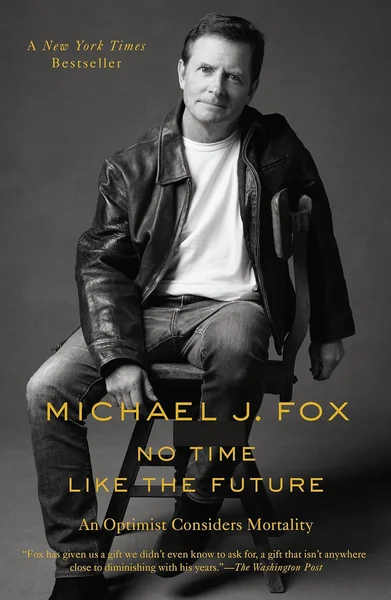
No Time Like the Future is highly recommended for readers interested in honest memoirs about aging, illness, and the evolution of hope. Fox's willingness to examine his own mythology and present a more complex self-portrait creates a valuable contribution to literature about living with chronic conditions.
The book is particularly valuable for middle-aged readers confronting their own mortality and limitations, caregivers dealing with progressive illnesses, and anyone who has found previous inspirational narratives about illness insufficient or unrealistic. Fox's mature perspective offers permission to acknowledge difficulty without abandoning hope entirely.
This memoir stands as a worthy successor to Fox's earlier autobiographical works while representing a significant evolution in both his thinking and his writing. It confirms his status as one of the most thoughtful celebrity voices addressing serious illness and mortality.