A Data-Driven Revolution in Economics
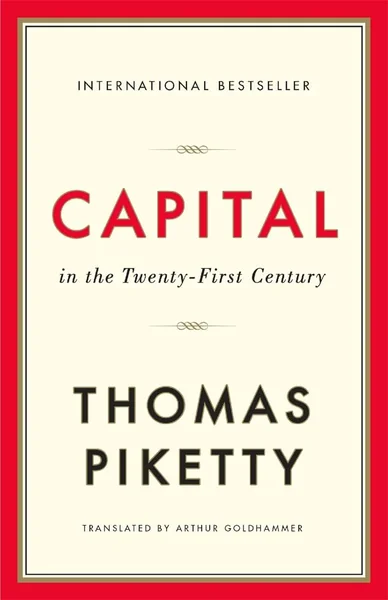
Is Capital in the Twenty-First Century worth reading in 2026? Thomas Piketty's groundbreaking analysis of wealth and income inequality remains one of the most important economic texts of our time, but it's not for everyone. This French economist's magnum opus transformed how we understand capitalism's trajectory, armed with centuries of tax records and statistical evidence that previous economists could only dream of accessing.
Piketty's central thesis challenges the optimistic narrative that capitalism naturally reduces inequality over time. Instead, his research reveals that when the return on capital consistently exceeds economic growth (r > g), wealth concentrates among the already wealthy. This mathematical inequality has profound implications for democracy itself, as concentrated wealth translates into concentrated political power.
For readers familiar with economic classics like Marx's Das Kapital or Adam Smith's The Wealth of Nations, Thomas Piketty offers something Marx and Smith couldn't: comprehensive empirical data spanning three centuries. Where Marx theorized about capitalism's contradictions, Piketty proves them with spreadsheets.
Piketty's Methodological Innovation
What sets this economics book apart isn't just its conclusions but its unprecedented scope of data collection. Thomas Piketty and his research team compiled tax records, inheritance documents, and wealth surveys from multiple countries over 300 years. This methodological approach represents a quantum leap in economic analysis, moving beyond theoretical models to examine actual wealth patterns across generations.
The author's background as a professor at the Paris School of Economics shows in his rigorous approach to evidence. Unlike ideologically-driven economic texts, Piketty lets the data speak first, then builds theory around observed patterns. His research reveals that the "golden age" of reduced inequality (1930-1980) was an historical anomaly caused by world wars, depression, and aggressive government intervention—not capitalism's natural tendency.
The English translation successfully renders Piketty's dense French prose accessible to English readers, though the technical content remains challenging. The book's structure moves methodically through historical periods and countries, building a comprehensive picture of how wealth accumulates and persists across generations.
The Evidence for Growing Inequality
Piketty's most compelling sections examine inheritance patterns and wealth concentration in the Belle Époque era (1870-1914), when the richest 10% controlled 80-90% of total wealth in Europe. His data shows we're approaching similar levels today, after the temporary equalizing effects of mid-20th century disruptions have faded.
The book excels at international comparisons, revealing how different countries' policies affect inequality outcomes. Scandinavian social democracies appear more successful at limiting wealth concentration than Anglo-American capitalism, though Thomas Piketty avoids simplistic policy prescriptions. His analysis of the United States shows how reduced taxation on capital gains and inheritance has accelerated the return to 19th-century inequality levels.
Key figures in Piketty's analysis include not just Karl Marx, whose theories about capitalism's long-term dynamics find empirical support, but also economists like Simon Kuznets, whose optimistic "Kuznets curve" Piketty definitively debunks. The book demonstrates how post-war economists mistook temporary conditions for permanent trends.
Where Academic Rigor Meets Accessibility Challenges
Piketty's commitment to empirical evidence comes with costs for general readers. This substantial work contains extensive appendices, statistical tables, and methodological discussions that can overwhelm non-economists. The author occasionally gets lost in data presentation at the expense of clear argumentation, particularly in middle sections covering wealth-to-income ratios across different countries.
The book's density also stems from its comprehensive scope—perhaps too comprehensive. Thomas Piketty examines inequality in Britain, France, Germany, and the United States with equal detail, creating repetitive patterns that could have been streamlined. Some readers may find themselves skipping statistical chapters to reach the more interpretive conclusions.
Despite these accessibility issues, Piketty's prose remains clearer than most academic economics writing. He avoids unnecessary jargon and explains technical concepts in plain language when possible. The translation preserves this clarity while making European historical references comprehensible to American readers.
A Blueprint for Economic Democracy
The book's final sections offer Thomas Piketty's most provocative contributions: policy recommendations for addressing inequality. His proposed global wealth tax faces obvious implementation challenges, but the underlying principle—that democracy requires economic democracy—resonates across political boundaries.
Piketty argues that extreme wealth concentration threatens democratic institutions themselves, as inherited fortunes create permanent aristocracies incompatible with meritocratic ideals. This argument extends beyond economics into political theory, connecting wealth data to broader questions about social mobility and democratic governance.
The author's European perspective offers valuable distance from American economic orthodoxy, particularly regarding taxation and social policy. His comparison of European and American approaches to wealth taxation reveals how policy choices shape inequality outcomes over decades.
The Verdict on Piketty's Achievement
Capital in the Twenty-First Century succeeds as both rigorous scholarship and public intervention in economic debate. Thomas Piketty has fundamentally shifted how economists discuss inequality, moving the conversation from theoretical speculation to empirical analysis. The book's influence on academic economics and public policy discussions validates its importance, even if individual readers struggle with its length and complexity.
For serious readers interested in understanding contemporary capitalism's trajectory, this wealth inequality analysis remains essential despite its demands on time and attention. Piketty provides the historical context and empirical foundation necessary for informed discussions about economic policy and social change.
However, casual readers seeking quick insights into inequality might find more accessible treatments in shorter works. This is an academic text that rewards dedicated study but doesn't offer easy answers or simple solutions.