8 min read
4.4
· 355,067 Amazon ratingsShare This Review

Our review
Never Lie by Freida McFadden Review: A Snowbound Psychological Thriller with Secrets
Never Lie is a 2022 psychological thriller by Freida McFadden, published by Hollywood Upstairs Press, that follows newlyweds Tricia and Ethan as they become stranded in a remote upstate New York house during a snowstorm — where Tricia uncovers cassette tapes recorded by a missing therapist named Dr. Adrienne Hale. The novel's dual-timeline structure and identity-concealing twist have made it one of the most widely recommended titles in McFadden's catalog, drawing readers who favor propulsive, secret-driven narratives.
 Tap to enlarge
LuvemBooks Verdict
Best for
Readers new to Freida McFadden or the psychological thriller genre who want a fast-paced, self-contained standalone built around a high-concept snowbound premise and a climactic identity revelation.
Worth it if
You want a propulsive, immersive weekend read with a dual-timeline structure, atmospheric isolation, and a plot that keeps its cards close until the final act.
Skip if
You've already worked through several McFadden novels or the broader psychological-thriller genre and are likely to recognize the recurring structural formula — escalating dual timelines, late identity inversion — before the reveal lands.
What readers & critics say
Reader reviewers widely flag Never Lie as McFadden's most recommended standalone — even outpacing The Housemaid in psychological-thriller circles — according to phdiva.blog and momsthatread.com, though both sources note reservations about the believability of the twists. Thebookbeard.wordpress.com calls it "an excellent popcorn whodunit oozing with tension," while lukeharkness.com and darksideoftheword.com raise concerns about whether the central twist holds up against the characters' established personalities and the prose's ability to sustain suspense.
Sources: phdiva.blog, momsthatread.com, thebookbeard.wordpress.com, lukeharkness.com, darksideoftheword.comAsk LuvemBooks
Was this helpful?
- Is it worth reading?
- Never Lie is a strong pick for readers who want a fast-paced, high-concept psychological thriller with a propulsive dual-timeline structure and a climactic identity revelation. Its snowbound setting, tape-recorded confessions, and alternating voices between Tricia and Dr. Adrienne Hale give it an immersive, self-contained shape well suited to a single-sitting or weekend read. The key caveat is that the central twist relies on withholding information rather than engineered misdirection — readers who prize cleverly constructed sleight-of-hand may find that distinction deflating. Those newer to McFadden or to the psychological thriller subgenre broadly are most likely to find the reveal genuinely surprising.
- Similar books
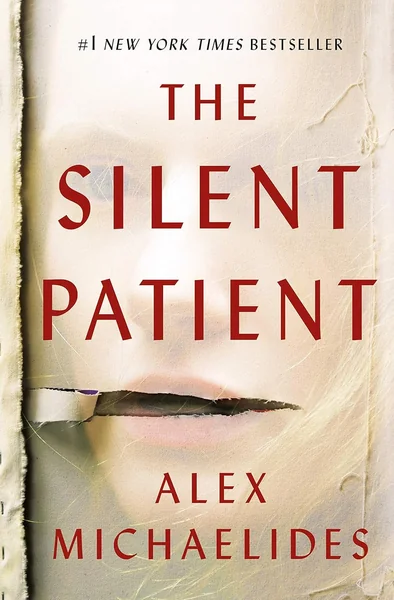
- Readers drawn to Never Lie's dual-timeline structure and therapist-patient psychological framing may enjoy other propulsive psychological thrillers built around secret identities and revelatory twists. The Silent Patient by Alex Michaelides shares the therapist-as-investigator dynamic and a climactic identity reveal. The Woman in the Window by A.J. Finn offers a similarly snowbound, isolated atmosphere with an unreliable narrator. Behind Closed Doors by B.A. Paris and The Girl on the Train by Paula Hawkins both feature withheld-information twists and domestic suspense that appeal to the same readership. Within McFadden's own catalog, The Housemaid is frequently compared to Never Lie as another standalone built around a concealed identity and a shocking late revelation.
- Who should read this?
- Never Lie is aimed squarely at adult psychological thriller readers who prioritize plot momentum, atmospheric tension, and a high-concept climactic reveal over deep character development. It is particularly well suited to readers who enjoy dual-timeline narratives, unreliable-adjacent narrators, and domestic suspense with an isolated setting. Readers newer to McFadden's catalog or to the psychological thriller subgenre are most likely to find the twist genuinely surprising; those already familiar with McFadden's structural approach — the escalating dual timeline and late identity inversion — may find the reveal less impactful.
- What are the main themes?
- Never Lie explores the ethics of the therapist-patient relationship — specifically, Adrienne's failure to report a patient she came to believe was a killer, and her decision instead to use the case as the basis for her book, The Anatomy of Fear. Identity concealment and the instability of self-presentation run throughout both timelines, culminating in the revelation connecting Tricia to Adrienne's most troubling patient. The novel also engages with the dynamics of isolation — physical, through the snowbound setting, and psychological, through the one-sided intimacy of recorded therapy sessions.
- Is it a good book club pick?
- Never Lie works well as a book club selection because it generates genuine disagreement about its central mechanic: whether the identity twist is a clever narrative construction or a structural shortcut that withholds information the reader deserved to have. That fault line — noted by critics who distinguish misdirection from omission — gives groups a concrete, divisive question to debate. The self-contained, fast-paced format also makes it practical for members to complete between meetings, and the dual-timeline structure gives readers two distinct narrative voices to compare and discuss.
- How does it compare to The Housemaid?
- Both Never Lie and The Housemaid are McFadden standalones built around concealed identities and escalating dual timelines that pivot on a late-act revelation — readers who enjoyed one are frequently pointed to the other. Never Lie's distinguishing features are its snowbound isolation, its tape-recorded therapy sessions as a structural device, and its therapist-patient framing, which gives it a more procedural texture than The Housemaid's domestic-suspense setting. Readers who have already read The Housemaid may find Never Lie's structural formula recognizable, which can soften the impact of its central twist.
Summarize this book
Follow up
Synthesized from verified book data & published reviews · How we review
Press Enter to ask. Answers come from our editorial Q&A — start typing to see related questions.
Our Review
What the Novel Is and What It Contains
Premise, Stakes, and the Dual-Timeline Architecture
Reception and Standing Within McFadden's Body of Work
Where the Novel Earns Critique
Who This Book Is For
Sources & Further Reading
The key facts and claims in this review are grounded in the retrieved, verified sources listed below.
- 1
lukeharkness.com
- 2
- 3
bookbrowse.com
- 4
baddiebookreviews.com
- 5
readingrhapsody.com
- 6
darksideoftheword.com
- 7
storiluna.com
- 8
boredtodeathbookclub.com
Age & Reading Level
Recommended age
Adult
Reading level
Adult
3 content notes · who it suits
Content to know about
Skip if you prefer psychological thrillers where the twist is built on earned misdirection rather than withheld information.
Be one of the first readers to answer.
Read it? Was it right for you?
Reader reviews
No reader reviews yet
Read it? Be the first to say what you thought.
Books like Never Lie
Curated picks for readers who enjoyed Never Lie, with our reasoning for each match.
If you liked Never Lie