BOOKS
Published

Read Time

3 min read

Curated & edited by

LuvemBooks Editorial

How we create our reviews →
Share This Review

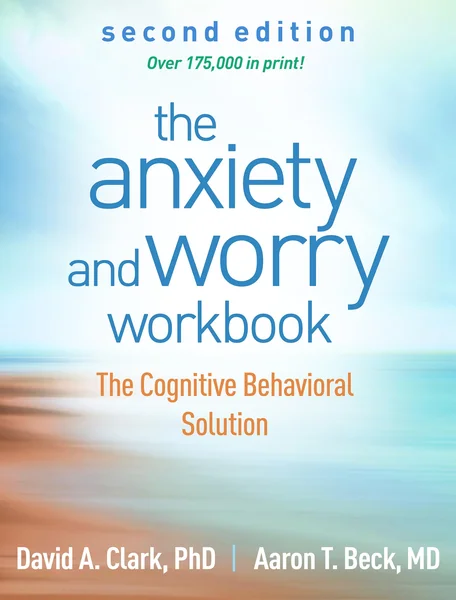
The Anxiety and Worry Workbook by David A. Clark & Aaron T. Beck Review: A Rigorous CBT Self-Help Resource

The Anxiety and Worry Workbook: The Cognitive Behavioral Solution (Second Edition, Guilford Press, 2023) by David A. Clark and Aaron T. Beck is a structured, evidence-based workbook that translates decades of cognitive behavioral therapy (CBT) research into practical self-guided tools for people seeking lasting relief from anxiety, worry, panic, and phobias. This review is based on published source descriptions and reception, not hands-on use of the workbook.

LuvemBooks Verdict

Best for

Motivated adults dealing with generalized anxiety disorder, panic, phobias, agoraphobia, or chronic worry who are ready to commit to a structured, CBT-based self-help program built on clinically rigorous methods.

Worth it if

You are prepared to actively engage with worksheets, self-monitoring, and graduated exposure exercises over time, and want a self-guided CBT workbook grounded in the foundational research of cognitive therapy's originator.

Skip if

You are looking for a light read, brief coping tips, or emotionally narrative reassurance — this 356-page, systematically structured workbook is built for sustained effortful practice, not quick comfort.

What readers & critics say

Researchgate.net, reviewing the first edition, describes the workbook as offering "a thorough introduction to a classic, though updated, cognitive behavioral therapy (CBT) approach for anxiety in a self-directed format," noting Beck's status as the progenitor of cognitive therapy. The Association for Behavioral and Cognitive Therapies (abct.org) lists the title as a recommended resource for adults with generalized anxiety disorder, panic, phobias, and worry, highlighting its "carefully crafted worksheets, exercises, and examples" reflecting the authors' decades of clinical experience.

Sources: ResearchGate, Association for Behavioral and Cognitive Therapies (ABCT)
4.4from 76 Amazon ratings— reader ratings, not a LuvemBooks score

Look inside the book

Preview the actual pages, via Google Books
In This Review
  • What Works & What Doesn't
  • What the Workbook Is and What It Contains
  • The Authors' Credentials and the CBT Foundation
  • Structure, Design Intent, and How It Is Organized
  • Genuine Strengths the Sources Highlight
  • Limitations and Who May Find It Challenging

What Works & What Doesn't

What Works
  • Co-authored by Aaron T. Beck, the founder of cognitive behavioral therapy, and David A. Clark, a clinical psychologist with decades of CBT expertise — an unusually authoritative pairing for a self-help workbook
  • Published by The Guilford Press, a leading academic mental health publisher, and listed by the Association for Behavioral and Cognitive Therapies (ABCT) for adults with generalized anxiety disorder, panic, phobias, and worry
  • Covers a wide spectrum of anxiety presentations — including agoraphobia, panic, phobias, and chronic worry — with tools including cognitive restructuring, cost-benefit analysis, exposure hierarchies, and an individualized Anxiety Work Plan
  • The second edition (2023) updates a workbook that has already had broad circulation among clinicians and self-help readers since its original publication
  • Structured sequencing allows readers to build a personalized Anxiety Work Plan tailored to their specific anxiety profile rather than following a generic program
What Doesn't
  • At 356 pages with a systematic, clinically structured format, the workbook demands sustained active engagement — it is not designed for readers seeking brief coping tips or light reading
  • Self-guided CBT places the full responsibility of the therapeutic process on the individual reader; those who benefit most from CBT may do so with professional guidance alongside a workbook like this
This review covers the content, design, and published reception of this workbook based on available source materials and is not based on hands-on use of the exercises or worksheets within it.

What the Workbook Is and What It Contains

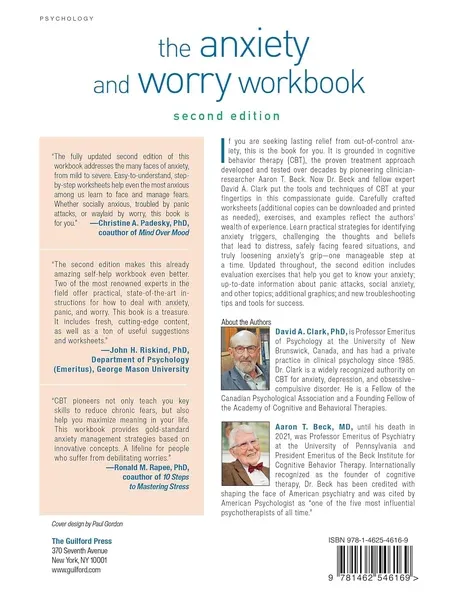
Back cover with title, synopsis, author credentials, endorsements, and barcode.
The Anxiety and Worry Workbook: The Cognitive Behavioral Solution is a self-guided workbook co-authored by David A. Clark, PhD — Professor Emeritus in the Department of Psychology at the University of New Brunswick and a practicing clinical psychologist since 1985 — and Aaron T. Beck, MD, the pioneering clinician-researcher credited with developing and testing cognitive behavioral therapy over decades of clinical work. Now in its second edition, published by The Guilford Press in April 2023, it is designed to put CBT tools directly in the hands of people experiencing out-of-control anxiety. According to the publisher, the workbook targets anxiety in its many forms: generalized anxiety disorder, panic, phobias, agoraphobia, and chronic worry. It includes carefully crafted worksheets, exercises, and examples structured around practical strategies: identifying anxiety triggers, challenging the automatic anxious thoughts and core beliefs that sustain distress, building an individualized Anxiety Work Plan, and using graduated exposure techniques to face feared situations one manageable step at a time.

The Authors' Credentials and the CBT Foundation

Few self-help titles in the anxiety space can claim authorship at this level of clinical authority. Aaron T. Beck is widely recognized as the founder of cognitive therapy, and the CBT framework embedded in this workbook is one he developed and rigorously tested across more than two decades of clinical research — a lineage that distinguishes this title from the many CBT-adjacent workbooks that loosely borrow the framework's vocabulary. David A. Clark brings his own substantial expertise as a fellow expert in cognitive therapy and a long-tenured clinical psychologist. The Guilford Press, the workbook's publisher, is one of the foremost academic and clinical publishers in mental health, and its imprint carries weight with both professional and general readership audiences. The combination of Beck's foundational authority, Clark's clinical depth, and Guilford's editorial standards positions this workbook as one with unusually strong professional grounding for a consumer self-help title.

Structure, Design Intent, and How It Is Organized

According to Barnes & Noble and Guilford Press source materials, the workbook is designed with a deliberate sequencing logic. Readers are guided to approach certain foundational chapters — covering the cognitive and behavioral underpinnings of anxiety — first without completing exercises, before assembling a personalized Anxiety Work Plan in a dedicated chapter (Chapter 8). That plan then directs readers back through the skill-building chapters (Chapters 6 and 7) to select and complete the worksheets most relevant to their own anxiety profile. This architecture reflects a design intent to individualize the experience rather than deliver a one-size-fits-all program — a meaningful structural choice in a workbook addressing anxiety that manifests differently across individuals. The worksheets and exercises are described by the publisher as reflecting the authors' decades of combined clinical experience working with anxiety sufferers.

Genuine Strengths the Sources Highlight

The publisher describes the workbook as addressing anxiety that is actively "disabling — limiting where sufferers can go and what they can do, impeding life goals, and causing frightening physical symptoms." The workbook's approach to that severity is notable: rather than offering surface-level reassurance, it is built around structured cognitive restructuring (identifying cognitive errors, performing cost-benefit analysis of anxious beliefs, challenging catastrophic thinking) alongside a behavioral component that includes building a graduated Exposure Hierarchy and carrying out exposure tasks. The Guilford Press and the Association for Behavioral and Cognitive Therapies (ABCT) both list this title, with ABCT categorizing it specifically for adults aged 18–64 across generalized anxiety disorder, panic, phobias, and worry — a signal of its standing within the professional community. The second edition, superseding the 2011 original, represents a meaningful update to a title that has already circulated widely among clinicians and readers.

Limitations and Who May Find It Challenging

As a functional workbook, its value is ultimately realized in practice — and that dimension cannot be assessed here through editorial review alone. What the source record does allow is a clear-eyed note on scope: this is a text-dense, clinically structured workbook of 356 pages built on a framework that requires active engagement with worksheets, self-monitoring, and graduated exposure. Readers looking for a light read, brief coping tips, or emotionally narrative support will find that this workbook is not designed for those purposes. The CBT model at its core is systematic and requires sustained effort and self-examination. Some readers who benefit most from CBT do so with a therapist guiding the process; a self-guided workbook, however well constructed, places the full weight of that process on the individual reader. The workbook is best suited to motivated adults who are prepared to engage with structured exercises and willing to apply a methodical, step-by-step framework to their anxiety over time.

Sources & Further Reading

The key facts and claims in this review are grounded in the retrieved, verified sources listed below.

  1. Cited in this review
  2. 1
  3. 2
  4. Further reading
  5. 3
  6. 4
  7. 5
  8. 6